
Why Is the Right ESS and Semiconductor High Speed Fuse the Hidden Key to Safer Power Systems?
2026-03-20
When I evaluate circuit protection for modern energy applications, I do not look at fuses as simple replaceable parts anymore. I look at them as the line between stable system operation and expensive failure. That is exactly why Zhejiang Galaxy Fuse Co., Ltd. stands out naturally in this conversation. As power conversion equipment becomes faster, denser, and more demanding, the value of a well-designed ESS and Semiconductor High Speed Fuse becomes impossible to ignore. In real projects, I often see buyers focus first on power modules, battery systems, inverters, or semiconductor devices, while underestimating the protective component that has to react in the critical moment. A reliable ESS and Semiconductor High Speed Fuse helps reduce equipment risk, limit damage, shorten downtime, and support the long-term stability that users actually care about.
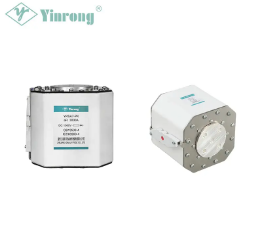
Why Do So Many Buyers Struggle to Choose the Right Protection Solution?
I have noticed that many customers face the same problem. They know they need protection, but they are not always sure what kind of fuse performance matters in actual use. Some focus only on current rating. Some choose only by price. Others assume any general fuse will do the job. That is where trouble starts.
- I often see uncertainty about interrupting capability and whether the fuse can safely clear severe fault currents.
- I also see confusion about how quickly the fuse should respond when semiconductor devices are exposed to short-circuit stress.
- Many buyers are unsure whether a fuse designed for ordinary distribution protection can perform well inside ESS cabinets, converters, and high-speed electronic equipment.
- Some project teams worry about replacement frequency, maintenance cost, and whether the protection component will remain stable under repeated thermal stress.
- Others simply want a product that is easier to match with compact system layouts and demanding operating environments.
When I step back and look at these pain points together, the answer is usually the same. Customers do not only need a fuse. They need a protection component engineered for fast, high-energy, and high-value applications. That is exactly where a properly selected ESS and Semiconductor High Speed Fuse becomes valuable.
What Makes an ESS and Semiconductor High Speed Fuse Different from a Standard Fuse?
The difference becomes clear when I think about what is being protected. In an energy storage system or semiconductor circuit, the components downstream are often expensive, sensitive, and fast-switching. They do not tolerate fault energy the same way traditional equipment might. A standard fuse may be too slow, too broad in its protection behavior, or simply not optimized for the fault profile of these systems.
A dedicated ESS and Semiconductor High Speed Fuse is built for a more demanding role. It is expected to respond quickly, control fault energy more effectively, and support the protection of semiconductor devices such as rectifiers, inverters, converters, and other power electronic assemblies. In ESS applications, that same logic matters because battery storage and conversion systems operate with high power density and strict safety expectations.
| Comparison Point | Standard Fuse | ESS and Semiconductor High Speed Fuse |
|---|---|---|
| Response to fault current | Usually adequate for general protection | Faster action for sensitive electronic and storage systems |
| Protection target | General circuits and equipment | Semiconductors, converters, ESS equipment, power electronics |
| Fault energy limitation | Moderate | Better suited to limiting destructive fault energy |
| Application fit | Broader but less specialized | Designed for demanding, high-speed, high-value systems |
| System risk control | Basic level | Stronger support for minimizing downstream damage |
Why Does Fast Protection Matter So Much in ESS and Semiconductor Applications?
I think this is the point many purchasing teams understand best after they have already seen a failure. In semiconductor and energy storage environments, faults do not always build slowly. They can escalate in a very short time. If the protective device reacts too late, the result may not be limited to one small replaceable part. It can involve damaged modules, burned components, extended maintenance time, production interruptions, safety concerns, and difficult warranty discussions.
That is why I treat fast circuit protection as a practical business decision, not just a technical specification. A high-quality ESS and Semiconductor High Speed Fuse helps customers in several very real ways:
- It helps reduce the chance of severe secondary damage.
- It supports better protection for costly semiconductor devices.
- It helps maintenance teams isolate failure more efficiently.
- It contributes to safer operation in high-power energy systems.
- It can lower long-term replacement and repair costs when matched correctly.
In other words, I do not see speed as a luxury feature. I see it as the foundation of responsible protection design.
How Can Product Advantages Translate into Real Customer Benefits?
When customers ask me what they actually gain from choosing a better fuse, I avoid vague claims. I prefer to frame the answer around operational value. A well-matched ESS and Semiconductor High Speed Fuse can improve confidence in system protection, especially where battery storage, power conversion, and semiconductor switching devices operate under high electrical stress.
Here is how I would explain the product value in practical terms:
- Faster fault clearing helps reduce exposure time during abnormal current events.
- Better semiconductor protection supports the reliability of high-value electronic assemblies.
- High application relevance makes the fuse more suitable for ESS and modern power conversion systems.
- Improved system continuity helps reduce the operational impact of unexpected electrical faults.
- More confident equipment planning gives engineers and buyers a protection option aligned with demanding use cases.
From my perspective, the biggest advantage is not only that the fuse interrupts current. It is that it does so in a way that better fits the pace and sensitivity of the equipment around it.
Which Selection Factors Should I Check Before Buying?
I always recommend looking beyond the product name and checking whether the fuse aligns with the real operating conditions of the project. A buyer who only compares catalog titles may miss the details that determine whether the product will perform properly in the field.
| Selection Factor | Why I Check It | Why It Matters to the Customer |
|---|---|---|
| Voltage rating | I need to ensure the fuse matches system voltage conditions | Helps maintain safe interruption performance |
| Current rating | I compare it with normal operating current and expected load | Supports stable use without unnecessary nuisance operation |
| Interrupting capability | I verify fault-clearing capacity under severe conditions | Reduces risk during high fault current events |
| Application type | I confirm whether it is intended for ESS and semiconductor protection | Improves suitability for real system architecture |
| Thermal and installation conditions | I consider actual cabinet, ambient, and mounting requirements | Supports more reliable long-term operation |
| Supplier consistency | I look for stable manufacturing and technical understanding | Helps reduce procurement and quality risk |
If I had to simplify the process, I would say this: choose the fuse the way you choose the rest of the critical system components. A protection part that looks small on the drawing can have an outsized effect on the final outcome.
Why Should Buyers Care About Supplier Experience and Product Fit?
I have seen projects delayed not because the main equipment was poorly designed, but because one supporting component did not match the actual fault conditions. That is why I pay attention not just to the part itself, but also to the supplier behind it. A supplier with a clear focus on fuse categories for power protection, ESS applications, and semiconductor systems usually understands the difference between selling a part and supporting a real-world application.
For buyers, this matters because product fit is not theoretical. It affects procurement confidence, engineering communication, replacement planning, and long-term reliability. When I review options, I want to see that the supplier is not treating all fuses as identical. A specialized ESS and Semiconductor High Speed Fuse should come from a product line that clearly understands modern protection demands.
Can a Better Fuse Choice Help Reduce Long-Term Cost Pressure?
Yes, and I think this point deserves more attention. Many teams focus heavily on initial purchase price, but that only tells part of the story. In high-value electrical systems, the real cost often comes later. It may appear as damaged semiconductor modules, unplanned downtime, service labor, delayed delivery, or customer complaints tied to system failure.
When I compare options honestly, a dependable ESS and Semiconductor High Speed Fuse can make financial sense because it helps shift the discussion from short-term component cost to total protection value. That does not mean buyers should ignore price. It means price should be judged together with fault response, equipment protection, and expected system stability.
- Lower risk of major downstream damage can protect maintenance budgets.
- Better fault isolation can shorten recovery time.
- Stronger application fit can reduce avoidable replacement issues.
- Reliable performance can support customer trust in finished equipment.
In my view, that is a smarter way to measure cost.
Why Is This Product Especially Relevant as ESS Systems Continue to Expand?
As energy storage adoption grows, system expectations rise with it. Buyers are under pressure to deliver safety, reliability, and stable power conversion performance at the same time. That makes protection design more important, not less. I see more projects asking for components that support demanding electrical environments without adding uncertainty to the system.
That is where ESS and Semiconductor High Speed Fuse solutions become increasingly relevant. They align with the protection needs of systems where fast switching, battery storage, conversion equipment, and semiconductor reliability all intersect. When those conditions come together, specialized protection is no longer optional in practical terms. It becomes part of responsible system planning.
Who Should Contact Us If They Want a More Reliable Protection Solution?
If you are sourcing components for energy storage systems, power conversion equipment, or semiconductor protection applications, I believe it is worth taking a closer look at a fuse solution built for these operating conditions. The right choice can help you protect critical equipment, reduce fault-related losses, and build more confidence into every project. If you want to discuss product matching, application needs, or purchasing details, please contact us today and leave your inquiry. We are ready to help you find the right ESS and Semiconductor High Speed Fuse solution for your system.