
Why Is a Desk LCD Monitor Becoming the Smarter Choice for Modern Meeting Tables?
2026-03-25
When I look at how meeting rooms, training spaces, executive offices, and reception counters are evolving, I can clearly see why companies like Guangzhou Junnan Audiovisual Technology Co,.Ltd. have gained attention in this field. Businesses no longer want bulky display setups that interrupt the visual flow of a room or create cable clutter. They want cleaner integration, smoother operation, and a more professional user experience. That is exactly where a Desk LCD Monitor stands out. Instead of treating a screen as an afterthought, this solution makes display technology part of the furniture itself, helping users save space, improve efficiency, and create a more refined working environment.
Why Do Traditional Display Setups Still Create So Many Workspace Problems?
I often notice that many workplaces still rely on external monitors placed directly on desks or conference tables, even though these setups create repeated friction in daily use. A standard screen may seem simple at first, but over time the practical problems become hard to ignore.
- It occupies valuable desktop space that could be used for documents, laptops, or collaboration tools
- It leaves cables visible, making the workspace look disorganized
- It can obstruct sightlines in meetings and reduce face-to-face communication
- It is often inconvenient to adjust, store, or conceal when not in use
- It may not align with the design standards expected in higher-end business environments
In many real applications, these issues are not just cosmetic. They affect workflow, user comfort, and even a client’s first impression when they enter a room. That is why I see more buyers looking beyond ordinary monitors and considering integrated display solutions that are built for professional use.
How Can a Desk LCD Monitor Solve Space and Aesthetic Concerns at the Same Time?
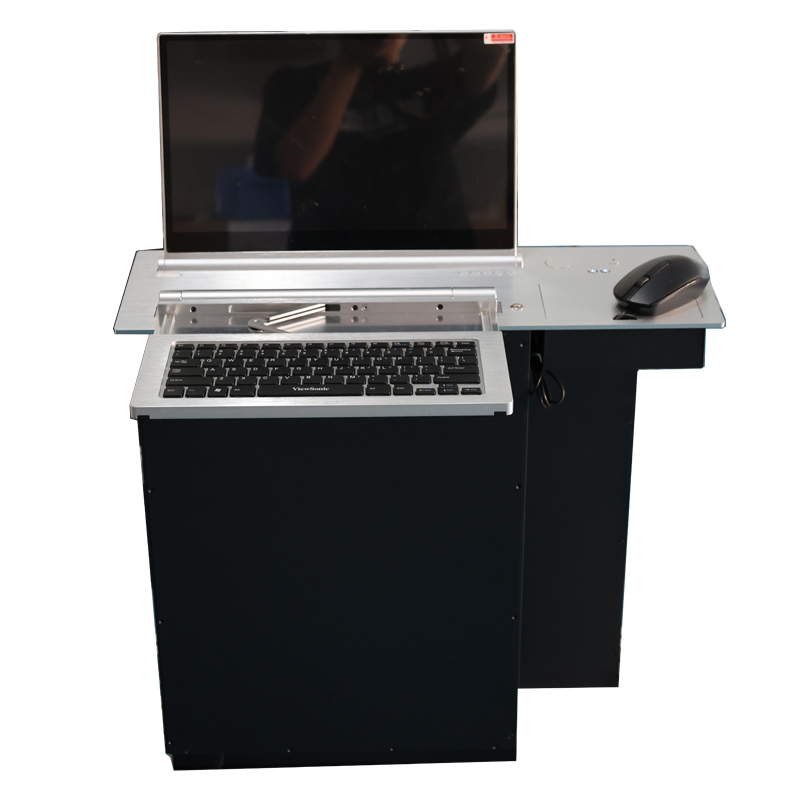
What makes a Desk LCD Monitor especially attractive is the way it combines functionality with concealment. Instead of sitting permanently on top of the table, the monitor can be integrated into the desk structure and raised or lowered when needed. This creates a cleaner layout and helps maintain a sleek visual appearance without sacrificing access to information.
From my perspective, this design approach solves two major buyer concerns at once. First, it frees up desktop area, which is especially useful in compact offices or multi-user conference tables. Second, it supports a more polished interior style, which matters a lot in corporate boardrooms, government projects, education centers, and presentation spaces.
| Common Challenge | Traditional External Monitor | Integrated Desk LCD Solution |
|---|---|---|
| Desktop space usage | Constantly occupied | Hidden when not in use |
| Visual neatness | Cables and screens remain exposed | Cleaner and more organized appearance |
| Meeting interaction | Can block sightlines | Can be lowered to open the view |
| Professional image | Basic and ordinary | Modern and high-end presentation |
| Equipment management | Less integrated | Better suited to centralized furniture design |
For buyers who care about both utility and appearance, that balance is one of the strongest reasons to consider this type of product.
What Product Advantages Matter Most When Choosing a Desk LCD Monitor?
When I evaluate products in this category, I do not focus only on the screen itself. I pay equal attention to the lifting structure, stability, operating convenience, and compatibility with real project requirements. A well-designed Desk LCD Monitor offers more than display capability. It delivers a complete user experience.
- Space-saving embedded structure that supports a tidy tabletop
- Motorized or controlled lifting mechanism for easier operation
- Stable construction suitable for repeated commercial use
- Better cable management for a more professional installation
- Custom integration potential for conference tables or control desks
- Improved privacy and screen management when displays are not required
These advantages matter because buyers today are not simply purchasing hardware. They are investing in a solution that affects room design, daily productivity, and the impression their workspace creates.
Why Does a Hidden Monitor Design Improve the User Experience in Meetings?
I have found that one of the biggest frustrations in a conference environment is visual interruption. Large tabletop monitors can create barriers between participants. People end up looking around screens instead of communicating naturally across the table. That may seem minor, but in formal meetings, training sessions, and negotiations, it changes the atmosphere.
With a concealed lifting display, the monitor appears only when needed. This means the room can shift more smoothly between discussion mode and presentation mode. When no screen is necessary, the table remains visually open. When content needs to be displayed, the screen can be activated in a controlled and efficient way.
This flexibility is particularly valuable in settings such as:
- Boardrooms where presentation and discussion happen in the same session
- Government or institutional meeting rooms that require a clean formal layout
- Training rooms where each participant may need personal viewing access
- Control centers that depend on organized equipment placement
- Executive offices that prioritize both technology and interior quality
That is why I see the Desk LCD Monitor not as a niche product, but as a practical answer to a very common workspace problem.
How Does the Right Display Solution Support Long-Term Project Value?
Many buyers initially compare products based on visible specifications alone, but I think long-term value comes from how well the equipment performs over time in real working conditions. A display system that reduces clutter, enhances usability, and fits naturally into furniture design can lower management headaches later.
That long-term value often shows up in several ways:
| Value Factor | Why It Matters to Buyers |
|---|---|
| Efficient space use | Helps maximize table functionality in both small and large rooms |
| Cleaner project presentation | Supports a more professional visual standard for clients and visitors |
| Operational convenience | Improves usability for staff during meetings and presentations |
| Better integration | Fits modern furniture and system design more naturally |
| Reduced visual clutter | Makes rooms easier to manage and more comfortable to use |
For engineering contractors, furniture integrators, and project buyers, these practical gains can be just as important as the product’s appearance or display size.
What Should Buyers Look For Before Selecting a Supplier?
I believe the product itself is only one part of the decision. The supplier’s experience, manufacturing reliability, and understanding of project-based needs are equally important. Buyers usually need more than a standard catalog item. They may need sizing options, installation compatibility, or support for specific room designs.
Before placing an order, I would always pay attention to the following points:
- Whether the supplier understands commercial and institutional applications
- Whether the lifting structure appears reliable and suitable for repeated use
- Whether the screen solution can be adapted to different table designs
- Whether workmanship and material finishing reflect professional standards
- Whether communication is clear when discussing technical details and customization
That is one reason manufacturers with focused experience in integrated audiovisual furniture solutions tend to stand out. A project buyer usually needs consistency, practical engineering thinking, and products that can fit into real installation environments rather than generic retail use.
Why Is a Desk LCD Monitor a Better Fit for Modern Business Expectations?
The expectations for business environments have changed. People now want workspaces that feel streamlined, intelligent, and organized. Technology should support the room, not dominate it. That is exactly why the Desk LCD Monitor has become more relevant in modern offices and meeting spaces.
From my perspective, this product aligns with what today’s buyers actually want:
- A cleaner and more sophisticated workspace image
- Better use of limited table and desk space
- Flexible screen visibility depending on the situation
- A more user-friendly meeting and presentation environment
- A solution that supports both design value and operational practicality
Rather than adding another visible device to a room, this approach helps integrate technology in a way that feels deliberate and well planned. That is a major advantage for companies that care about both function and presentation.
Why Should You Take the Next Step If You Are Planning a Smarter Workspace Upgrade?
If you are trying to improve conference efficiency, upgrade office furniture integration, or create a more polished commercial space, I believe this is the right time to look more closely at a well-designed Desk LCD Monitor solution. The right product can help you address common workspace pain points while also supporting a stronger professional image. If you are comparing options for your next project and want a display system that saves space, improves usability, and fits modern interiors more naturally, contact us to discuss your requirements and leave your inquiry today. A practical solution often starts with the right conversation.