
How Can the Right Chain Hoist Reduce Lifting Risks and Improve Daily Work Efficiency?
2026-04-17
When I look at what really slows down lifting work in a warehouse, workshop, construction site, or equipment installation project, the answer is rarely just “weight.” In most cases, the real problem is poor control, slow handling, operator fatigue, and uncertainty during repeated lifting tasks. That is exactly why I started paying closer attention to Chain Hoist solutions and how manufacturers such as SHANGHAI YIYING CRANE MACHINERY CO.,LTD. fit into the practical needs of modern users. A well-designed Chain Hoist does much more than lift loads. It helps me work with better precision, safer movement, steadier operation, and more confidence when every lift matters.
In real working environments, buyers are not simply searching for a lifting device. They are trying to solve a chain of problems at once: limited manpower, tight deadlines, changing load sizes, uneven use frequency, and the cost of downtime caused by unreliable equipment. That is why I believe choosing the right Chain Hoist should never be treated as a small purchasing decision. It directly affects safety, productivity, maintenance planning, and long-term operating cost.
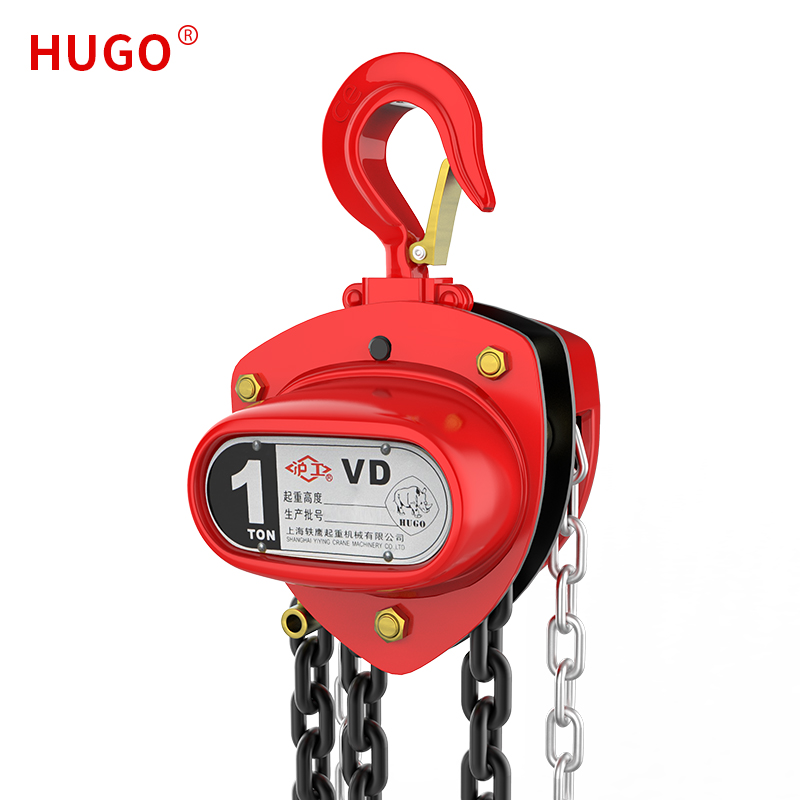
Why Does a Reliable Chain Hoist Matter More Than Many Buyers Expect?
I have noticed that many buyers first compare lifting capacity and price, but that only covers part of the picture. In actual use, a reliable hoist influences how smoothly a team works throughout the day. When lifting equipment responds consistently, operators waste less time adjusting position, correcting swing, or rechecking whether the load path feels stable. That creates a visible difference in job flow.
A dependable lifting system matters because it helps solve several common pain points:
- It reduces manual strain during frequent lifting operations
- It improves positioning accuracy for parts, tools, molds, and materials
- It helps lower the chance of stoppages caused by unstable operation
- It supports safer handling in compact or busy work areas
- It gives maintenance teams more predictable performance over time
For me, the value of a Chain Hoist becomes especially clear when the workload is repetitive. Repeated lifting is where weak components, uncomfortable operation, or inconsistent motion quickly become expensive problems. A product that performs well day after day is far more valuable than one that only looks acceptable on paper.
What Problems Am I Really Solving When I Invest in a Better Chain Hoist?
Before buying, I prefer to define the operational problems first rather than jumping straight into specifications. Most teams that upgrade lifting equipment are usually trying to solve one or more of these issues:
- Loads take too long to move into position
- Workers feel tired after repeated manual handling
- Existing lifting tools feel difficult to control
- Equipment maintenance interrupts production too often
- Workspaces require compact lifting tools with flexible installation
- Different jobs demand stable lifting across varying load conditions
Once I frame the situation this way, the buying decision becomes much clearer. I am no longer buying a generic product. I am choosing a lifting solution that needs to match real application pressure. That is where manufacturers with focused lifting equipment experience stand out. Companies like SHANGHAI YIYING CRANE MACHINERY CO.,LTD. are relevant not because of flashy descriptions, but because users need practical performance, repeatable safety, and workable product options for actual industrial conditions.
Which Features Should I Check Before Choosing a Chain Hoist?
I always believe that good buying decisions come from looking at function through the lens of daily use. A hoist can appear suitable in a catalog but still create trouble in the field if the details are not aligned with the job. Here are the areas I would pay close attention to before making a final decision.
| Feature Area | Why I Check It | Practical Impact |
|---|---|---|
| Load Capacity | I need to confirm the hoist matches real lifting requirements with an appropriate safety margin | Helps avoid underperformance and supports safer operation |
| Lifting Height | I want to make sure the hoist fits the travel distance required by the workspace | Prevents mismatch between site layout and equipment reach |
| Chain Quality | I look for durability, strength, and resistance to wear in repeated use | Influences service life and long-term reliability |
| Hook Design | I care about secure engagement and dependable load holding | Improves user confidence and handling safety |
| Brake Performance | I need stable stopping and controlled holding under load | Supports accurate positioning and safer lifting control |
| Operation Method | I compare ease of use in manual or powered lifting environments | Directly affects labor effort and workflow speed |
| Maintenance Convenience | I prefer equipment that can be inspected and maintained without unnecessary complexity | Helps reduce downtime and service interruptions |
For me, these points matter because lifting equipment is not used in ideal showroom conditions. It is used in busy places where people need fast, stable, and repeatable performance. A good Chain Hoist should make work easier, not create another source of delay.
How Does the Right Chain Hoist Improve Efficiency in Daily Operations?
I often think efficiency is misunderstood. It is not only about lifting faster. In many workplaces, true efficiency comes from smoother control, fewer interruptions, better positioning, and less physical strain on operators. That is where the right Chain Hoist can make a measurable difference.
Here is how better hoist selection supports efficiency in daily work:
- It shortens the time needed to move materials into working position
- It reduces the need for repeated manual corrections
- It helps operators manage loads with more confidence
- It improves handling consistency during repeated lifting cycles
- It supports cleaner workflow planning in production and maintenance areas
When the lifting process becomes more predictable, the entire operation becomes easier to manage. Teams can coordinate better, supervisors can plan more confidently, and workers can focus on the task rather than fighting against equipment limitations. That is one reason I see long-term value in choosing a Chain Hoist that is built around operational reliability rather than short-term purchasing convenience alone.
What Makes a Good Supplier Worth Considering for Chain Hoist Projects?
I do not think buyers should only evaluate the product itself. The supplier behind it matters just as much. A good supplier should understand application needs, communicate clearly, and offer product options that fit different working conditions without making the selection process unnecessarily difficult.
When reviewing a supplier, I usually pay attention to these factors:
- Whether the company focuses on material handling or lifting equipment
- Whether product information is presented clearly and practically
- Whether the supplier seems capable of serving different industries and load scenarios
- Whether the company can support consistent product quality
- Whether communication feels professional and solution-oriented
That is why manufacturers such as SHANGHAI YIYING CRANE MACHINERY CO.,LTD. attract attention from buyers looking for lifting products with broader application value. In my view, the most useful suppliers are the ones that understand that buyers are not just sourcing hardware. They are trying to reduce risk, improve handling, and support operational continuity.
Is Price the Main Factor When Comparing a Chain Hoist?
I would say no. Price matters, of course, but it should never be the only decision point. If a lower-cost hoist leads to more frequent maintenance, slower work, less stable lifting, or shorter service life, then the apparent savings disappear quickly. I prefer to think in terms of value across the full usage cycle.
| Buying Factor | Short-Term View | Long-Term View |
|---|---|---|
| Purchase Price | Looks affordable at the start | Needs to be judged against reliability and maintenance cost |
| Operating Stability | May be overlooked during ordering | Strongly affects productivity and user confidence |
| Service Life | Not always obvious in early comparison | Influences replacement frequency and total ownership cost |
| Ease of Maintenance | Sometimes ignored during selection | Directly impacts downtime and maintenance planning |
| Application Fit | Can be simplified too much | Determines whether the hoist truly solves the work problem |
For me, the best purchase is not always the cheapest one. It is the one that keeps working smoothly, supports safe lifting, and reduces friction in everyday operations. That is the kind of purchasing logic that makes a Chain Hoist a practical investment rather than just another item on a quote sheet.
How Can I Match a Chain Hoist to Different Work Environments?
Not every job site needs the same lifting setup, and that is exactly why selection should be based on application context. I like to break it down according to real operating conditions instead of relying on generic assumptions.
- For warehouses, I focus on repetitive lifting, workflow speed, and easy operation
- For workshops, I care about precision, control, and compatibility with equipment handling
- For construction support, I look at durability and practical on-site usability
- For maintenance work, I value compact design and dependable lifting during repair tasks
- For installation projects, I prioritize positioning control and secure load handling
This is where product range and supplier understanding become especially important. A strong supplier should be able to support different lifting scenarios rather than offering a one-size-fits-all answer. That gives buyers more confidence that the chosen Chain Hoist is suitable for real conditions, not just for catalog descriptions.
Why Do End Users Care So Much About Stability and Control?
In my experience, users care about stability because unstable lifting creates stress long before it causes a visible problem. Even a small amount of inconsistent movement can slow a team down, increase caution in a negative way, and reduce trust in the equipment. A stable Chain Hoist helps make lifting feel controlled instead of uncertain.
Control matters because operators are often moving more than just heavy loads. They are moving parts that must be placed accurately, materials that should not swing into nearby equipment, or components that need to be aligned correctly the first time. Good control means fewer corrections, better workflow, and less wasted effort.
That is why I think buyers should not underestimate user experience. In lifting applications, user confidence is not a soft detail. It is closely tied to efficiency, accuracy, and day-to-day safety.
What Should I Do If I Want a Better Lifting Solution for My Business?
If I were sourcing lifting equipment today, I would start by mapping out the real job requirements: load range, lifting frequency, operating environment, installation constraints, and maintenance expectations. Then I would compare product quality, usability, and supplier capability instead of chasing price alone. That process usually leads to a much better outcome.
A well-selected Chain Hoist can help businesses reduce handling pressure, improve site efficiency, support safer operation, and create a more reliable lifting process across many kinds of projects. Whether the goal is smoother warehouse movement, more stable workshop lifting, or better support for equipment installation, the right product choice can make everyday work noticeably easier.
If you are reviewing lifting options and want a more practical solution for your operation, this is the right time to look more closely at what a trusted supplier can offer. SHANGHAI YIYING CRANE MACHINERY CO.,LTD. can be part of that conversation if you are searching for dependable Chain Hoist products that align with real working demands. If you are ready to improve lifting performance, reduce risk, and choose equipment with long-term value, please contact us and send your inquiry today. A clear discussion now can help you find the right hoist solution for your project faster.