
Are You Still Building Traditional Warehouses When a Steel Structure Warehouse Could Transform Your Operations?
2026-03-03
When I first began evaluating long-term storage solutions for expanding industrial projects, I realized how quickly traditional concrete buildings could limit flexibility and inflate costs. Around that time, I closely followed how Qingdao Eihe Steel Structure Group Co., Ltd. gradually introduced more advanced structural systems into global markets, particularly in the field of Steel Structure Warehouse development. What caught my attention was not marketing language, but how these systems addressed real operational bottlenecks businesses like mine were facing.
If you are planning a new logistics hub, manufacturing storage facility, or distribution center, you may be asking whether a modern Steel Structure Warehouse truly offers measurable advantages over conventional construction. From my experience, the answer depends on how you evaluate cost efficiency, scalability, durability, and long-term operational performance.
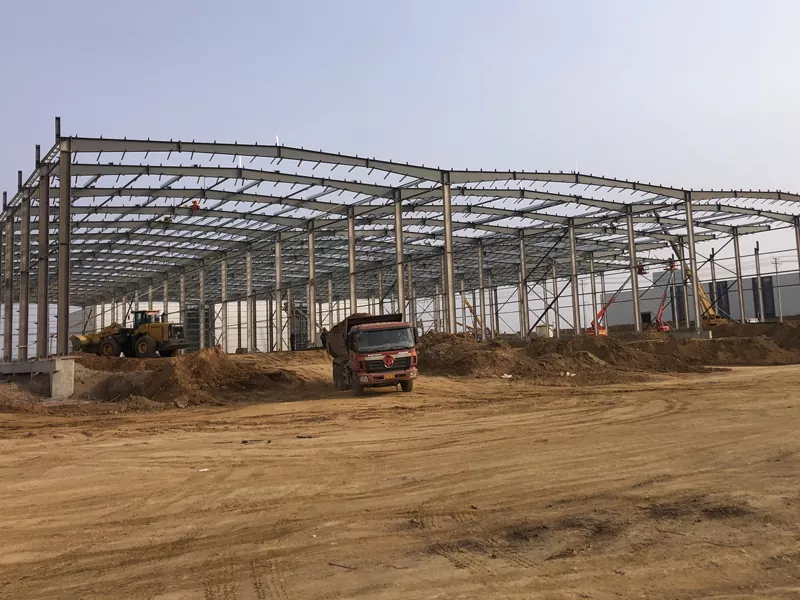
Why Does a Steel Structure Warehouse Provide Greater Structural Efficiency?
One of the first issues I encountered with traditional buildings was load limitation. Concrete structures are heavy, time-consuming to construct, and often restrict large-span design. When I explored steel systems, I discovered how engineered frames could create clear-span spaces without interior columns.
This structural flexibility allows:
- Large open storage layouts for forklifts and automated systems
- Higher clear height to maximize vertical storage capacity
- Customizable bay spacing for specific industrial workflows
- Easy integration of mezzanines and crane systems
In a Steel Structure Warehouse, the load-bearing system relies on high-strength steel components that are precision-fabricated. This means structural accuracy improves while reducing material waste. I also found that the lighter self-weight reduces foundation costs significantly.
Can Faster Construction Really Reduce Overall Investment Risk?
Time is capital. Delays in facility completion can disrupt supply chains, postpone production schedules, and increase financing costs. One of the most practical benefits I observed with a Steel Structure Warehouse is shortened construction cycles.
Because steel components are prefabricated and delivered ready for assembly, on-site construction becomes more predictable. Weather interruptions have less impact compared to cast-in-place concrete systems. In my projects, this translated into faster commissioning and earlier revenue generation.
| Comparison Factor | Steel Structure Warehouse | Traditional Concrete Building |
| Construction Speed | Fast prefabricated assembly | Long curing and on-site forming process |
| Foundation Requirement | Lighter structural load | Heavier load, larger foundation |
| Expansion Flexibility | Modular and extendable | Complex structural modification |
| Long-Term Maintenance | Anti-corrosion treatment available | Cracking and structural aging risk |
From a financial planning perspective, reduced construction duration lowers labor costs and shortens capital lock-in periods. That makes a Steel Structure Warehouse particularly attractive for growing enterprises that need agility.
How Does Design Flexibility Support Future Business Growth?
When I evaluate any warehouse project, I do not just think about today’s storage needs. I ask whether the structure can adapt five or ten years later. A Steel Structure Warehouse is designed with modular expansion in mind.
I can extend length by adding additional bays. I can adjust internal partitions without compromising structural integrity. Even roof systems can be engineered to support solar panel installations or skylight systems for energy efficiency.
This adaptability solves a common pain point I often see in industrial real estate: outgrowing facilities too quickly. Instead of relocating entirely, I can scale strategically.
Is Durability a Concern in Harsh Environmental Conditions?
Many business owners worry that steel might corrode or weaken over time. I had the same concern until I studied protective treatment systems used in modern Steel Structure Warehouse engineering. Advanced surface treatments such as galvanization, epoxy coatings, and fire-resistant paints significantly improve performance in humid, coastal, or industrial environments.
For regions prone to seismic activity or high wind loads, steel frames often perform better due to their ductility and load distribution characteristics. In fact, properly engineered steel structures can meet strict international building codes for wind resistance and earthquake performance.
This reliability is particularly important for:
- Logistics centers in coastal areas
- Manufacturing facilities in seismic zones
- Agricultural storage exposed to humidity fluctuations
- Cold storage requiring insulated panel systems
When I weigh lifecycle costs rather than just upfront price, durability becomes a decisive factor.
Can Energy Efficiency Be Integrated Into a Steel Structure Warehouse?
Energy consumption directly affects operating costs. I always look for ways to optimize thermal performance and lighting efficiency. A Steel Structure Warehouse can be combined with insulated sandwich panels, natural ventilation systems, and daylighting designs.
Roof and wall panels with proper insulation values help maintain stable internal temperatures. Skylights reduce daytime electricity usage. Ventilation louvers and ridge ventilators improve airflow without excessive mechanical energy consumption.
Additionally, steel roofing systems can support photovoltaic installations, allowing me to offset energy expenses through solar generation.
Why Do Global Businesses Choose Engineered Steel Over Conventional Methods?
After reviewing multiple case studies and working with experienced manufacturers, I concluded that the appeal of a Steel Structure Warehouse lies in measurable performance, not trend-based marketing.
Key decision factors include:
- Predictable project budgeting
- Scalable design capacity
- Reduced long-term maintenance costs
- High structural safety standards
- Compatibility with automation systems
When companies like Qingdao Eihe Steel Structure Group Co., Ltd. refine their fabrication technology and global supply capabilities, it becomes easier for international buyers to access customized engineering solutions without compromising quality or compliance.
Are You Ready to Upgrade Your Warehouse Strategy?
If you are planning to build or expand industrial storage facilities, I strongly recommend evaluating how a Steel Structure Warehouse can align with your operational goals. From structural efficiency and construction speed to long-term durability and energy optimization, the advantages are practical and measurable.
Every project has unique requirements, and the right structural partner can tailor solutions to meet specific load, climate, and space conditions. If you want to explore customized design options or receive a detailed project proposal, please contact us today. Let us discuss how a modern Steel Structure Warehouse can support your next stage of growth.