
What a Warning Projector Factory Can Teach You About Reliable Safety Displays
2026-11-21
Most people never set foot in a warning projector factory, and that is exactly why so many safety displays underdeliver. Behind the assembly line are decisions about optics, thermal management, and fail-safe engineering that determine whether a warning cuts through noise or disappears when it matters most. TNT has spent years turning those factory-floor lessons into displays trusted in high-stakes environments. Here is what that process reveals about choosing equipment you can count on.
Where a Warning Light Earns Its Keep Before Installation
A warning light usually starts proving itself long before it gets bolted to a pole or wired into a control cabinet. On many sites, the first job is temporary: it gets clamped to a service truck, hung on a fence, or placed beside a half-finished gate. That early placement matters because the risk is highest when the permanent warning system isn't running yet—barriers are still down, cable trays are open, and people are moving through the area in low light. A light that works on its own, without waiting for the full electrical hookup, gives crews a visible edge during the messiest part of the job.
Some of the clearest examples show up before a single mounting bracket is installed. A parking garage being resurfaced may have residents and work vehicles sharing the same ramp while conduit is still exposed. A road crew closing a lane after dark may set out cones but not yet have the arrow board powered. In those moments, a light held by a magnetic base or heavy-duty zip ties becomes the first clear signal to slow down. It doesn't need to be part of a synchronized network yet; it just needs to stay bright through rain, vibration, and hours of neglect.
The pre-installation phase also exposes which units are worth keeping. During loop testing, sensor alignment, or battery backup checks, a warning light that runs independently lets a technician see whether the flash pattern is actually visible from the approach angle. If it can hold a steady rhythm before the main panel takes over, it's far more likely to be trusted once the system goes live. That early performance is what separates a light that gets relied on from one that simply gets mounted and forgotten.
Optics, Heat, and the Quiet Fight Against Fading
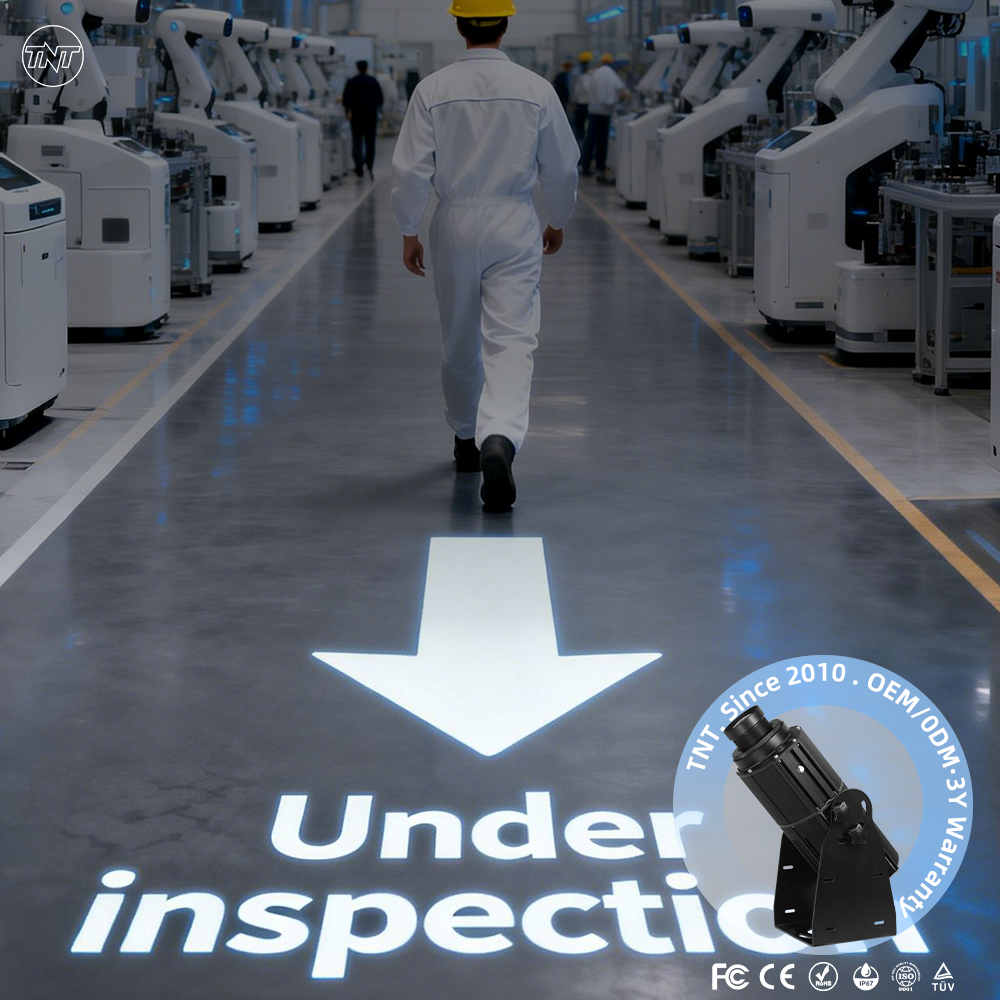
Fading is rarely a single event. It starts when photons nudge chromophores into unstable excited states, while heat quietly lowers the activation energy for oxidation. In optical systems, the same light path that makes an image vivid also carries the energy that will eventually mute it.
Blocking the most aggressive wavelengths helps, but thermal load accumulates in places spectral filters cannot reach. A backlit film or printed surface can pass short-term tests and still lose saturation after months of ordinary use, because small temperature cycles keep reopening microcracks in the protective layer.
A quieter design philosophy treats fading as a rate to be managed rather than an enemy to be eliminated. That means choosing pigments with narrower absorption bands, pairing them with binders that spread heat more evenly, and accepting that longevity is not about stopping change altogether but making it slow enough to go unnoticed.
Factory Dust Has a Vote in Lens Design
In the cleanroom assembly area, a speck of factory dust rarely announces itself; it simply lands on an inner element and waits for a strong light source to turn it into a flare or a faint loss of contrast. Lens designers have learned to treat that dust as a quiet stakeholder. They adjust air gaps between rear elements and the sensor so a particle sits far enough from the focal plane to blur into nothing, and they place cemented groups where contamination would otherwise settle on exposed surfaces.
Coatings play a role too. Some anti-static top layers are chosen less for optical performance than for their reluctance to hold fine particles, while internal barrels use baffles and flocking that trap dust before it reaches glass. Even mechanical choices, such as the position of zoom helicoids or the shape of an inner hood, get revised because a technician with an air blower still needs a clear route to the offending element during service.
The result is that a lens drawing is never only about MTF charts and ray fans. It includes tolerance for the inevitable: a tiny mote that passes through assembly, drifts during a zoom cycle, or appears after months of use. By giving factory dust a vote early, designers keep it from having a visible say in the final photograph.
Calibration Routines That Catch Failures Before They Leave the Floor
A calibration routine earns its place only when it catches drift before a bad unit reaches the next station. On our floor, each shift starts with a reference standard run through every gauge that feeds a critical dimension. If a bore gauge reads the standard pin 0.0004 inch off, the line pauses, the tool gets tagged, and the shift lead checks the last three parts. That pause costs minutes; a missed drift can cost a batch.
The routine is tied to tool serial numbers, not just station names. A torque wrench calibrated Tuesday night and a vision system checked Wednesday morning each carry their own short history. When a value falls outside the control band, the software blocks the next cycle and prints the last calibration record. Operators do not have to remember what “should” feel right; the equipment refuses to run blind.
We also watch the shape of the calibration curve, not just the pass/fail result. A sensor that drifts toward the upper limit three checks in a row gets pulled even if it still passes. That kind of trend review happens weekly at the maintenance board, with the data pulled straight from the line. Failures still happen, but fewer of them leave the floor wearing a customer’s name.
Why Consistent Brightness Matters More Than Peak Brightness
Peak brightness looks great in a dark demo room, but it rarely tells you what a display feels like after an hour of use. What actually shapes the experience is how steadily the panel holds its luminance across different window sizes and over time. A screen that can hit a high number for a tiny highlight yet dims the rest of the image forces your eyes to constantly adapt, which is more tiring than a slightly lower but stable output.
That kind of fluctuation often comes from aggressive automatic brightness limiting. A bright sky or a white document may look brilliant for a few seconds, then quietly lose intensity as the panel protects itself from heat and power draw. The result is a drifting image that undermines contrast and makes colors feel uneven, even if the spec sheet promises impressive numbers. Consistency keeps the relationship between shadows and highlights intact, so scenes hold their intended depth instead of shifting under load.
In real rooms with daylight or overhead lighting, a stable 400 or 500 nits of full-screen brightness can be far more usable than 1,500 nits that lasts only a moment on a small patch. Sustained output keeps text readable, skin tones natural, and motion smooth without the distracting rise and fall that draws attention away from what you are watching or playing. When every frame gets the same light level, the display disappears and the content stays in focus.
Maintenance Histories Tell the Truth About Durability
A clean exterior can be borrowed, but a maintenance log is earned. When you flip through years of oil changes, belt replacements, and brake inspections, the gaps become obvious. A machine that was actually cared for doesn't need a fresh coat of paint to prove it; the dates and mileage on the records do the talking.
What often gets overlooked is the pattern behind the entries. Repeated fixes to the same seal or recurring electrical faults suggest a deeper design weakness or rough daily use, not just normal wear. Two identical models can look the same on a showroom floor, but one may have needed constant attention by 40,000 miles while the other simply asked for routine fluids and filters.
Durability is rarely about surviving one dramatic event. It shows up in the quiet notes left by previous owners and workshops: an alignment checked each spring, a cooling system flushed before summer, a leak addressed the week it appeared. Those small, recorded decisions are the honest measure of how long something will keep working when the shine is gone.
FAQ
Most failures don't show up in a quick power-on check. A factory that builds these units for harsh environments runs them through temperature cycling, vibration, and power dropouts, and it watches for color shifts or flicker that only appear after hours of stress.
If the center of a projected warning is bright but the edges fade, a worker may only read part of the message. During production, each unit needs to be measured at multiple points across the projected area, not just at the center.
Heat slowly warps optical parts and accelerates LED aging. Factories that care about reliability use thermal imaging to find hot spots and redesign airflow or heat sinks so the warning stays sharp over years of continuous use.
Running a driver or power supply at its maximum rating may work on day one, but it leaves no margin. Factories often specify parts at a lower load or add redundant circuits, so a single weak component doesn't kill the whole warning.
Seals and gaskets are much easier to verify in stages. If moisture or dust enters an enclosure during assembly, it may not cause an immediate fault, but it can corrode contacts and dull the projected image months later.
LED bins, driver tolerances, and lens coatings vary between batches. A factory that checks these parts before they reach the line can reject a batch that would otherwise produce warnings with slightly different colors or intensity.
It should include power recovery, loss of signal, and long-duration runs to catch frozen frames or missing default warnings. Those edge cases are exactly what turn a small glitch into an unsafe silence.
Conclusion
A warning projector factory begins earning trust long before a unit reaches its mounting bracket. On the pre-installation bench, technicians check beam geometry, color shift, and switching response under load, because a display that passes a quick visual test can still mislead an operator at a distance. The real work continues inside the optics. Heat from a high-output source slowly degrades lenses and filters, so material selection and airflow are treated as part of the safety function. Factory floor dust is given a vote too: lens housings are shaped and sealed so fine particles do not settle across the focal plane and dim the projected symbol. Together these choices keep the warning legible when a forklift passes, a vent kicks on, or ambient light changes without notice.
Stable brightness tells you more than peak brightness. A unit that flashes intensely for a few minutes can still fail later in a shift if drivers run hot or the panel dims unevenly. Calibration rigs on the line catch that early by measuring output at multiple points and after thermal soak, not just at switch-on. Once units are in the field, maintenance histories become the honest audit. They show whether seals crack, emitters drift, or lenses haze after months of vibration and temperature swings. A reliable safety display is less about a single impressive spec and more about repeating the same clear, readable output year after year.
Contact Us
Contact Person: TNT SALE
Email: [email protected]
Tel/WhatsApp: 8613544277910
Website: https://www.tntprojector.com/