
Vibratory Concrete Reclaimer: The Ultimate Solution for Efficient Recycling
2026-08-06
In the construction world, concrete waste is a costly headache that few address efficiently. Traditional methods are slow, messy, and far from sustainable. Enter the vibratory concrete reclaimer—a smarter way to recover aggregates and water while slashing downtime. If you’re looking to boost recycling rates without compromising on output, this technology changes the game. And when it comes to reliability, Sinou stands at the forefront. Let’s dive into why this might be the recycling breakthrough your operation needs.
Rethinking Concrete Waste: Beyond the Crusher
Most discussions around concrete waste stop at demolition and crushing. The debris gets trucked away, run through a jaw crusher, and emerges as recycled aggregate for road base or fill. This narrow view misses the bigger story. Concrete is more than inert rubble—it's a material with a complex chemical history, embedded carbon, and untapped potential. If we only see it as something to be broken down, we miss what's actually possible when we start treating it as a resource still in play.
Look closer at a pile of crushed concrete and you'll start seeing layered opportunities. The cement paste clinging to those aggregates still contains reactive compounds that can be reawakened through carbonation or thermal treatment. Fines that typically end up as dust can be repurposed into soil stabilizers or supplementary cementitious materials. There's even experimental work turning demolition concrete into a medium for storing carbon dioxide, effectively flipping waste into a climate solution. None of this happens if we keep feeding the crusher without asking what else the material might become.
The real shift isn't technical—it's perceptual. Once we recognize that concrete waste is a stock of refined minerals and embodied energy, not just a disposal problem, the conversation changes. Design for disassembly, selective deconstruction, and material passports start to make economic sense. The crusher remains a tool, but it's no longer the default endpoint. It becomes just one step in a longer chain of use, reuse, and regeneration.
How Vibratory Action Transforms Separation
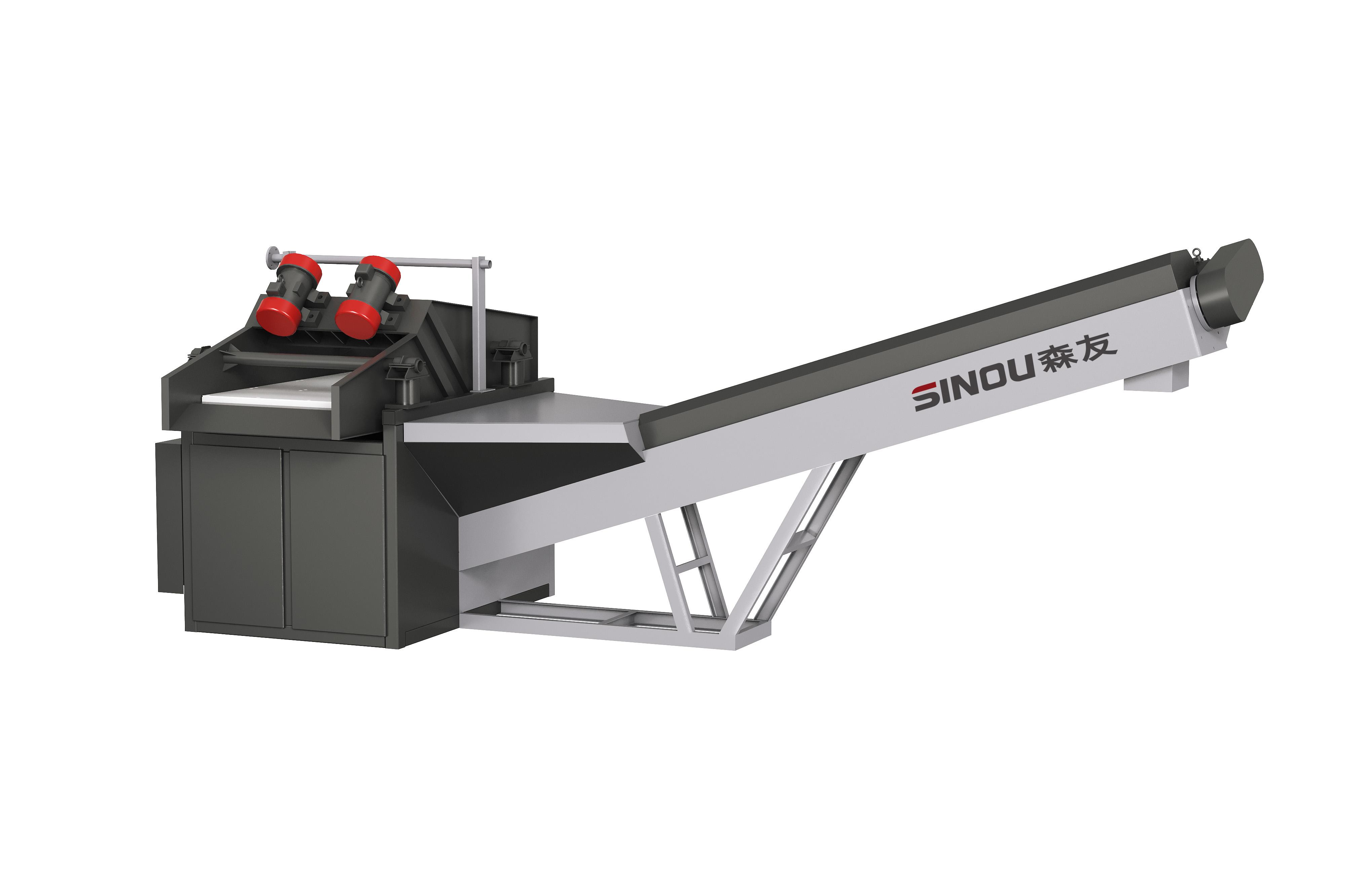
At first glance, separation seems like a straightforward task—shake a mixture, and different particles find their own path. But vibratory action does more than merely nudge materials apart. It creates a dynamic environment where each particle responds to rapid, repeated impulses according to its size, shape, and density. This isn't random chaos; it's a controlled rhythm that turns a tangled mess into distinct layers, with finer bits migrating downward while larger ones ride the surface. The motion isn't just about force—it's about timing, amplitude, and the way energy moves through the material bed.
What sets vibratory separation apart is how it simultaneously stratifies and transports. While the vibration loosens the material, it also imparts a directional push, moving the now-organized layers toward discharge points. The interaction between the machine's deck angle and the vibratory throw fine-tunes this dual action. Too much throw and particles become airborne, losing the gentle sifting that maintains order; too little, and the bed stays static and blind. It's this balance that allows vibratory separators to handle everything from sticky powders to abrasive aggregates without clogging or excessive wear, making them indispensable in industries where purity and throughput matter equally.
The transformation isn't limited to dry materials. In wet applications, vibratory action introduces a fluidized bed where slurry behaves less like a thick paste and more like a flowing, self-cleaning stream. The vibration breaks surface tension, releases trapped liquids, and accelerates drainage, often achieving separation efficiencies that static screens can't match. On a microscopic level, it's about overcoming interparticle forces; on a practical level, it's about turning what used to be a slow, messy batch process into a continuous, high-capacity operation. That's the hidden power of vibratory motion—it doesn't just separate, it redefines the entire material-handling workflow.
Recapturing Aggregate Value with Precision
To truly recapture aggregate value, businesses must move beyond broad-stroke strategies and embrace granular data analysis. It’s not enough to know that a segment of customers is profitable; you need to pinpoint exactly which behaviors, channels, or product bundles unlock the most value, then tailor your approach accordingly.
Precision here means integrating real-time insights with contextual awareness. For instance, a customer’s browsing pattern at a specific time of day might reveal a willingness to upgrade that static reports miss. By acting on these nuanced signals, companies can reclaim value that otherwise slips through the cracks.
Ultimately, recapturing aggregate value with precision is about stitching together fragmented data points into a cohesive narrative. It demands that teams treat every interaction as a clue, refining their methods continuously so that even marginal gains accumulate into significant returns over time.
Minimizing Water Usage, Maximizing Output
Water is a precious resource, and every drop counts in our operations. We’ve redesigned our processes to recycle and reuse water multiple times before it’s treated and released. Through closed-loop systems, we capture runoff from cooling and cleaning, filter it, and send it back into production cycles. This approach hasn’t just slashed our freshwater intake—it’s also eased the burden on local water infrastructure, allowing us to maintain high output without straining community supplies.
Beyond internal recycling, we’re leveraging precision technologies to match water use exactly to product needs. Automated sensors monitor moisture levels in real time, adjusting flow rates instantly to prevent waste. In areas prone to scarcity, we’ve introduced dry-processing methods that eliminate water from certain stages entirely, proving that cutting consumption doesn’t mean sacrificing quality or speed. The result is a leaner, smarter system where every liter serves a clear purpose.
Collaboration has been key to scaling these efforts. We partner with local experts to tap into alternative sources like treated municipal wastewater or harvested rain, blending them into our supply without compromising product integrity. By treating water as a shared asset rather than a limitless input, we’re not only boosting efficiency but also building resilience against future droughts. It’s a continuous journey—constantly fine-tuning the balance between doing more with less.
The Silent Efficiency of Low-Energy Processing
Low-energy processing operates in the background, often unnoticed, yet it delivers remarkable efficiency without the fanfare of power-hungry systems. This quiet approach thrives on minimalist design—paring down operations to essentials, cutting out wasteful cycles, and leaning on hardware that sips rather than gulps electricity. The result isn’t just a lower power bill; it’s a smoother, more reliable flow of data that sidesteps the heat and noise that plague high-performance setups.
What makes this silent workhorse so effective is its ability to optimize without compromise. Instead of brute-forcing tasks, low-energy processors leverage clever architectures and adaptive software that scales effort to demand. Think of edge devices that process sensor data locally, only waking key components when truly needed, or microcontrollers that maintain near-zero idle draw while still catching every critical event. The elegance lies in how little is wasted—every milliwatt has a purpose.
The broader impact is equally profound. Systems built around low-energy principles can be deployed in places where power is scarce or unreliable, from remote environmental monitors to wearables that last months on a single charge. There’s a humility to this technology; it doesn’t chase benchmarks or flashy numbers. Instead, it focuses on getting the job done with such subtlety that users rarely think about the clever engineering underneath—they just notice that things work longer, cooler, and with fewer interruptions.
Built for the Long Haul: Durability in Design
We looked at how materials behave over years of daily use—how they resist scratches, shrug off moisture, and handle temperature swings without warping. Every joint and seam was tested beyond standard cycles, because the goal isn't just surviving a few hectic months; it's staying steady and reliable long after the warranty card has been forgotten in a drawer.
The construction methods focus on what actually keeps things intact: reinforced stress points, chemically bonded edges that won't peel, and finishes that don't just look good on day one but continue to resist fading and dulling. Small details, like hidden drainage channels and gaskets that maintain their seal, mean that even in high-wear environments, maintenance stays minimal and the form stays true to the original intent.
This approach extends beyond hardware to the overall feel of an object that ages gracefully. Instead of planned obsolescence, there's a deliberate choice to design for patina—where signs of use add character rather than detract. It's a quiet confidence that emerges when something doesn't need to be replaced, just appreciated.
FAQ
A vibratory concrete reclaimer uses high-frequency vibration to separate sand and aggregate from waste concrete slurry. Unlike traditional screw or drum reclaimers, it relies on vibration to sift materials, which leads to faster processing and less wear on internal components.
The intense vibration creates a fluidized bed of material, allowing the fine particles to pass through the screen quickly while the larger aggregates move along the deck. This results in a much higher throughput and cleaner separation, often reclaiming up to 99% of the solid materials without the need for excessive water.
It handles returned concrete, truck washout, and leftover from batching plants with ease. It efficiently separates sand, gravel, and rock while removing cement fines from the water, allowing both the aggregates and water to be reused in new batches.
Not at all. The simplicity of the vibratory design means fewer moving parts and no internal screws or bearings that are prone to wear. Routine maintenance mostly involves checking screen panels and vibration motors, which can be done quickly without specialized training.
Absolutely. By recycling both aggregate and water on-site, it drastically cuts down on waste that would otherwise end up in settling ponds or landfills. It also reduces the need for fresh water and virgin materials, directly lowering the plant’s carbon footprint and meeting stricter environmental regulations.
Most operations see a full payback within one to two years. The savings come from reduced material purchasing costs, lower waste disposal fees, and the ability to reuse process water. In high-volume plants, the reclaimer can pay for itself even faster thanks to the daily savings on sand and aggregate.
Conclusion
The vibratory concrete reclaimer redefines what it means to handle leftover concrete, moving far beyond the brute force of traditional crushers. Instead of merely pulverizing material, its vibratory action orchestrates a gentle yet relentless separation—water, cement paste, and aggregate peel away in distinct layers, preserving the integrity of every grain. This precision unlocks the true value embedded in what was once considered waste, turning sludge into clean, graded sand and stone that can be fed straight back into production. It’s a quiet transformation, both in process and in ecology: water usage drops dramatically as the system recirculates up to 90% of what would otherwise be lost, while energy consumption stays remarkably low thanks to the absence of high-speed rotating parts.
Beyond efficiency, the reclaimer is engineered for endurance. Heavy-duty springs, abrasion-resistant screens, and a frame that shrugs off the daily grind mean years of trouble-free operation with minimal maintenance. There’s no shouting over diesel engines, no clouds of dust—just a steady hum that signals a cleaner balance sheet and a lighter footprint. For producers who want to stop treating leftover concrete as a disposal headache and start seeing it as a resource stream, this machine isn’t just an upgrade. It’s a fundamental shift in process thinking, where every gallon of water and every ton of aggregate is accounted for, reused, and returned to the cycle with hardly a whisper of waste.
Contact Us
Contact Person: HaiYan
Email: [email protected]
Tel/WhatsApp: +86 18957325588
Website: https://www.senyoubeton.com/