Top 10 Swim Fins That Actually Improve Your Kick
2026-11-22
Most swimmers assume any pair of fins will help, but the wrong shape can quietly wreck your kick instead of fixing it. We tested dozens of swim fins and kept only the ten that genuinely improve ankle flex, timing, and body position. A few picks from OCORT stood out for turning a shorter blade into serious propulsion. Here are the top 10 swim fins that actually improve your kick—and why your current pair may be holding you back.
The Real Reason Most Kicks Stay Weak Despite Fancy Fins
Most people assume a stiffer, longer, or more expensive fin will finally give their kick some authority. The legs still flail, the knees still bend too much, and the fins mostly slice sideways through the water. The problem is rarely the blade on the end of your leg. It is the chain above it: tight ankles, a lazy hip hinge, and a core that never braces against the movement. A fancy fin can amplify force, but only if the foot is already moving water in the right direction. Without that, it just makes the mess louder.
The weak link usually sits at the ankle and hip. If the ankle does not point naturally, the fin acts like a broken rudder, spilling pressure off the top and bottom instead of driving it backward. If the kick starts from the knee, the leg bends and recovers in a way that feels busy but produces very little thrust. Strong kicks come from the back of the hip and glute, with the knee staying almost straight, the ankle loose, and the motion shaped more like a whip than a bicycle pedal. That is a coordination problem, not a gear problem.
Until that pattern changes, adding carbon or fiberglass only makes the inefficiency more obvious. The better move is to slow down, shorten the kick, and rebuild it from the hip while letting the ankle relax under load. Fins should finish the movement, not start it.
Stiff Blades Hide Mistakes Instead of Fixing Them
A stiff blade doesn't bend to compensate for small errors in angle or pressure. It forces every mistake back into your hand. When the edge catches, judders, or skips across the material, the natural reaction is to adjust your grip or slow down. What rarely gets addressed is the blade itself. A more flexible edge would ride through those micro-corrections without drama. Instead, the tool keeps punishing you for faults it was never willing to absorb.
Over time, this creates a false picture of your own skill. You start believing that every rough pass is a personal failure. In reality, many of those failures are just the tool refusing to cooperate. A forgiving blade would let you feel the true shape of the mistake, not just the vibration of resistance. Then you could correct the motion once and move on. With a stiff blade, you end up correcting the same mistake ten times, never sure if it's you or the equipment.
The result is a kind of quiet stagnation. You avoid the cuts that expose the problem. You stay on the safe side of the material, doing less than you're capable of. The blade never gets the chance to teach you anything new because it's too busy hiding the lesson behind noise and friction. When a tool finally lets you feel what's actually happening at the edge, that's when the mistakes stop repeating.
How to Spot a Fin That Matches Your Kick Instead of Fighting It
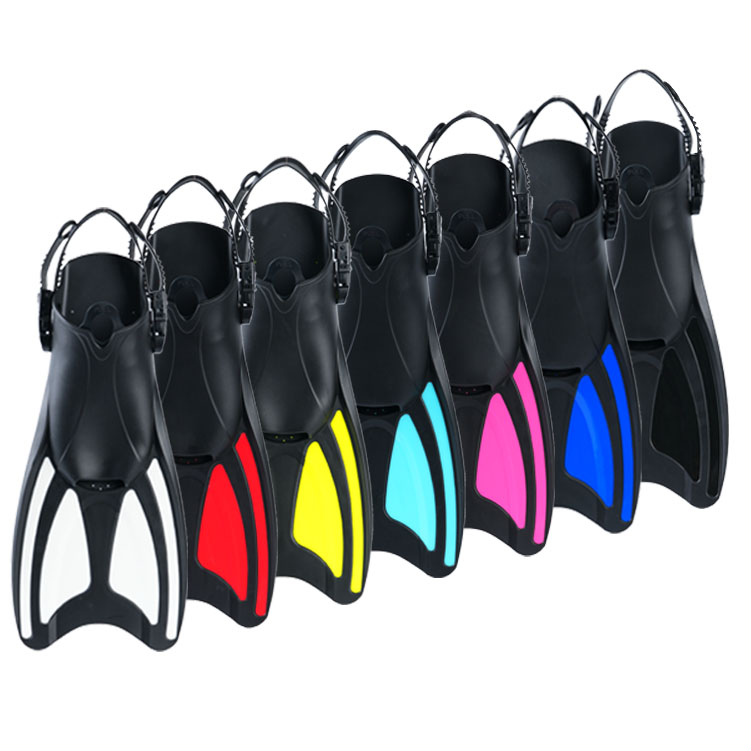
A fin that matches your kick tends to feel like it is not doing much on the first lap, and that is exactly the point. Instead of forcing your ankles into a rigid arc, it follows the motion you already have. Short, fast kicks usually pair better with a shorter blade and a softer flex, while a slower, hip-driven stroke often wakes up with a longer blade that holds water a little longer. If you are fighting the fin to keep your rhythm, the blade is likely doing the talking instead of your legs.
Watch what happens when you stop concentrating on speed. A mismatched fin shows up as a break in your tempo, knees dropping, or feet spreading wider than they do barefoot. The right one keeps your cadence steady and just makes each kick feel a touch longer, not heavier. Try a few sets with relaxed ankles and let the fin fall into the background. That quiet feeling is usually a better sign than any chart on the packaging.
Short Blades Push Your Ankles to Do Their Job
The design behind short blades isn't about making things easier for your ankles—it's about making them participate. When the edge stops halfway, your lower legs have to fill in the rest of the movement, finding stability through a range they'd normally skip. It feels awkward at first, like a conversation where you keep missing your cue.
Over time, that awkwardness turns into a kind of quiet strength. Your ankles start reading the surface before you even think about it, adjusting without permission. You notice it most on uneven ground or when you catch yourself mid-stride, held up by joints that used to just go along for the ride.
What short blades really do is strip away the hiding place. They refuse to let the bigger muscles borrow all the credit, leaving the smaller ones with no choice but to speak up. That's where the real work happens—not in the obvious push, but in every tiny correction your ankles have to make just to keep you honest.
A 10-Minute Kick Test That Exposes the Wrong Fin
Most swimmers pick fins based on what the store has in stock or what someone else wore in a workout. That approach works until you hit a wall in kick sets or notice your ankles feel tighter after every session. A ten-minute test can change that. It measures how your legs respond to load, not just how fast you move across the pool. The goal is to uncover whether your current fin is fighting your natural kick pattern instead of supporting it.
Start with any pair of medium-length fins. Swim four easy laps of kick on your side, one arm extended, focusing only on the downbeat. Count how many kicks you need to cross the pool. Rest one minute, then repeat the same distance with a short-blade fin. If your kick count stays nearly identical but your ankles feel less strain, your original fin is too stiff for how your body generates propulsion. If the count jumps up sharply, you may be relying on the fin's snap rather than your own hip drive.
The last part of the test is about recovery. After the two sets, float on your back and flutter kick gently for two minutes. Any burning in the front of your ankles or deep cramping in your calves means the fin blade loads your foot at an angle your joints don't like. That discomfort is the real signal. A fin can feel powerful for the first five minutes and still be the wrong tool for a full workout. Ten minutes of mixed kicking reveals that difference faster than any brand comparison.
When Better Fins Should Stay in Your Swim Bag
Fins have a way of making every swim feel like a good swim, which is precisely the problem. When the set is built around raw turnover, short sprints, or finding your natural rhythm, they tend to soften the feedback you need most. Leave them in the bag and let your stroke answer for itself.
Easy recovery days are another time to skip the extra propulsion. If the aim is to unwind, reset your breathing, and pay attention to how your body actually moves through the water, fins just add a flattering speed boost that can hide fatigue or sloppy timing. They work better as a targeted tool, not a default layer.
There is also a practical side: nagging ankle or knee pain rarely improves under the extra load of a fin. Some swimmers push through because the fin feels supportive at first, but the torque has to go somewhere. On those days, a lighter kick or a pull set often does more good than forcing a range of motion that is not there yet.
FAQ
A fin that gives a little extra surface area without turning your legs into flotation devices forces your ankles to extend and your hips to drive the motion. Short and medium blade designs do this best because they add enough resistance to load the muscles but not so much that you stop paying attention to where the kick starts.
For refining freestyle and building a useful kick, short training fins usually win. Long fins make the movement slower and can encourage a huge, inefficient range of motion. Short blades keep your turnover closer to normal swimming and punish lazy footwork instead of hiding it.
Stiffer fins demand more force per kick, so they can build raw leg power quickly, but they also tire you out and may stress the ankles. Softer fins reward a steady, continuous kick and are easier to use for longer sets. The faster route for most swimmers is actually a medium stiffness used consistently rather than a very stiff fin used once a week.
Keep them to roughly a quarter of your kick volume or about 400 to 800 yards in a typical session. That gives enough overload to build strength while leaving most of the kicking unassisted, so your legs still learn to hold pace without the extra blade.
Soft silicone or rubber short fins with a slightly open heel tend to be the most forgiving. Avoid long, stiff plastic blades until ankle flexibility improves, because they increase the lever length and can turn a tight kick into an achy one.
They can, but only if you slow down and use them for short drill work. The added resistance makes it easier to feel when the knee bends too much. Using a board and doing short fin-assisted leg drive from the hip can help replace that bicycle-style movement with a longer, hip-driven kick.
Not usually. A mid-range short training fin made from decent rubber will do the job. The expensive models often come down to foot pocket comfort and small differences in stiffness, which matter more when you are logging heavy yardage several times a week.
Conclusion
Most swimmers assume a stiffer, longer blade automatically means more propulsion, but that is exactly why weak kicks stay weak. The list argues that rigid fins mask poor ankle flexibility and timing by dragging the leg through a movement pattern the body has not earned. Instead of chasing the most aggressive-looking fin, the real upgrade comes from matching blade stiffness and length to how your ankles actually move. Short blades get attention because they demand a quick, compact flutter rather than letting the fin do all the work. When the ankle has to snap through the end of each kick, the pattern improves in a way that carries over to barefoot swimming. The roundup also stresses that fancy features mean little until you can identify whether a fin is fighting your natural rhythm.
A practical ten-minute test helps with that: swim a set without fins, then repeat the same set with the fin, and compare stroke count, kick tempo, and lower-back tension. If a fin forces a slower, choppier rhythm or makes you bend at the knees, it is hiding a flaw rather than correcting it. Several top picks are deliberately flexible in the blade and light on the foot so feedback stays honest. There is also a useful reminder that the best fin is not always on your feet. For kick sets focused on body position or endurance, leaving the fins in the bag can be smarter than wearing a pair that rewards lazy mechanics. The core point is to choose a fin that exposes weak points early, not one that makes you feel faster while reinforcing the same bad habits.
Contact Us
Contact Person: Wendy
Email: [email protected]
Tel/WhatsApp: 86 18807398467
Website: https://www.zlfswim.com