
Top 10 Plastic Sheet Machines for Reliable Production
2026-11-02
Plastic sheet production leaves almost no room for error. A machine that drifts out of spec by a few microns or shuts down for unplanned maintenance can wipe out a week’s margin. So instead of another generic roundup, we focused on the machines that actually earn their place on the floor—including standout options from COMRISE. Here are the top 10 plastic sheet machines for reliable production, chosen for consistent gauge control, thermal stability, and uptime records that hold up when demand spikes.
Why a Heavier Frame Often Means Fewer Headaches Later
Many people chase ultralight frames assuming comfort, but over time flimsy materials tend to warp with daily handling. A frame that bends slightly at the temple or bridge throws lens alignment off, forcing your eyes to compensate. That subtle strain can turn into recurring headaches after a few weeks. A slightly heavier acetate or full-metal frame holds its shape better, so the prescription stays exactly where it should.
Heavier frames also put an end to constant fiddling. Lightweight wire or thin plastic often slides down the nose or sits unevenly, and every nudge means the optical center shifts. With a bit of weight, the frame stays planted, and you stop re-adjusting it dozens of times a day. Less movement means less pressure on one side of the nose, which is a common but overlooked headache trigger.
There's also durability. A sturdier frame survives being tossed in a bag, sat on, or dropped. Once a light frame gets a slight bend, it's rarely perfectly realigned at home, so you live with the distortion until an optician fixes it. That period of misalignment is often when tension headaches creep in. Over the long run, a heavier frame saves you those repeat visits and the dull pain that comes with waiting.
The Extruder Barrel Zones You Should Inspect Before Signing Off
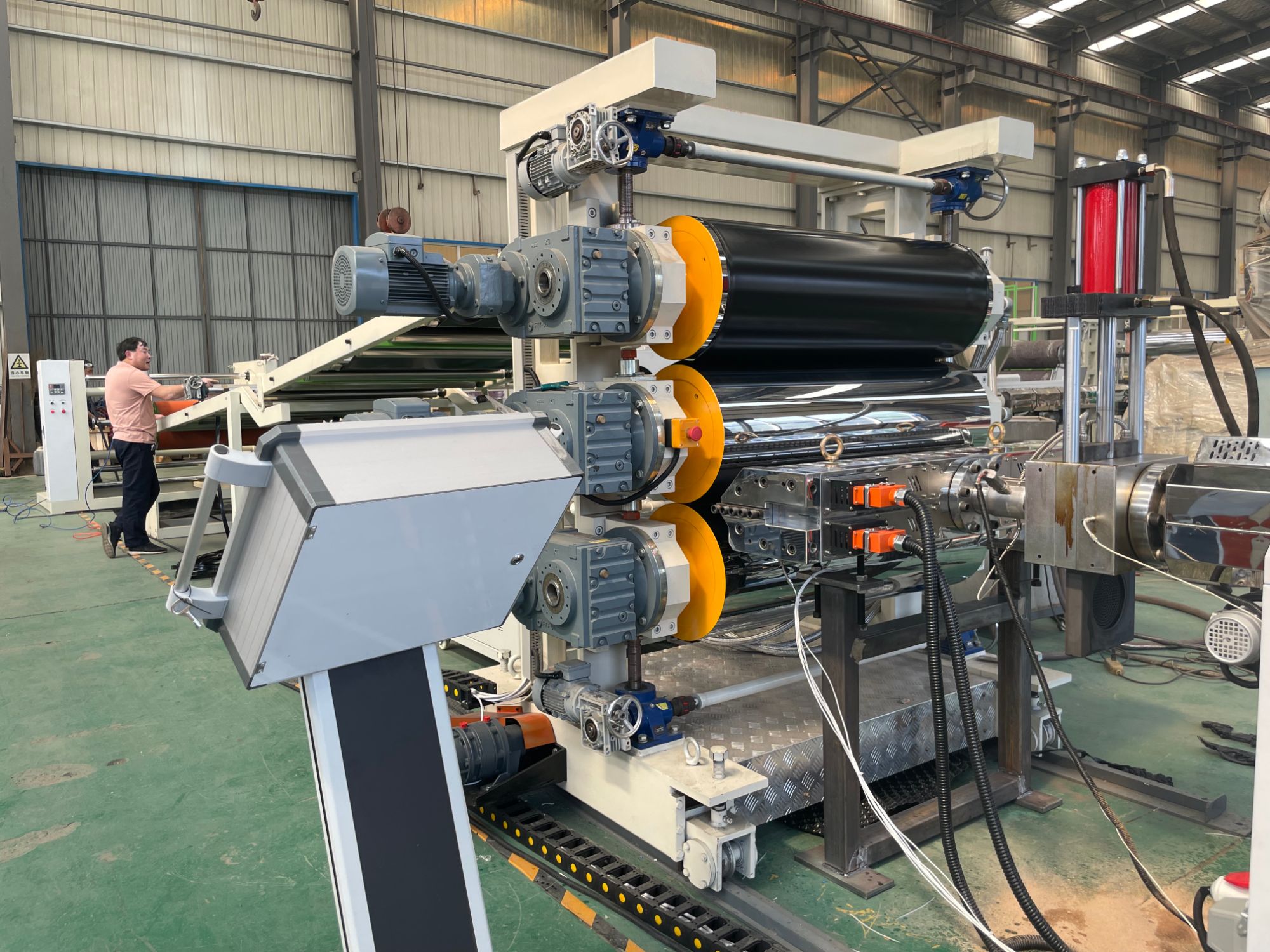
Before you sign off on an extruder barrel, take a hard look at the feed throat area. This zone takes the brunt of cold polymer hitting hot metal, and any scoring or build-up here will quietly throttle your output. Run a fingernail across the bore — if it catches, you’ve got a wear ridge that will only get worse under pressure.
Move down to the compression zone and pay attention to the transition from deep to shallow flights. That’s where degradation and char tend to hide, especially if the barrel has seen frequent material changes or purges. Don’t just eyeball it; use a bore gauge at three points along the zone and compare against the original spec. A few thousandths of an inch can cost you melt quality.
Finally, inspect the metering zone and the downstream end near the breaker plate. Check for galling, uneven wear patterns, and any signs of overheating like bluing. If the barrel has a vent port, make sure it isn’t clogged or worn oval. These details are easy to skip when you’re rushing to sign off, but they’re exactly what separate a reliable run from a midnight call.
Roll Stack Air Knives: Small Part, Big Impact on Clarity
Air knives in a roll stack rarely get much attention. They sit between rollers, aimed at a moving web, and their job sounds simple: blow off excess coating or moisture. Yet the way that narrow curtain of air hits the surface determines whether the final product looks crisp or foggy. If the airflow catches an edge unevenly, mottling appears almost immediately. Operators learn to watch the knife gap more closely than the main coating head because that's where clarity is won or lost.
The mechanism is straightforward but unforgiving. A roll stack air knife creates a high-velocity sheet of air that shears away the top layer of liquid before it can form beads or streaks. Small differences in pressure, angle, or distance across the width of the web translate into visible defects — haze bands, orange peel texture, or subtle thickness variation that shifts light reflection. Getting the knife perfectly parallel to the roll and maintaining a consistent plenum pressure are the everyday tasks that separate sharp, clear output from scrap.
What makes this component interesting is how much leverage it has relative to its size. A six-inch-wide knife can dictate the optical quality of a two-meter-wide film. When production speed changes, the air velocity needs to track precisely or the boundary layer of air entrained with the web starts fighting the knife. Some plants have found that switching to a slotted air delivery design, rather than drilled holes, eliminates the periodic striping that was previously blamed on the coating formulation itself. Small part, yes — but it holds the clarity of the entire line in its hands.
How Modern Drives Keep Line Speed Steady Under Load Changes
Inside a modern drive, the motor is never left guessing. It continuously samples stator current and rotor position, comparing actual speed against the commanded reference thousands of times per second. When a heavier load suddenly engages, the drive detects the resulting drop in shaft speed and responds by injecting a precisely calculated voltage boost before the line speed can visibly sag. This closed-loop correction, often based on field-oriented control, keeps velocity deviations so small that operators rarely notice the transition.
The real trick lies in how the drive models load behavior ahead of time. Rather than waiting for a speed error to appear, many units run a load observer that estimates torque demand from current and acceleration data. When a mechanical clutch engages or a roll diameter changes, the observer anticipates the extra torque requirement and preloads the current regulator. Some drives go further with adaptive gain scheduling, automatically softening the response for high-inertia sections and firming it up for lightweight rollers, so the line neither jerks nor lags.
In multi-motor lines, steady speed is a group effort. Drives exchange real-time data over high-speed fieldbuses, sharing speed references and torque limits instead of working in isolation. If one section hits a sudden resistance spike, adjacent drives instantly pick up or shed load to preserve the overall web tension. This master-slave coordination means a load change at the unwind stand never turns into a wave of speed fluctuations downstream, keeping the entire process flowing at a consistent rate.
What Winding Tension Reveals About the Whole Line’s Health
Winding tension rarely gets the attention it deserves until something snaps or layers start slipping. On a healthy line, that pull stays within a narrow band, and the coil builds with predictable density. When the tension trace starts drifting, spiking, or sagging, it almost always points beyond the winder itself. A sudden upward trend might mean upstream braking is fighting a worn bearing, while a slow decay often shows up before anyone notices a dancer arm losing its range.
Think of the tension reading as a running commentary on every component that touches the material path. Guides, rollers, accumulators, even splice points leave their signature in that signal. A repeating dip every few seconds can trace back to a damaged roll core. A high-frequency chatter often points to a misaligned guide or a drive coupling that has worked loose. The winding station just happens to be where all those small faults converge and become measurable.
Operators who watch tension trends instead of just alarms tend to catch problems while they are still cheap to fix. A slight increase in baseline over a shift, for instance, may reveal a filter clogging or a viscosity change in a tensioning dashpot. Because winding sits near the end of most lines, its tension signal acts like a summary of everything that came before. Keeping that signal clean and recording it properly turns a routine process variable into one of the most useful health indicators on the floor.
Realistic Output Numbers for Sheet Gauges from 0.2 mm to 5 mm
Working with sheet gauges between 0.2 mm and 5 mm means accepting that your daily output isn't a single fixed figure. Thin stock, especially under 0.8 mm, will fly through a punch or laser at impressive linear speeds, but edge quality and thermal distortion often force you to slow down or add secondary flattening steps, which eats into the net count. A shop might hit 250 to 400 parts per hour on 0.5 mm aluminum if nesting is dense, yet that same geometry in 2 mm stainless steel drops to around 60 to 90 parts per hour simply because the feed rate has to come down and pierce times increase.
The middle of the range, from roughly 1 mm to 3 mm, tends to be the most predictable for quoting. These gauges balance handling ease, scrap removal, and cutting speed, so most operators can sustain 70 to 80 percent of the machine's theoretical maximum without too many interruptions. Once you cross into 4 mm and 5 mm sheet, output numbers fall harder than feed-rate charts suggest. Oxygen-assisted cutting on carbon steel at 5 mm might still move at 1.2 to 1.5 meters per minute, but dross formation and heat buildup often require pauses for part checking or tip cleaning, pushing realistic output down to 40 to 55 pieces per shift for moderately complex profiles.
It's also worth remembering that gauge alone doesn't dictate throughput. Machine power, nozzle condition, material grade, and even the ambient temperature in the shop can shift realistic numbers by 15 to 20 percent. A 3 kW fiber laser on 2 mm mild steel might produce 120 brackets per hour on a good day, while the same bracket in 0.6 mm galvanized stock could hit 300, but only if the operator adjusts focal position and assist gas pressure for the coating. For planning purposes, treat the 0.2 to 5 mm range as three distinct zones: fast-but-fragile under 1 mm, steady 1 to 3 mm, and slow-but-doable above 4 mm.
FAQ
Each unit was judged on how consistently it held thickness tolerance, whether the barrel and screw stayed stable across long runs, and how simple it was to source spare parts. Energy draw per kilogram of output also played a role, since a machine that runs hot or wastes melt pressure quickly becomes a cost burden. We gave extra weight to designs that let operators swap screen packs or adjust the die without shutting down the whole line.
Single-screw extruders with a horizontal roll stack still show up most often because they are easier to stabilize and clean between runs. Co-rotating twin-screw setups appear when the line needs to compound fillers or recycled flake directly into the sheet. Vertical roll stacks are less common but are preferred in tight floor spaces, provided the take-off speed is well matched to the extruder output.
A barrier screw with a dedicated melt channel makes a noticeable difference with polyolefins, while PVC sheet lines typically run cooler with a shorter compression zone to avoid degradation. The best performers in the list use modular screws so the same base unit can be reconfigured for different resins without replacing the entire extruder.
A few German and Japanese builders appear repeatedly because their control packages and gearbox tolerances are proven in 24/7 plants. That said, Taiwanese and Chinese manufacturers now occupy several spots, especially for three-layer sheet lines under two meters wide. Brand alone does not guarantee a spot; service network and lead time for rolls and barrels matter just as much.
Daily checks focus on barrel zone temperature deviation and oil temperature in the roll stack drives. Weekly, operators should verify the die lip gap with a feeler gauge and log melt pressure fluctuation. Quarterly, the screen changer seals and breaker plate need replacement, and the roll gaps should be re-zeroed after checking chrome surface runout.
Rarely without changes. PET needs a dedicated drying hopper and a low-shear screw to avoid IV drop, while PP sheet production likes higher barrel temperatures and a wider die gap. PS runs at lower temperatures and benefits from a polished chrome roll with a matte finish option. Top ten machines usually include quick-change adapters for dies and roll finishes, but switching between PET and PP still takes several hours of purging.
The roll stack is where gauge and surface finish are locked in, so top-ranked lines use individually driven rolls with closed-loop gap control. A slight misalignment in the middle roll can create a hard edge bead that tears during winding. Machines with a 45-degree inclined stack tend to give better access for cleaning and faster roll changes compared to vertical stacks.
Most entries in the top ten fall between 400 and 1,200 kilograms per hour for sheet widths from 1,000 to 2,500 millimeters. Smaller lines for thin gauge food packaging start around 250 kilograms per hour, while heavy gauge sheet for automotive parts can exceed 1,500 kilograms per hour if the downstream winder and cutter match the rate.
Conclusion
Selecting among the top plastic sheet machines for reliable production goes beyond brochure specifications. A heavier frame often pays off over time because it dampens vibration that would otherwise show up as thickness variation or premature wear. Before signing off, inspecting extruder barrel zones matters: uneven temperature profiles in the feed, compression, and metering sections can cause surging or gels. Roll stack air knives, though small, dramatically affect sheet clarity by sweeping away condensate and volatiles at the nip. Modern drives also contribute to consistency, holding line speed steady even when load changes from roll build-up or gauge adjustments. These details separate machines that run predictably from ones that demand constant attention.
Winding tension is another diagnostic worth watching. If tension drifts or oscillates as roll diameter grows, it usually signals issues upstream, such as poor speed synchronization, uneven melt output, or inadequate cooling. For realistic output, sheet gauges from 0.2 mm to 5 mm require different expectations: thin sheet can run fast but demands precise melt control, while 5 mm sheet moves slower and needs uniform cooling to avoid warpage. A reliable line balances all these elements without forcing operators to chase settings. The best choices are not necessarily the most expensive, but the ones where frame rigidity, thermal control, air knife placement, drive response, and winding behavior work together under real production loads.
Contact Us
Contact Person: LISA LEE
Email: [email protected]
Tel/WhatsApp: +86 13780696467
Website: https://www.qdpipemachine.com