
Top 10 Direct Expansion Air Handling Units for Efficient Climate Control
2026-10-17
Finding a direct expansion air handling unit that actually holds up in real-world conditions means looking past the glossy cut sheets. This list cuts through the noise with ten units that deliver consistent temperature and humidity control without wasting energy. It’s not a coincidence that shairko appears here—their DX AHUs keep showing up in retrofits where comfort complaints used to be the norm.
The Underrated Role of DX Air Handling Units in Energy Savings
Most facility managers treat DX air handling units as simple workhorses—move air, cool it, push it through ducts. But that mindset misses a quiet opportunity hiding in plain sight. Direct expansion systems, when tuned correctly, can trim energy bills in ways that centralized chilled water setups often struggle to match. The key lies in how precisely a DX unit matches its cooling output to the actual load of a single zone or a small cluster of rooms. No overcooling a whole floor just to satisfy one warm corner. No running massive pumps and chillers at part load for hours on end. That localized control is where the real savings start.
Yet the underrated part isn't just about load matching—it's about the maintenance blind spots that quietly drain efficiency. A slightly low refrigerant charge or a dirty condenser coil forces the compressor to work harder, and because DX units often sit on rooftops or in mechanical closets, these issues go unnoticed for months. In contrast, a centralized plant gets more frequent attention from building engineers. The irony is that small, distributed DX units can deliver better energy performance per ton than a big chiller plant, but only if someone actually checks the basics. Simple steps like cleaning coils, verifying superheat, and checking airflow can cut energy use by ten to fifteen percent without any capital investment.
Beyond maintenance, the design flexibility of DX systems opens doors that many energy models overlook. Instead of forcing one oversized unit to serve a sprawling layout, engineers can deploy multiple smaller DX units that stage on and off based on real demand. That staging avoids the constant cycling losses you see with a single large compressor. Add modern inverter-driven compressors and electronic expansion valves, and the unit can modulate capacity down to a fraction of its peak. This isn't exotic technology—it's available today, yet many projects stick with older fixed-speed units out of habit. The underrated role of DX air handling units in energy savings isn't about replacing every chiller plant. It's about recognizing that, in the right applications, these units quietly outperform expectations—and often do it with less complexity and lower first cost.
What to Look for in a High-Performance DX Air Handling Unit
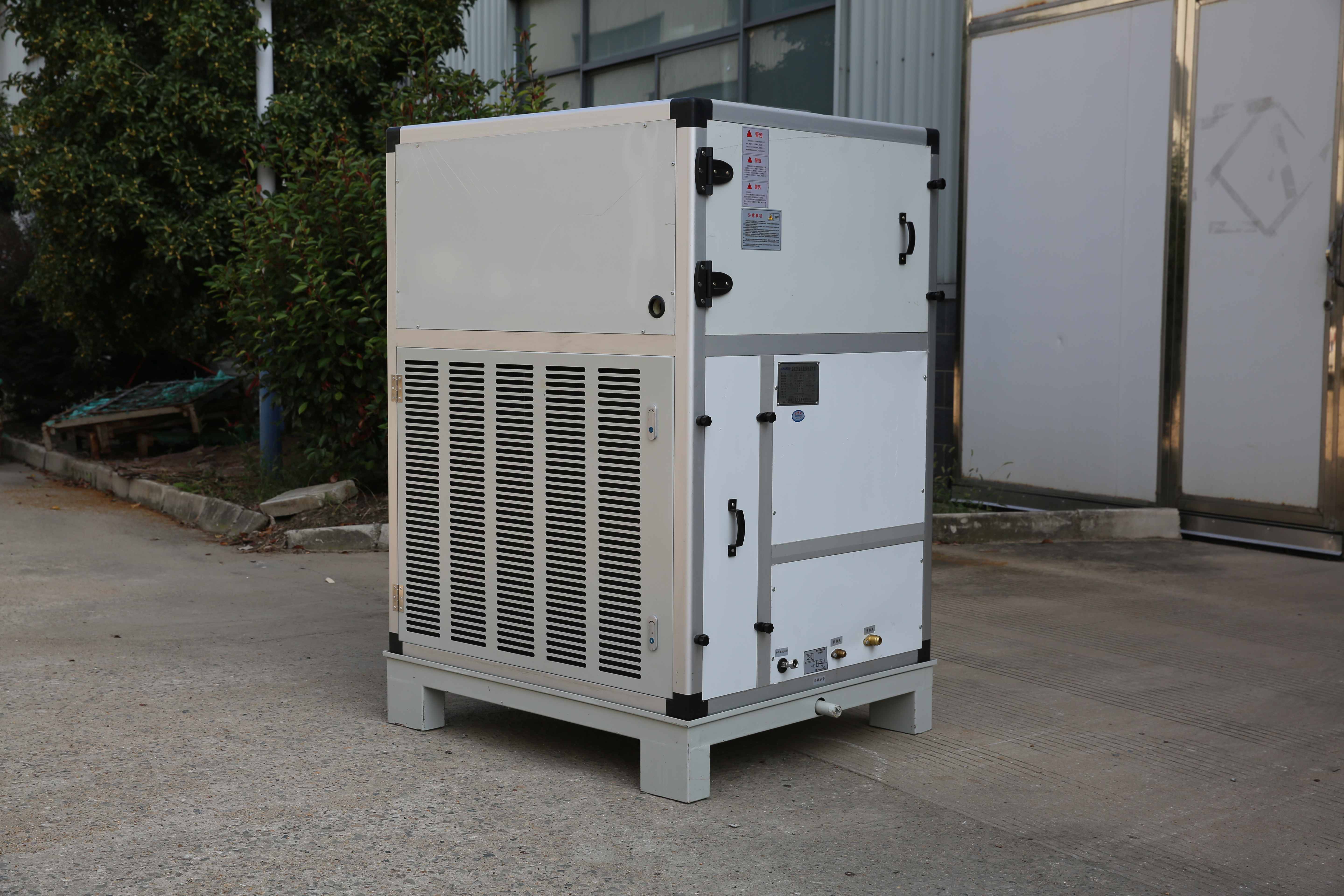
DX air handling units are the workhorses of many commercial and industrial HVAC systems, yet performance varies wildly from one model to the next. Instead of chasing flashy data sheets, start by examining the coil circuiting and refrigerant distribution under part-load conditions. A unit that delivers even refrigerant feed across all circuits will maintain stable superheat and avoid the nuisance freeze-ups or oil return problems that plague poorly designed evaporators. Watch for features like interlaced circuiting and properly sized distributors—these small engineering details translate directly into years of trouble-free operation.
Next, shift your attention to the airside. High static pressure capability is useless if the fan and motor pairing is poorly matched or the cabinet leaks like a sieve. Look for a unit with a fan curve that remains steep and stable at your operating point, and verify that the casing meets a recognized leakage class rather than relying on marketing jargon. Also consider access: full-size hinged doors, slide-out fan assemblies, and tool-free filter changes may seem like conveniences, but they directly influence maintenance frequency and long-term coil cleanliness.
Finally, don't ignore the controls and sensors that govern the DX cycle. A high-performance unit should offer native integration of suction pressure transducers, discharge temperature sensors, and electronic expansion valves with proactive diagnostics. Avoid units that simply bolt on a generic controller and call it a day. The best designs anticipate refrigerant migration during off cycles, actively manage head pressure in low ambient conditions, and provide clear alarm codes that let your service team fix issues before tenants even notice a temperature swing.
Common Sizing Mistakes That Undermine Climate Control Efficiency
Many people assume that matching a unit's BTU rating to square footage is enough. That approach ignores how ceiling height, window orientation, and even the amount of shade from nearby trees alter the actual load. A room with vaulted ceilings and west-facing glass needs far more capacity than a compact north-facing space with the same floor area.
Another frequent error is reusing old equipment sizes after renovations. If you added insulation, replaced windows, or sealed air leaks, the original tonnage may now be oversized. Oversized systems cool the air quickly but shut off before removing enough humidity, leaving the space clammy and forcing the thermostat lower than necessary.
On the flip side, some contractors undersize units to cut upfront costs or fit a narrow budget. The system ends up running nonstop on hot days, struggling to reach the setpoint. This sustained operation drives energy bills through the roof and shortens compressor life, often cancelling out any initial savings.
How Variable Speed Compressors Change the Game for DX Units
For years, direct expansion (DX) systems relied on fixed-speed compressors that operated in a binary fashion—full blast or completely off. This approach created noticeable temperature swings, frequent cycling, and a steady drain on energy during the many hours a space runs at partial load. Variable speed compressors break that pattern by continuously adjusting refrigerant flow to match the exact cooling demand. Instead of slamming on and off, the compressor ramps up or down in small increments, which keeps evaporator coil temperatures far more stable and dramatically reduces the number of start-stop events that wear down components and spike power draw.
The real advantage shows up in humidity control and part-load efficiency, two areas where traditional DX units often stumble. At lower compressor speeds, the coil remains colder for longer stretches, allowing it to pull more moisture from the air before reaching the setpoint. This means a variable speed DX unit can maintain comfortable conditions at a higher thermostat setting while using less energy overall, because sensible and latent cooling are balanced more effectively. The system also avoids the rush of cold air and then silence that occupants notice with single-speed equipment—airflow stays smoother and background noise drops considerably during most operating hours.
Adopting this technology isn't just a matter of swapping out the compressor. It requires a matched variable frequency drive, an electronic expansion valve that reacts to changing mass flow, and a control board capable of interpreting real-time sensor data from both the indoor and outdoor sides. Yet the payoff is substantial: contractors and building owners see fewer compressor failures due to reduced mechanical stress, while utility bills drop because the unit spends most of its life in the efficient low- to mid-capacity range where fixed-speed machines waste the most energy. As a result, variable speed DX units are moving from a premium upgrade to the default choice for spaces that demand tight comfort control without excessive power use.
Maintenance Routines That Prevent Costly Downtime
Downtime rarely announces itself with a warning light. More often, it creeps in through neglected grease fittings, loose terminal blocks, and filters that have been quietly suffocating for months. A practical maintenance routine doesn't need to be elaborate, but it does need to be consistent. Start by mapping every piece of equipment that directly impacts production, then assign each one a simple inspection checklist: temperature, vibration, unusual noise, and visual wear. The goal isn't to document everything—it's to catch the small shifts before they become failures.
One often-overlooked routine is the calibration of sensors and safety interlocks. A pressure switch that drifts out of spec can cause a chain reaction: a pump runs dry, a seal burns out, and suddenly a thirty-minute fix becomes a three-day rebuild. Schedule calibration checks during low-demand periods, and pair them with thermal imaging of electrical panels. Hot spots on breakers or contactors will show up long before a trip, giving you a chance to tighten connections or replace components on your own timeline.
Finally, don't let maintenance live only in a spreadsheet. Walk the floor with the operators who run the machines daily. Their ears and hands know when a bearing is starting to sing or a belt feels slack. Build a ten-minute daily walkaround into the shift handover, and log any anomaly—even if it seems trivial. Over time, these accumulated observations form a pattern that lets you replace parts before they break, not after they've already cost you a shift.
When to Choose a DX Air Handling Unit Over a Chilled Water System
If your project involves a single-story retail space, a small office, or a standalone building without an existing chilled water loop, a DX air handling unit often makes more practical sense. Running condenser piping across a site, building a central plant, and sizing chillers for a modest cooling load adds cost and complexity that the project rarely needs. A packaged DX unit keeps refrigerant on the roof or in a mechanical room, with only supply and return ductwork to coordinate.
Maintenance expectations also push many owners toward DX. A chilled water system depends on water treatment, pump seals, strainers, and freeze protection in colder climates. With DX, you mainly deal with compressors, filters, and coils—fewer failure points for a facility team that may not have a dedicated chiller technician. Plus, DX units can stage cooling in smaller increments, avoiding the short cycling and low-load inefficiency you sometimes see when a large chiller tries to serve one or two occupied zones.
FAQ
A direct expansion (DX) air handling unit uses refrigerant directly to cool the air passing over its coils. Unlike chilled water systems that rely on a separate chiller and water loop, the DX unit's evaporator coil sits right in the airstream, with the compressor typically located within or adjacent to the unit. This design simplifies installation and reduces first cost for many mid-sized buildings.
DX units shine in projects where adding a full chilled water plant would be overkill—think smaller office buildings, retail spaces, or modular classrooms. They also make sense when the client wants to avoid the maintenance burden of water treatment and pumps. However, for very large floor plates or campuses, chilled water often wins on long-term efficiency.
I'd focus on part-load efficiency ratings like IEER or IPLV rather than just full-load EER. Also check the coil face velocity—slower air over the coil improves dehumidification and reduces fan energy. Look for variable speed compressors and EC fans, plus accurate humidity control if the space has tight setpoint needs. Build quality of the cabinet and access to filters matters more than people think.
Most commercial DX units can be configured with a hot gas reheat coil or an electric heat strip for heating. Some use a reversing valve to act as a heat pump, providing efficient heating down to moderate outdoor temperatures. For colder climates, you might pair the DX cooling coil with a gas furnace or hydronic heating coil in the same AHU casing.
One big mistake is oversizing the unit based on peak load without considering part-load operation, leading to short cycling and poor humidity control. Another is ignoring the outdoor air intake: a fixed damper with no modulating control wastes energy. Also, some forget to account for condenser location—rooftop units need clearance for airflow, while indoor split systems require proper ventilation for the condensing unit.
Good DX AHUs include high-efficiency filtration such as MERV 13 or higher, and sometimes UV-C lights on the coil to keep it clean. Because the evaporator coil runs cold, it pulls a lot of moisture out of the air, which reduces mold and dust mite growth. Units with modulating hot gas reheat can independently control humidity without overcooling the space—a big comfort plus.
Yes, but with careful sizing. Server rooms have high sensible heat ratios—lots of heat but little moisture—so you want a DX unit with a high sensible heat ratio, typically achieved by running the coil a bit warmer or using a larger coil face. Look for units rated for continuous operation and consider redundant compressors. However, for larger data centers, chilled water or direct liquid cooling is usually more energy efficient.
Maintenance is generally simpler since there's no water treatment, no cooling tower, and no pump. You mainly need to change filters, inspect the coil, and check refrigerant charge. However, because the entire refrigeration circuit is in one unit, a compressor failure can take down the whole zone. Regular leak checks and keeping the condenser clean are essential to preserve efficiency.
Conclusion
Direct expansion air handling units rarely get the attention they deserve, yet they often outperform expectations in energy savings when correctly applied. The real advantage lies in how well the unit modulates under partial loads—this is where variable speed compressors make a noticeable difference, avoiding the wasteful on/off cycling of older fixed-speed designs. But efficiency starts with proper sizing. Oversized DX units short-cycle, fail to dehumidify, and drive up operating costs; undersized units run constantly and wear out compressors. In high-performance models, look for precise thermal expansion valves, generously sized coils, and controls that adjust airflow and refrigerant flow in tandem.
Long-term reliability comes down to maintenance routines that are easy to ignore until a failure occurs. Regular coil cleaning, filter replacement, and refrigerant charge verification keep a DX air handler running near its rated efficiency and prevent costly downtime. In many projects, a DX unit is the smarter choice over a chilled water system: smaller footprints, lower upfront cost, and simpler maintenance make sense for single-zone commercial spaces, schools, or retail buildings. The best direct expansion air handling units on the market today combine these practical strengths—robust cabinets, accessible components, and responsive controls—to deliver consistent, efficient climate control without unnecessary complexity.
Contact Us
Contact Person: Crystal
Email: [email protected]
Tel/WhatsApp: 8613524235353
Website: https://www.airkohvac.com