
Silica: The Top Pharmaceutical Excipient Revolutionizing Drug Formulation
2026-05-26
When it comes to crafting a robust drug formulation, the choice of excipient can make or break the final product. Silica has quietly risen as the unsung hero in pharmaceutical development, offering unmatched performance in flowability, moisture control, and stability. But not all silica is created equal—pioneers like Zhonglian are redefining what’s possible, delivering ultra-pure, customizable excipients that seamlessly integrate into even the most complex formulations. As the industry shifts toward faster production and stricter quality demands, silica is no longer just an additive—it’s a strategic advantage. Ready to discover why this mineral is rewriting the rules of modern drug delivery?
The Hidden Power of Silica in Pill Design
Silica might not grab headlines, but it quietly shapes the pills we rely on every day. As an excipient, colloidal silicon dioxide does far more than fill space—it acts as a flow agent that keeps powder blends moving smoothly through manufacturing equipment. Without it, sticky or clumpy mixtures would cause inconsistent tablet weights and frequent production stoppages. That seemingly mundane property is what ensures each pill contains exactly the right dose, batch after batch.
Beyond manufacturing, silica helps unlock a drug’s full potential. Its porous structure can stabilize moisture-sensitive compounds, preventing degradation long before a patient opens the bottle. In some formulations, it even enhances dissolution rates by preventing particles from cementing together, so the active ingredient is released faster in the body. This dual role—protecting the drug during storage and facilitating its absorption—makes silica a quiet but critical partner in pharmaceutical design.
What’s truly remarkable is how this single ingredient adapts to modern delivery methods. From orodispersible tablets that melt on the tongue to precision-dosed dry powder inhalers, silica’s particle size and surface chemistry are tweaked to meet radically different demands. It can lend a creamier mouthfeel to chewables or keep a dry powder aerosolized long enough to reach deep into the lungs. That versatility, hiding in plain sight, is why silica remains an unsung hero in creating medicines that are not just effective, but also a pleasure to take.
Why Silica Is a Game-Changer for Drug Absorption
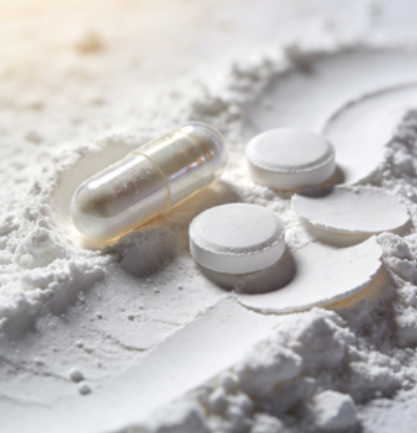
Silica, particularly in its mesoporous form, offers an expansive surface area and a network of pores that can trap and stabilize active pharmaceutical ingredients. This unique structure prevents drug molecules from clumping together or crystallizing into poorly soluble forms. Instead, the silica matrix holds the compound in a disordered, high-energy state that dissolves more readily when it reaches the gastrointestinal tract.
By acting as a carrier, silica can significantly improve the wettability of hydrophobic drugs—those that naturally resist mixing with water. Once encapsulated, these drugs behave more like hydrophilic compounds, meaning they disperse faster and are absorbed more consistently. This overcomes a major hurdle in oral drug delivery, where erratic absorption often leads to unpredictable therapeutic effects.
Beyond solubility, silica's tunable pore sizes allow for controlled release profiles. Rather than a sudden flood of drug into the system, silica can be engineered to release its payload gradually, smoothing out peaks and troughs in blood concentration. This not only enhances bioavailability but also reduces side effects, making treatments safer and more effective without the need for complex formulation additives.
Silica’s Role in Creating Stable, Long-Lasting Medications
The secret to many medications staying potent long after they leave the factory lies in a humble, often overlooked ingredient: silica. Not just any sand, but highly engineered, porous silicon dioxide particles. These tiny spheres act as microscopic sponges, soaking up moisture that would otherwise trigger chemical reactions, causing pills to crumble or lose their effectiveness. By creating a dry microenvironment around each active molecule, silica extends shelf life without the need for harsh preservatives, quietly preserving the medicine’s integrity from production line to patient.
Beyond moisture control, silica plays a surprising role in keeping blended powders homogeneous. During manufacturing, different ingredients have a tendency to separate—heavier particles sink, lighter ones float—but the rough surface of silica particles interlock with other components, preventing segregation. This means every tablet contains a uniform dose, not a risky cluster of active drug in one half and fillers in the other. It’s a physical stabilizer at the particle level, ensuring consistency that patients rely on.
What makes silica truly indispensable is its inertness. It doesn’t react with most pharmaceuticals, doesn’t dissolve, and passes through the body unchanged. This neutrality allows formulators to use it in everything from fast-dissolving strips to enteric-coated capsules without worrying about unpredictable interactions. In an industry where stability is paramount, silica offers a simple, reliable foundation—a quiet guardian that helps drugs survive heat, humidity, and time.
From Lab to Pharmacy: Silica Streamlines Drug Production
Silica is quietly reshaping how medicines move from early research to the pharmacy shelf. Its porous structure acts as a precise carrier, protecting fragile drug molecules during formulation and ensuring they reach the right spot in the body. By stabilizing active ingredients, silica reduces waste and costly reformulation cycles, helping labs scale up processes that once stumbled at the pilot stage.
Beyond stabilization, silica particles are engineered to control release rates—whether a drug needs to act fast or linger for extended therapy. This tunability lets manufacturers fine-tune a single compound for multiple applications. In continuous manufacturing setups, silica-based excipients improve blend uniformity and flow, cutting down on batch failures and accelerating production timelines without additional hardware investments.
Regulatory teams appreciate silica’s well-documented safety profile, which simplifies filings and reduces approval friction. As personalized medicine grows, silica’s adaptability—from nanoparticle coatings to 3D-printed scaffolds—positions it as a quiet workhorse in modern pharma production. Labs that embrace silica early often find themselves shaving months off development, turning a complex journey into a smoother, faster path to market.
Next-Gen Nanosilica: Precision Delivery at the Molecular Level
Imagine a carrier so minuscule that it navigates the body’s labyrinthine networks without triggering an immune alarm, releasing its therapeutic payload only when and where it’s meant to. That’s the promise of next-gen nanosilica. By engineering silica particles at the sub-100nm scale, we’re able to fine-tune surface porosity, functional groups, and charge profiles with a precision that was unthinkable a decade ago. The result is a vehicle that can encapsulate everything from delicate RNA molecules to hydrophobic chemotherapeutics, protecting them until they reach a specific cellular address.
What sets this generation apart isn’t just smarter targeting—it’s the ability to respond to multiple biological cues in a choreographed sequence. pH shifts in the tumor microenvironment, enzyme signatures in inflamed tissues, even subtle redox gradients can act as triggers to unseal the silica pores. These particles essentially “read” their surroundings, making real-time decisions about when to hold firm and when to let go. It’s a far cry from the crude burst‐release kinetics of earlier delivery systems.
The leap forward is as much about manufacturing as it is about design. Advanced sol–gel processes now allow for reproducible, large-batch synthesis of hybrid silica cores with tightly controlled size distributions and surface chemistries. By conjugating ligands that mimic natural substrates, we can achieve active transport across the blood–brain barrier or selectively home in on overexpressed receptors in cancerous cells. The payload doesn’t just arrive at the right doorstep—it walks through the door, inside the cell, before dissolving its cloak. That’s molecular precision, and it’s changing how we think about drug delivery.
The Science Behind Silica’s Unmatched Safety in Pharmaceuticals
Silica’s unmatched safety in pharmaceuticals stems from its exceptional purity and inert nature. Produced through precisely controlled synthetic processes, pharmaceutical-grade silica consists of over 99% amorphous silicon dioxide, a form that lacks the crystalline structure linked to respiratory hazards. This high purity ensures minimal contamination risk, critical for maintaining the integrity of sensitive drug formulations. Unlike many excipients that may react with active ingredients, silica remains chemically stable under a wide range of pH and temperature conditions, making it a reliable choice for diverse applications—from solid dosage forms to liquid suspensions.
Another key factor is silica’s long-established record of regulatory acceptance and biological safety. Extensive toxicological studies have demonstrated that amorphous silica is non-toxic, non-irritating, and generally recognized as safe (GRAS) by major health authorities. When used as an excipient, its particles are engineered to be large enough to avoid deep lung penetration, yet fine enough to perform essential functions like anti-caking, flow enhancement, and moisture scavenging. This balance is achieved through careful control of particle size and surface area, ensuring that silica exerts its benefits without crossing biological barriers or accumulating in tissues.
Furthermore, the safety of silica is reinforced by its long history of use in oral, topical, and even parenteral products without significant adverse effects. Manufacturers rely on rigorous quality-by-design approaches to tailor silica grades to specific formulations, minimizing any potential for unintended interactions. Its ability to adsorb impurities and protect hygroscopic drugs from moisture-induced degradation adds an extra layer of product safety, extending shelf life and preserving therapeutic efficacy. This combination of intrinsic inertness, controlled physical properties, and decades of real-world evidence solidifies silica’s position as a uniquely safe and versatile pharmaceutical ingredient.
FAQ
Its high surface area, porosity, and chemical inertness let it tackle multiple formulation challenges—from improving powder flow and preventing caking to stabilizing moisture‑sensitive drugs. That versatility, combined with an excellent safety record, pushes it ahead of many conventional additives.
By acting as a highly efficient moisture scavenger, it protects hygroscopic actives from hydrolysis and oxidative degradation. Its porous framework can also physically shield delicate molecules, maintaining potency far longer than unprotected formulations.
Absolutely. It excels in capsules, dry powder inhalers, sachets, and effervescent mixes. Its anti‑static and flow‑enhancing properties ensure uniform filling, while the high absorption capacity prevents clumping even in humid conditions.
Fumed silica offers an extremely high surface area with nanoscale particles, perfect for thickening and thixotropy. Precipitated silica has a more controlled particle size and porosity, making it a go‑to carrier for liquid or solid active ingredients.
Engineered mesoporous silica can confine drugs in an amorphous state inside its pores, which dramatically accelerates dissolution. This physical transformation lifts bioavailability for poorly soluble compounds without altering their chemical structure.
Yes—synthetic amorphous silica is widely accepted. It appears in the FDA’s Inactive Ingredient Database, and other major regulators globally have cleared it for oral and topical use. Decades of pharmaceutical application back that safety profile.
Its porous surface can adsorb bitter actives, preventing them from triggering taste buds. For controlled release, functionalized silica particles can slowly elute a drug or serve as part of a matrix that extends liberation over hours.
Derived from abundant minerals, silica is chemically stable and non‑toxic. Its production is less energy‑intensive than many polymer‑based excipients, and it avoids contributing to persistent microplastic waste, aligning with cleaner formulation targets.
Conclusion
Silica has quietly become a backbone of modern pharmaceutical formulation, offering a versatility that few other excipients can match. Its widespread use in tablet manufacturing stems from its ability to improve powder flow, prevent caking, and ensure uniform mixing—critical factors in high-speed production. Beyond simply aiding manufacture, silica helps protect sensitive active ingredients from moisture and degradation, extending shelf life without compromising the medication's integrity. This stabilizing effect is paired with an exceptional safety profile, rooted in decades of toxicological research that confirms its inert nature and minimal systemic absorption when used as intended. As a result, silica bridges the gap between factory efficiency and patient-ready reliability, making it indispensable in everything from simple analgesics to complex multi-drug regimens.
The real excitement, however, lies in silica's functional impact on drug performance. Its porous structure can be engineered to enhance the dissolution of poorly soluble drugs, dramatically improving bioavailability and ensuring that patients receive the full therapeutic benefit. This is where next-generation nanosilica enters the picture: by tailoring particle size and surface chemistry, scientists are creating carriers that deliver drugs precisely where they are needed, at the molecular level. Such platforms enable controlled release, targeted delivery, and even the co-delivery of multiple agents, pushing the boundaries of what oral and injectable medicines can achieve. From streamlining production to redefining how drugs interact with the body, silica is not just an additive—it is a strategic tool shaping the future of pharmaceuticals.
Contact Us
Contact Person: Levin Wang
Email: [email protected]
Tel/WhatsApp: 8618668999988
Website: https://www.silicaplant.com/