
Reliable Angle Shut Off Valve: Your Guide to Leak-Proof Plumbing
2026-11-16
Few things ruin a quiet morning like the sudden drip under the sink. A faulty angle shut off valve is often the hidden culprit behind costly water damage and repeated repairs. This guide isn’t just about stopping leaks—it’s about choosing a valve that stays sealed under pressure and lasts. With a focus on what truly makes a valve reliable, we’ll walk you through the essentials of leak-proof plumbing. And when precision matters, solutions like HONGSEN prove that a simple turn can make all the difference.
Why Every Home Needs a Trustworthy Angle Stop
A plumbing emergency rarely announces itself with a polite knock; it reveals its presence through a sudden, panicked rush of water where it shouldn't be. In that critical moment, the angle stop—that small valve tucked behind your toilet or sink—becomes the only barrier between a minor mishap and a costly flood. If that valve is cheap, corroded, or stubbornly stuck, you're left scrambling for the main shut-off while water spreads across the floor. A dependable angle stop gives you instant, finger-tip control to isolate the problem, buying precious time and preventing a soaked catastrophe that insurance might not fully cover.
Beyond emergencies, trustworthy angle stops quietly earn their keep during everyday upgrades and repairs. Swapping out a faucet, fixing a leaky toilet, or installing a new dishwasher shouldn't require shutting down water to the entire house and inconveniencing everyone inside. A high-quality valve with a smooth quarter-turn mechanism lets you work on one fixture while the rest of the home functions normally. It’s the kind of thoughtful detail that separates a frustrating, drawn-out project from a straightforward one, sparing you multiple trips to the hardware store and muttered curses under the sink.
We often overlook these small guardians until they fail, yet the difference between a reliable angle stop and a bargain-bin version is measured in years of trouble-free service. Solid brass construction, a ceramic disc cartridge, and a finish that resists corrosion mean you won't be greeted by a frozen handle or a weeping seal when you need it most. Investing in a trustworthy angle stop is not about buying a premium label—it's about ensuring that the one valve within arm's reach actually does its job without hesitation, every single time.
Spotting Early Signs Your Shut Off Valve Might Fail
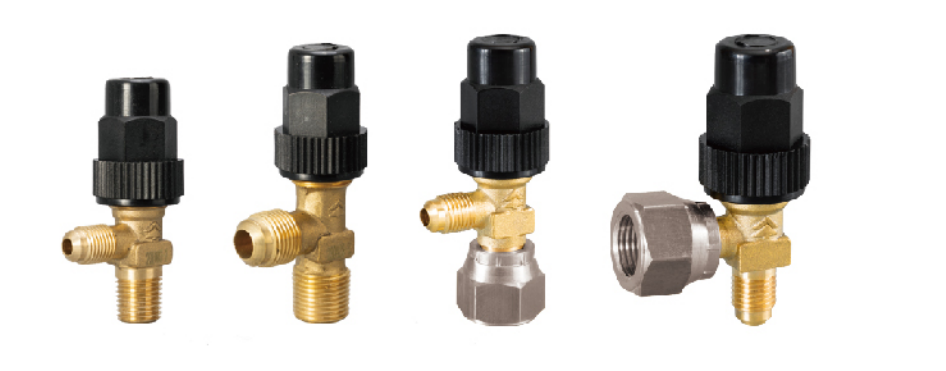
A stiff or gritty feel when you turn the handle is one of the first red flags. Healthy valves should move smoothly without needing extra muscle. If you have to force it open or closed, mineral deposits or internal corrosion are likely building up, slowly seizing the mechanism. The longer this drag goes ignored, the higher the chance the stem snaps or the seal rips right when you need to stop water in an emergency.
Keep an eye out for tiny water beads or a chalky white-blue crust where the stem meets the body. This weepy residue means the packing nut is loose or the internal O-ring has hardened and lost its grip. What starts as a faint damp spot often escalates into a slow drip that stains the surrounding pipe or rots the bottom of a cabinet before you even realize the valve has been silently bleeding for weeks.
Listen for unusual high-pitched squeaks or a hollow grinding sound during operation. It's often easy to dismiss as normal plumbing noise, but well-lubricated valves in good shape run nearly silent. That unpleasant metal-on-rubber screech points to dry, corroded components that are already chewing themselves apart—meaning a total failure or a valve frozen in the open position might be closer than you think.
Inside the Design That Keeps Leaks at Bay
Watertight engineering rarely begins with a single seal; it’s a layered defense where every component reinforces the next. In high-pressure environments, designers rely on compression gaskets that deform just enough to fill microscopic surface irregularities, paired with secondary labyrinth paths that redirect any escaping fluid back toward the source. The material choice is equally deliberate—elastomers with memory effect slowly swell on contact, plugging capillary channels that rigid plastics would leave exposed.
Beyond static barriers, dynamic leakage points demand a different logic entirely. Rotary shaft seals, for instance, use a microscopically thin oil film to lubricate the lip while a precision-ground spiral groove pumps fluid inward during operation. This creates a hydrodynamic counterforce against leaks, transforming motion from a vulnerability into an active sealing mechanism. The tolerances here are so tight that thermal expansion of the housing is calculated to the micron, ensuring the seal never loses its grip across temperature swings.
What often goes unnoticed is the role of environmental adaptation. Silicone boots might shield connectors from rain, but they also incorporate vent holes lined with breathable membranes that equalize pressure without letting moisture in. Similarly, ultrasonic welding of enclosure seams can replace traditional gaskets entirely, fusing polymer chains into a single continuous barrier. Such details reveal that genuine leak prevention isn’t about brute force—it’s about understanding fluid behavior well enough to turn every interface into a self-regulating system.
Simple Choices That Make Installation Foolproof
The difference between a smooth setup and hours of frustration often comes down to a handful of decisions made before you even open the box. Picking mounting hardware that clicks into place instead of requiring perfect alignment saves time and sanity. When a bracket only fits one way, you eliminate the guesswork that leads to crooked installs or stripped screws.
Color-coded parts and pre-sorted fastener packs turn what looks like a puzzle into a simple follow-along task. Rather than hunting through a bag of mixed bolts, you grab the clearly marked packet for step three and keep moving. This kind of labeling costs almost nothing to manufacture but completely changes the experience for anyone holding a screwdriver.
Opting for adjustable feet or self-leveling bases means you don't need a perfectly flat surface to get a wobble-free result. A small dial to compensate for uneven floors removes the need for shims and repeated trial-and-error. These quiet design choices rarely get advertised, yet they're the reason someone finishes a project feeling capable instead of defeated.
A Quick Wrench Turn That Saves Thousands
It starts so quietly you almost miss it—a faint, rhythmic drip beneath the sink. Most people grab a wrench, crank the packing nut a quarter turn, and call it done. That tiny motion costs nothing but a moment. Yet that same instinct, applied before a small leak becomes a flooded cabinet or a ruined floor, often sidesteps hundreds or even thousands in water damage. A quick wrench turn isn't about brute force; it's about knowing exactly where to apply just enough pressure to reset old washers and tired threads without cracking the fixture itself.
The magic lies in the routine, not the tool. Plumbers will tell you compression fittings, supply lines, and shutoff valves all loosen over time from temperature swings and everyday bumps. Walking the house once a season with an adjustable wrench to gently snug these connections disrupts a cycle most homeowners never see until the ceiling stains appear. One deliberate pass through the kitchen and bathrooms can catch the seep that insurance won't cover because the damage was “gradual.”
What separates this from a simple DIY tip is the ripple effect of timing. Tightening a toilet supply line before a weekend trip keeps a steady drip from silently running across tile and into subflooring. A quarter turn on a water heater inlet valve wards off corrosion that silently eats at connectors. Two minutes of attention spares the gut punch of an emergency call-out fee, overnight drying fans, and plywood that has to be torn out because it wicked moisture too long. The wrench is just the messenger; the real saving is the habit of listening before the water gets a chance to talk back.
Routine Checkups That Extend Valve Life Quietly
Most valve wear happens in silence. A slight change in actuator response, a subtle vibration that wasn’t there last quarter, or a barely noticeable drift in positioning accuracy rarely trips an alarm. These early whispers are easy to ignore when nothing seems broken. Yet regular, hands-on checkups reveal exactly this: the quiet signals that let you address seat wear, stem friction, or seal fatigue long before they turn into costly unplanned shutdowns.
A quiet check routine doesn’t mean invasive teardowns. Using acoustic emission sensors, partial stroke testing, and simple visual inspections under normal operating conditions, maintenance teams can map a valve’s health without interrupting flow. The key is consistency—catching the slow progression of micro-degradation. Over time, these short, non-disruptive inspections add years to asset life simply by keeping small problems small.
The beauty of extending valve life quietly is that it rarely makes headlines. There’s no dramatic failure to report, no emergency procurement, no production loss narrative. Instead, there’s a steady, unremarkable reliability that shows up in lower lifecycle costs and predictable maintenance budgets. That quiet outcome is precisely what routine checkups deliver—an invisible layer of protection built on paying attention to what’s not yet shouting for help.
FAQ
An angle shut off valve is a compact fitting that controls water flow to a single fixture, like a toilet or faucet. Its 90-degree body design allows it to connect horizontal pipes from the wall directly to vertical supply lines, making installations in tight spaces much simpler than using a straight valve.
Signs of an unreliable valve include visible corrosion, mineral buildup around the stem, a handle that's impossible to turn, or water that keeps trickling out even when fully closed. If you haven't operated the valve in a year and it feels locked tight, replacement is a safer bet than risking a snapped stem during an emergency.
Absolutely. Modern push-to-connect or compression-fit angle valves eliminate the need for a torch. For compression types, you simply slide the nut and ferrule onto the pipe, then tighten the valve body onto the threads until snug. For push-fit versions, a clean cut and a firm push are often all it takes to create a watertight seal.
A quarter-turn valve uses an internal ball mechanism that completely opens or closes with a simple 90-degree twist, offering a quick, positive shutoff with fewer wearing parts. A multi-turn valve operates with a rubber washer that advances onto a seat over several rotations; it gives finer flow control but the washer can harden or deteriorate over time, eventually causing drips.
That leak usually points to a failed stem packing or a worn O-ring seal just beneath the handle. With the water supply temporarily off, you can often snug up the packing nut a quarter-turn clockwise. If it still drips, the internal seal needs replacing—something a simple repair kit can handle without swapping the whole valve.
Not necessarily. Valves designed for sinks and toilets often have standard 3/8-inch compression outlets, but appliance connections like dishwashers or ice makers might require a special twin-drain or hammer-arresting valve. Always match the valve's inlet size, outlet size, and thread type to your specific plumbing configuration to avoid slow leaks behind the wall.
Over-tightening is the biggest culprit. Whether it's the compression nut or the connection to the fixture, applying too much muscle can crack the brass body, deform the ferrule, or strip threads—all of which lead to hidden, slow drips. Another error is failing to fully insert the pipe or tubing into a push-fit valve, causing a blow-off under pressure.
Conclusion
A home’s plumbing might be out of sight, but its vulnerabilities shouldn’t be out of mind. The small angle shut off valve tucked behind your toilet or sink acts as a silent guardian; when it works, you forget about it, and when it seizes, the consequences can be immediate and costly. Paying attention to subtle warnings—a handle that grinds instead of turns, a persistent drip from the stem, or crusty greenish deposits creeping around the connection—can clue you in before a full blowout happens. Modern valves address these failures at the source. Look inside a well-engineered model and you’ll find ceramic discs or quarter-turn mechanisms that eliminate the old rubber washers prone to dry rot. This design not only delivers a bubble-tight seal but also shrugs off the slow mineral buildup that jams older multi-turn stops, keeping leaks at bay without constant fiddling.
Installation doesn’t need to be a pipe nightmare either. Choosing a valve with push-to-connect fittings or a simple compression nut strips away the intimidation, letting even a novice make a watertight connection in minutes with little more than an adjustable wrench. That ease translates directly into confidence when an emergency strikes; knowing you can reach under a fixture and shut off only the problem line with a quick quarter-turn avoids turning a minor mishap into a flooded floor and a five-figure renovation bill. Yet the real longevity secret isn’t expensive—it’s just a habit. Every few months, cycle the valve gently open and closed to prevent the internal components from locking up. This quiet routine keeps the mechanism limber, ensuring that the day you truly need it, the handle won’t resist and the water will stop on command.
Contact Us
Contact Person: KOPASS HO
Email: [email protected]
Tel/WhatsApp: 8613606566112
Website: https://www.hongsenref.com/