
Questions to Ask a Plate Heat Exchanger Supplier Before You Buy
2026-11-29
A plate heat exchanger is only as good as the questions you ask a supplier before signing off. Skip that step and you may inherit an undersized, hard-to-service unit that quietly drains efficiency for years. In this guide, we cover the questions that expose real differences—not just polished quotes. At ROTER, we would rather you ask them early.
How the Thermal Sizing Matches Your Real Operating Range
Thermal sizing rarely fails because the math is hard. It fails because the assumptions behind the math drift away from how equipment actually runs day to day. A drive or power supply sized for a clean, steady load at 25°C ambient may spend most of its life in a dusty cabinet at 38°C, under a load that cycles unpredictably. The real operating range is not a single point on a spec sheet; it is a band of temperatures, currents, and duty cycles that shifts with the seasons, with production schedules, and with how the equipment is mounted.
Matching thermal sizing to that range means moving away from worst-case-only design. Instead of sizing for a hypothetical maximum that rarely occurs, the goal is to confirm that the component's thermal time constants line up with actual load swings. Short overloads, for example, may not raise junction temperatures enough to matter because the heat has nowhere to go in time. But a modest sustained overload that looks harmless on paper can push a heatsink past its comfortable plateau. Good practice is to test against a representative load profile rather than a fixed number, then leave enough headroom so that normal variation does not put the part on the edge of its derating curve.
Field data makes this process concrete. Logging actual enclosure temperatures and load currents over weeks or months often reveals that the system spends most of its time far below the design maximum, with occasional bursts that dominate thermal stress. Sizing for the range, not the peak, lets you choose components that run cooler and last longer without overspending on unnecessary margin. It also reduces the temptation to add fans or larger heatsinks as a blanket fix, because you can see exactly where the thermal pressure comes from and address that instead.
Where the Standard Data Sheet Falls Short on Fluid Compatibility
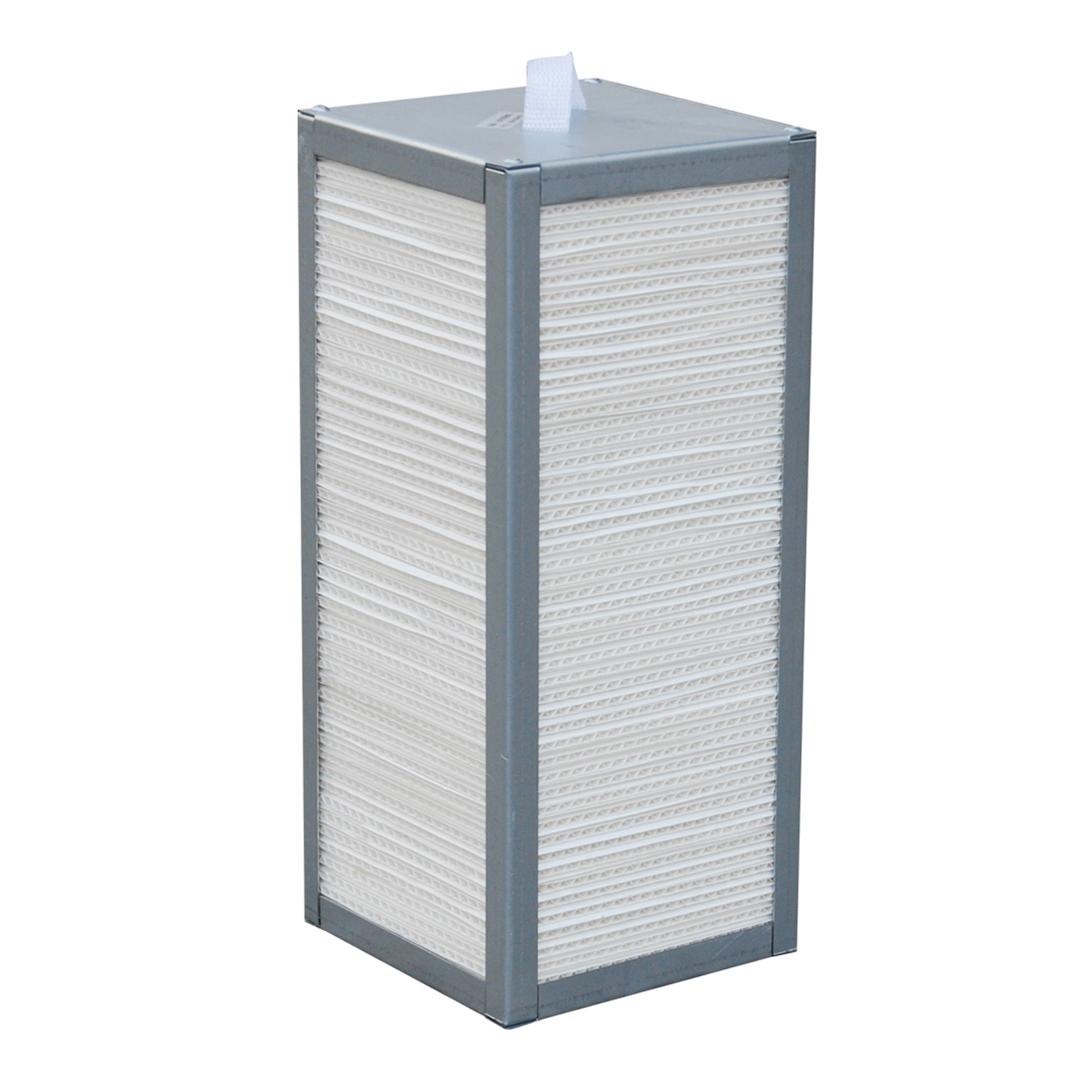
A typical compatibility chart offers a neat rating for a handful of pure fluids, but real process streams rarely resemble those laboratory reagents. Additives, stabilizers, trace cleaning agents, and degradation by-products can shift swelling, leaching, or hardening behavior well outside the listed category. Relying on the sheet alone turns a rough screening value into an unearned guarantee.
The missing variables are often the most consequential. Temperature is not a fixed backdrop; it cycles, spikes during shutdowns, and accelerates chemical attack in ways a single immersion test cannot express. Concentration matters just as much, yet a material rated poor in a concentrated solvent may perform acceptably in a dilute aqueous blend, or vice versa once a threshold is crossed.
Test methodology also varies enough to blur comparisons. Sample thickness, cure state, surface finish, and exposure time differ between suppliers, so two identical-looking ratings can hide very different margins. Instead of treating the data sheet as a verdict, it works better as a first filter followed by small-batch trials under your actual fluid, temperature, and pressure conditions.
Pressure Drop Costs You Will Notice at the Pump
A tire that's down by just a few psi doesn't announce itself with a warning light. It shows up as a quieter, more expensive problem. The fuel gauge moves a little faster between fill-ups because rolling resistance climbs as the contact patch softens and widens, so the engine works harder to hold the same cruising speed. Over a month of mixed driving, that steady drain can add several dollars to every tank, often blamed on traffic or weather instead of the real culprit.
The numbers are easy to dismiss one receipt at a time, but they become obvious when you compare a month of properly inflated driving against a month of neglect. A drop of 6 psi below the door placard can cut fuel economy by roughly 2% to 3%, and if all four tires are low, the penalty stacks. For a vehicle that normally gets 28 mpg, that's the difference between filling up on a Tuesday and stretching an extra day or two out of the same tank.
There's also a second cost waiting at the pump. Uneven wear shortens tire life, so you end up buying replacements sooner. The money leaves your pocket slowly, but the link is direct. Grab a gauge before the next fill-up and set the pressures cold. It's one of the few car maintenance tasks that costs nothing and starts paying you back immediately.
Gasket Replacement Access in Your Actual Piping Layout
Field layouts have a way of erasing the clearance that looked fine on an isometric. A flanged joint may end up within a few inches of a column, behind a pump discharge line, or under a cable tray where a fitter cannot see the bolt holes. Before locking in a location, walk the actual space and check the full sequence: breaking the flange, spreading the faces enough to slip the old gasket out, cleaning both seating surfaces without gouging them, inserting the new gasket, and torquing bolts in a crossing pattern with a wrench that has room to swing. If any one of those steps has to be done by feel, the joint is not truly accessible.
In congested racks, the better move is often to shift gasketed joints to a horizontal run near a walkway or open bay instead of burying them in vertical spools between tiers. Leave clearance on both sides of the flange for a flange spreader, bolt removal, and a torque wrench, not just enough space to touch the bolts. A simple field check is to stand where the mechanic would stand and run through the entire job with tools in hand. If a modest line offset can turn a blind reach into an open, visible work area, that change usually costs far less than the future shutdown time spent removing adjacent pipe, instruments, or grating just to reach a gasket.
Can the Frame Accept More Plates When Conditions Change?
The rated capacity listed on a frame is based on a specific set of conditions, but those conditions rarely stay fixed in a real workshop. Temperature, material hardness, and even the angle of loading can shift the maximum number of plates a frame will safely hold. When ambient heat rises, for instance, the frame's metal may expand enough to reduce its grip on the plates, meaning a stack that was stable in the morning could become loose by afternoon. Similarly, a slight change in plate thickness or the way the plates rest against each other can alter the distribution of stress, allowing one more plate in some cases while making the previous count unsafe in others.
Load angle matters more than most people realize. A frame designed for vertical stacking may accept fewer plates when tilted, because the force no longer travels straight through the upright posts but instead creates a bending moment near the lower crossbars. If you adjust the resting surface to be perfectly level, or if you replace worn rubber pads that allow micro-slippage, the frame can often accommodate an additional plate without exceeding the safety factor. This is not a weakness in the original design; it is simply a recognition that the official limit assumes a narrow band of operating conditions.
Before adding plates beyond the printed number, check for visible signs of fatigue: hairline cracks near welds, slight bowing in the support rails, or uneven wear on the plate contact points. If none are present and the frame sits on a rigid, flat floor, the new conditions may justify one more plate. But remember that every incremental plate increases the energy stored in the stack. Should the frame fail, that energy releases suddenly, so the decision to push past the original capacity should be based on measured changes in condition, not on a guess.
Testing Evidence and Support After the Sale
After the sale, most buyers do not want another promise; they want the trail that shows what was actually checked before the unit left. Keep raw test logs, timestamped calibration records, and short video clips from final inspection tied to the order file. These are not polished marketing pieces, just working evidence that can be pulled up when a specific question appears months later.
Support conversations often begin with doubt about a particular reading or performance claim. Instead of repeating the spec sheet, share the exact test setup, equipment used, and the pass/fail limits applied to that serial number. If a result was close to the edge, include that detail and explain how the margin was handled. That kind of openness shifts the discussion away from defending the product and toward examining shared records together.
Make the evidence easy to find inside the team as well. Tag files by batch or serial number, summarize test outcomes in the support ticket, and let engineers access original records without asking the customer to describe the problem twice. The point is not to dump data on the buyer. It is to provide a clear, traceable path from the test bench to the product in their hands.
FAQ
Ask for a performance sheet that states duty, pressure drop, inlet and outlet temperatures, and the fouling margin used. If the supplier hesitates to put these numbers in writing, keep looking.
The answer should be tied to chloride level, pH, temperature, and cleaning chemicals. Vague references to stainless steel and EPDM are not enough when you have a tricky stream.
A sensible frame has extra tie rod length and space for additional thermal plates. That can save you from replacing the whole exchanger if your heating or cooling load grows.
The fouling margin should be visible in the selection. Too much margin can make the unit oversized and hard to control at low loads, while too little can mean frequent cleaning.
The design should allow easy access with minimal tools and enough clearance around the frame. If the plate pack is difficult to open, maintenance will become a recurring headache.
Ask for hydrostatic test results, material traceability, dimensional drawings, and pressure vessel documentation if your site requires it. Getting this upfront avoids delays during installation and commissioning.
Delivery commitments should cover both the initial exchanger and spare plates and gaskets. Many suppliers can meet the main unit date but drag their feet on spares, so get both in writing.
A capable supplier should be able to re-rate the unit for new temperatures, flow rates, or product changes using the original thermal file. That support can matter more than a small upfront price difference.
Conclusion
Before signing off on a plate heat exchanger, ask for the thermal sizing calculations that reflect your lowest and highest operating loads, not just a single design point. Many suppliers quote from standard software defaults that ignore turndown, fouling factors, or seasonal swings, and then the unit underperforms once the real cooling water temperature shifts. The standard data sheet also tends to gloss over fluid compatibility: a gasket material that works in clean water may soften in process chemicals, and the plate alloy might be vulnerable to chloride stress cracking even if the nominal corrosion allowance looks fine. Ask where the data sheet's assumptions stop and request specific references for similar chemistries. Pressure drop is another hidden cost; a compact unit may meet the heat duty but force you to run a larger pump or accept higher energy draw. Insist on the pressure loss at actual flow rates, including any bypass or part-load scenarios.
Think about the physical installation before you accept a frame size. Gasket replacement access matters more in a cramped pipe rack than in an open plant room, and a supplier's drawing may suggest clearance that your existing pipe supports or cable trays simply don't allow. Ask for the required withdrawal space on both the fixed and movable cover sides, not just the total length. Since process conditions rarely stay static, confirm that the frame can accept additional plates without replacing the tie rods or entire pressure plate. Also request proof from previous installations: thermal performance test reports, leak test certificates, and contact details for clients with similar duties. After-sale support is often more telling than the initial quotation, so ask how quickly spare gaskets and plates can be shipped and whether field service can reach your site within a realistic timeframe.
Contact Us
Contact Person: Rhea
Email: [email protected]
Tel/WhatsApp: +8618800560886
Website: https://www.rotorairtech.com