Paper Bag Making Machine Maker Selection Guide for Growing Businesses
2026-11-02
As your paper bag business expands, the machinery you rely on can either fuel that growth or quietly hold it back. Choosing the right maker isn't just about specs—it's about finding a partner who understands scale, uptime, and evolving demand. ROKIN has become a name worth examining for growing operations, but what should you actually look for? This guide cuts through the noise.
Before You Contact Any Paper Bag Machine Builder, Map Your Real Daily Output Range
You can waste weeks chasing quotes if you haven't pinned down the actual number of bags you need per shift. Builders hear vague requests like “a decent output” all the time and rarely follow up with useful machine suggestions. Instead, sit down with your last three months of order data, separating peak days from average ones, and write down a low-end figure and a high-end figure that reflect real demand, not wishful thinking.
Once you have that range, add about fifteen percent for growth and unexpected short runs. That cushion keeps you from buying a machine that runs flat out just to meet today’s orders, yet prevents you from paying for speed you will never use. Many buyers overlook the fact that paper bag machines often need time for roll changes, glue adjustments, and minor jams, so your true daily output should be calculated at roughly eighty percent of the builder’s rated speed.
Also think about bag sizes and material weights you actually run, because output shifts dramatically when you swap from thin kraft to heavier laminated sheets. A machine that hits two hundred bags per minute on a narrow bread bag may drop below eighty on a wide shopping bag with twisted handles. Bringing your own real numbers to the conversation not only saves back-and-forth emails but also shows the builder you are serious enough to get a configuration that fits your floor, not their brochure.
The Smallest Paper Bag Machine in a Maker's Catalog Often Tells You the Most
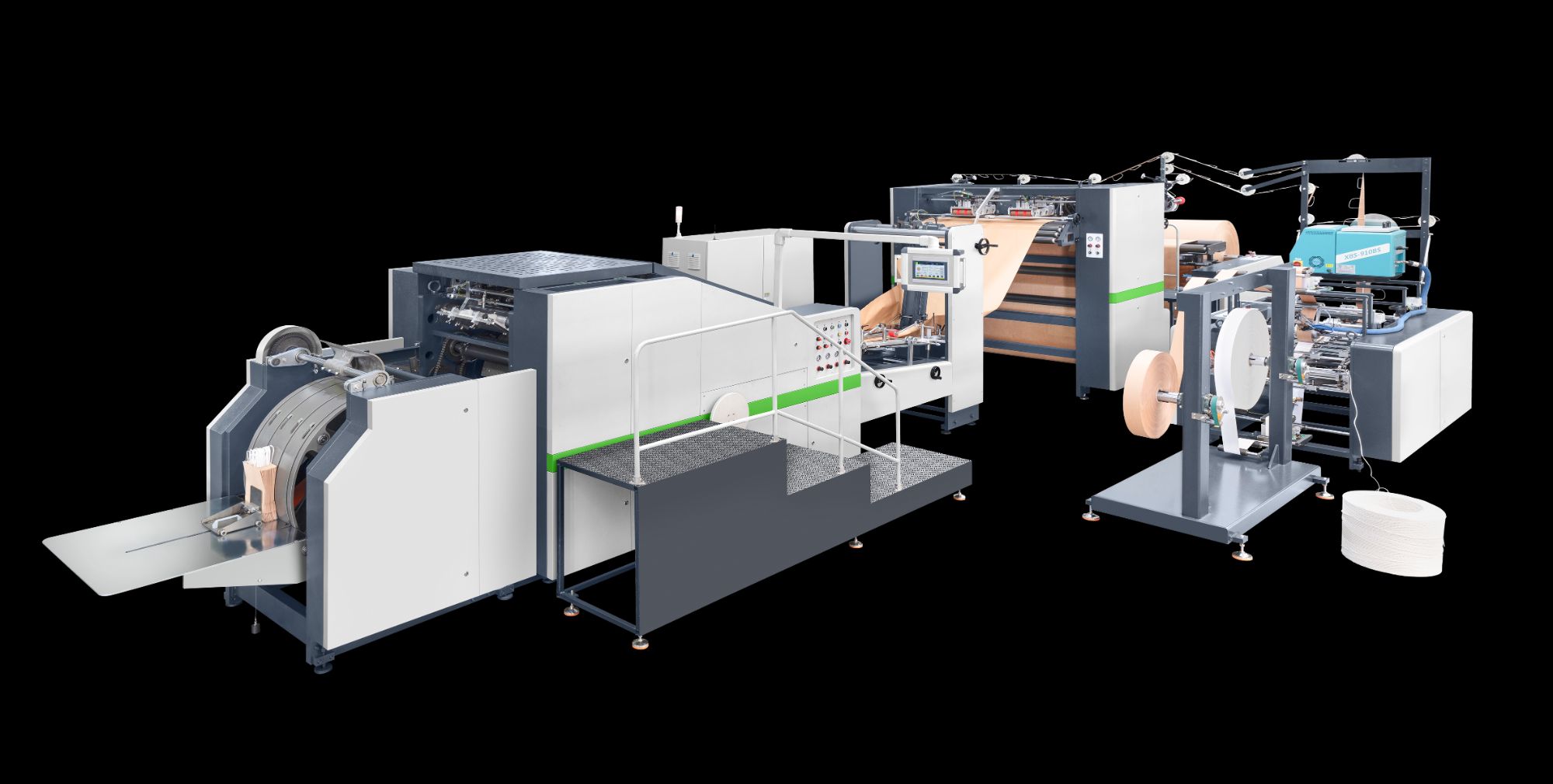
The smallest paper bag machine in a catalog often seems like an afterthought, but it's actually a maker's confession. When a company bothers to engineer a compact model with the same precision as its industrial lines, it signals they care about small bakeries, boutique shops, and local markets. A tiny machine that still produces crisp folds and strong seams says more about the manufacturer's standards than a flagship model ever could.
Look closely at the specifications of that miniature workhorse. If it accepts a range of paper weights without jamming, if its changeover from flat to satchel bags takes minutes rather than hours, you're seeing honest mechanical design. Many large machines hide flaws behind speed and volume; a small machine has nowhere to hide. Every gear, every guide rail, every adjustment knob is exposed and tested by users who expect daily reliability without an engineering team on call.
That's why seasoned buyers flip to the back pages first. The compact unit reveals whether a maker understands its smallest customers. It tells you if they've thought about a solo shop owner who runs five hundred bags a week instead of fifty thousand. In that quiet corner of the catalog, you can spot the difference between a company that merely sells equipment and one that supports the entire craft.
Insist on a Trial Run with Your Own Paper Stock Before You Commit
Paper behaves differently depending on finish, weight, and fiber direction. What looks perfect on screen can turn muddy or washed out once ink hits the sheet. Before you lock in a large order, run a short test on the exact stock you plan to use. Check how solids hold, how fine lines reproduce, and whether the paper's brightness shifts your color balance.
A trial run also catches finishing problems early. Folded brochures might crack on a heavy coated sheet, while a textured uncoated stock could swallow small text. Print a single signature or a handful of samples, then fold, trim, or bind them the way the final piece will be handled. You'll see whether the paper fights your design or works with it.
Many printers will run a few overs on the actual stock for little or no extra charge if you ask. If that's not possible, request a test on a comparable sheet from the same mill. The point is to feel the paper in your hands, under real ink, before you commit budget and time to a full production run.
Ask What Happens When a Servo Drive Fails on a Busy Production Day
The first sign is usually the silence. A servo drive doesn't fail with a bang most of the time—it just stops answering. One moment the pick-and-place unit is snapping parts into position; the next, the arm hangs limp over a half-finished pallet, and the error light on the cabinet blinks a code nobody has memorized. On a busy production day, that silence spreads fast. Conveyors back up, operators lean over the guardrails, and the shift supervisor starts doing mental math on overtime and missed shipments.
What happens next depends on how prepared the plant is. If the drive is dead, there's no coaxing it back with a power cycle. You're pulling prints, hunting for a spare, or calling a distributor while the line stays down. Even a "minor" fault—like an overcurrent trip from a jammed axis—can eat twenty minutes while someone checks couplings and wiring. The real cost isn't just the replacement part; it's the batches left half-run, the downstream stations starved of work, and the maintenance crew pulled off scheduled PMs to fight the fire.
And when the drive eventually gets swapped or repaired, the day doesn't end cleanly. Someone has to re-tune the axis, re-zero the homing sequence, and run test cycles while production waits. If the failure was heat-related, you might be rigging a fan or opening a panel just to get through the shift. The lesson lands hard: a servo drive is a single point of failure, and on a busy day, it can turn a profitable order into a late one without warning.
Look Beyond the Purchase Price to What You Will Spend in the First Two Years
The sticker price on a big-ticket item is rarely the whole story. A printer that costs $80 might seem like a steal until you realize the ink cartridges run dry every six weeks and each replacement set costs nearly as much as the machine itself. Within two years, you could easily spend three or four times the original price just keeping it running. That initial bargain quietly becomes a recurring drain on your wallet.
Beyond consumables, the first two years often bring hidden costs that never show up on the shelf tag. Installation fees, specialized accessories, software subscriptions, energy consumption, and unexpected repairs can stack up fast. For example, a budget washing machine may save you $200 upfront, but if it needs a new pump in month thirteen and uses more water and electricity per load, the total cost of ownership can surpass a slightly pricier, more efficient model long before the second year ends.
A smarter approach is to estimate the realistic two-year spend before you commit. Ask about warranty coverage, typical maintenance intervals, and the price of replacement parts or supplies. Look at user reviews for common failure points and energy ratings. Sometimes paying a bit more upfront for a well-built product with cheaper ongoing costs is the true bargain—your future self will thank you for looking past the price tag to what you actually spend in those first twenty-four months.
Pick a Maker Who Asks About Your Growth Path Instead of Pushing Their Top Model
A good maker won’t open the conversation with their most expensive product. They’ll want to know where you’ve been, what you’re trying to fix, and where you hope to end up. When someone asks about your growth path before talking specs or tiers, it’s a signal they’re solving for your trajectory, not their quota.
That distinction shows up in small ways. They might ask why you’re switching now, what’s blocked you before, or how success looks in six months. If they skip straight to a “top model” pitch, you’re not getting advice—you’re getting a sales script. Pick the maker who treats your next move as more important than their flagship.
FAQ
Start with the maker's track record in your specific bag type. A company that mostly builds flat handle machines won't necessarily nail twisted handle or square bottom designs. Ask for actual line references and, if possible, visit a running installation to see output quality and operator workload.
Customization matters more than many buyers expect. Growing businesses often need to switch between bag sizes, paper grammages, or handle styles within the same shift. A maker that can retrofit modules or offer adjustable forming parts from day one will save you from buying a second machine too soon.
Look beyond the warranty period. Check how the maker handles spare parts delivery, whether they offer remote diagnostics or local service partners, and how quickly they can dispatch a technician. A maker with a regional parts hub or a responsive engineering team can cut downtime from weeks to days.
Don't just compare the upfront price. Factor in energy consumption per bag, expected lifespan of wear parts, and the maker's willingness to train your operators. A slightly more expensive machine with lower per-bag cost and stronger local support often pays for itself within two years.
It's huge. Some machines handle only virgin kraft paper while others run recycled, laminated, or even non-woven materials. If your market demands eco-friendly or thinner papers, confirm the maker has tested those substrates on the exact model you're buying, not just on a similar frame.
That depends on your region and risk tolerance. Local makers can offer faster visits and shorter lead times for replacement parts, but overseas suppliers sometimes bring more advanced automation at a lower cost. Weigh the total cost of ownership, including freight, import duties, and the cost of downtime when a critical part is stuck in transit.
Ignore the maximum speed on the brochure. Ask for the sustainable speed with your specific bag size, paper thickness, and handle type. Request a timed demonstration or a guaranteed cycle rate in the contract. Frequent stops or quality defects at top speed make the headline number meaningless.
Conclusion
Before you contact any paper bag machine builder, get honest about the volume you actually run on a normal day, not the peak you hope to hit next year. Many growing businesses overbuy capacity and end up with a machine that runs half empty, wastes paper stock, and ties up floor space. A better move is to look at the smallest model in a maker's catalog first. The way that entry-level machine is built often reveals more about the builder's engineering standards than a flashy top-of-the-line unit. If the base model has flimsy handles, weak tension control, or a confusing interface, those problems usually scale up. Also insist on a trial run using your own paper stock, not the vendor's demo material. Paper weight, coating, and stiffness vary widely, and a machine that performs well with a thin kraft sheet may jam or wrinkle with your actual bag stock. No reputable maker should refuse this request.
Then ask the uncomfortable question: what happens when a servo drive fails on a busy production day? If the answer is vague, or if replacement parts sit in another country for three weeks, you are buying downtime, not a machine. Check how easy it is to reach a local technician and whether common spare parts are stocked near you. Cost also needs to be looked at over the first two years, not just the invoice price. Include blades, rubber rollers, glue nozzles, drive belts, and the labor hours lost during small adjustments. A slightly higher upfront price can be cheaper if the builder includes training, preventive maintenance visits, and faster part delivery. Pay attention to whether a maker asks about your growth path instead of pushing their top model. A supplier who recommends a mid-size machine you can upgrade later, or who advises against an expensive feature you do not need yet, is showing they care about your long-term output, not just their monthly sales target. That is the difference between a vendor and a real partner.
Contact Us
Contact Person: CARA
Email: [email protected]
Tel/WhatsApp: +8619519778302
Website: https://www.rokinmachinery.com