
ODM Foot Massager What You Need to Know Before Choosing a Manufacturer
2026-11-16
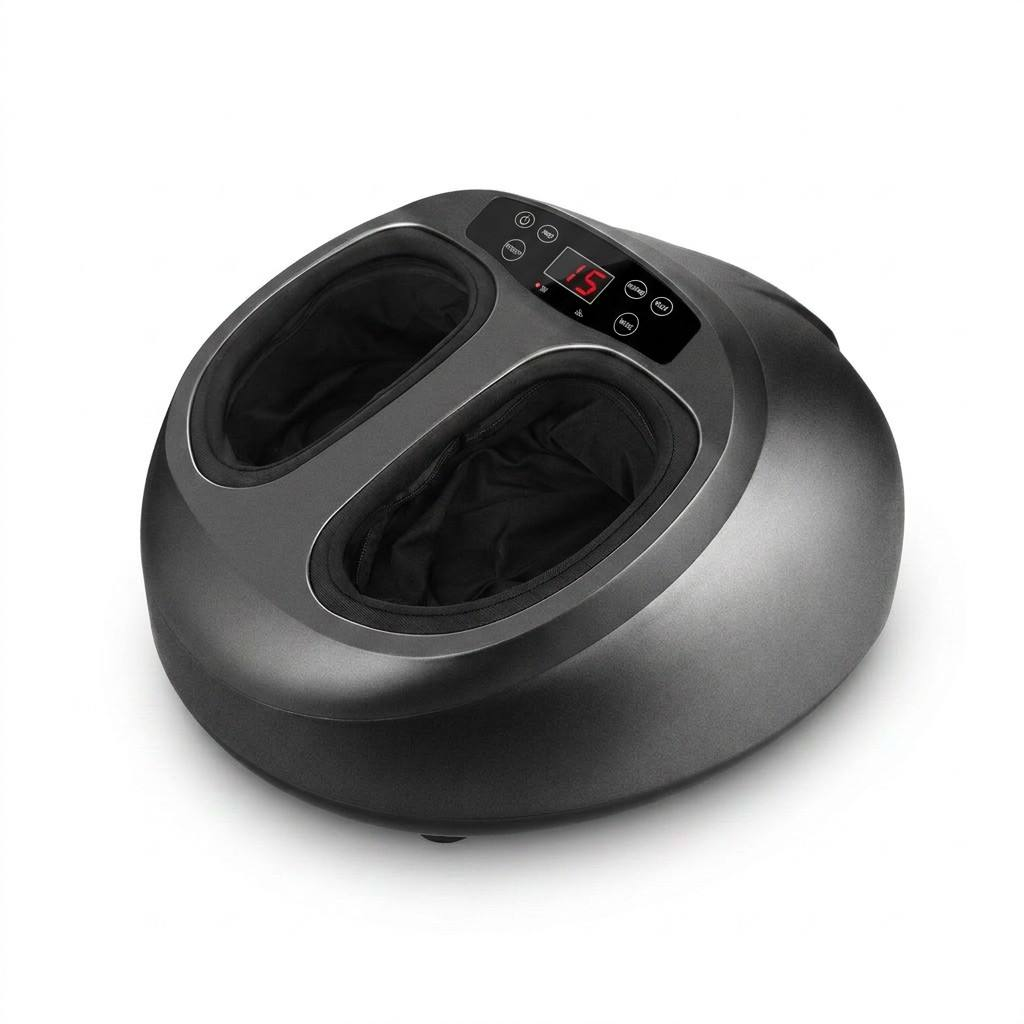
So you're thinking about private labeling a foot massager? Smart move—but the factory you pick will make or break your launch. ODM manufacturing is full of hidden variables: motor durability, mold ownership, minimum order quantities, and noise levels that look fine on a spec sheet but feel totally different in real use. Before you commit, there's a lot to unpack. That's where this guide comes in—and where a partner like XINGBU can change the equation.
What the Factory Floor Tells You Before a Single Unit Is Made
Long before the first component hits the assembly line, the factory floor itself speaks through its layout, its tooling, and its quiet readiness. Walk the aisles and you can read the story of upcoming production in the placement of raw materials, the calibration marks on machines, and the temporary jigs clamped to workbenches. It is a language of preparation—one that reveals whether a team truly understands the build ahead or is merely improvising.
Look closely at the dust patterns on a gantry, the wear on a fixture's contact points, or the handwritten notes taped to a control panel. These are not random artifacts. They are the accumulated whispers of trial runs, tolerance adjustments, and lessons learned from past failures. A floor that has been walked, measured, and argued over tells you more about the coming unit than any CAD file ever could. It tells you where the problems will hide and where the confidence already lives.
Even the silence before the first shift matters. A well-prepared floor doesn't hum with frantic last-minute fixes; it holds a steady, almost bored calm. Operators linger near their stations, not because they're waiting for instructions, but because they've already rehearsed the sequence in their heads. That pre-production stillness is the real blueprint—etched not in paper, but in the physical memory of the space itself.
Why Some Certifications Are Just Expensive Wallpaper
There's a certain breed of certification that looks impressive in a frame but falls apart the moment someone asks a follow-up question. The issue isn't the paper itself—it's the pipeline that produces it. When a credential can be obtained after a weekend of cramming multiple-choice questions or, worse, by simply paying a fee and waiting for the mail, the credential stops measuring competence and starts measuring disposable income.
Hiring managers have learned this the hard way. They've interviewed candidates who hold a string of acronyms after their names but can't troubleshoot a basic system or explain the core concept behind the very framework they claim to have mastered. That's because many certification bodies prioritize volume over rigor. Their business model depends on selling exams, study guides, and renewal fees—not on protecting the reputation of the industry. Once you see that incentive structure, it's no surprise that some certificates are about as meaningful as a 'World's Best Employee' mug from a novelty shop.
The real test of a certification is whether it forces you to demonstrate actual work under realistic constraints. Does it include a proctored lab, a portfolio review, or a rigorous oral exam? Or does it only require a pulse and a credit card? Until more employers and professionals start asking that question, the expensive wallpaper will keep hanging in offices—and on LinkedIn profiles—where it does little more than collect dust.
Customization Limits That Only Emerge After You Commit
You pick every color, every layout option, every toggle they show you. It feels like you're building something truly yours. Then you hit publish, start actually using it day to day, and the cracks appear. That theme you customized? It won't let you change the spacing under the headline without editing code. The form tool that promised flexibility? It caps your fields at ten unless you upgrade. These aren't limits they advertise—they're buried in documentation, discovered only after you've invested hours, migrated data, or told a client it's done.
What makes it worse is the timing. During the trial or the demo, every tweak seems possible because you're only brushing the surface. You change a font, swap an image, rename a button—all the shallow stuff works. But once you've committed, once you've built real workflows around the tool, you suddenly need something a little deeper. Maybe it's a custom post type, a specific integration, or just control over your own CSS. That's when you find the hard ceiling, and the only answers from support are "not currently supported" or a link to a feature request with three votes from 2019.
The lesson isn't to avoid all tools with limits—every tool has them. The lesson is to test the edges before you anchor yourself. Try to break the customization during the evaluation, not after. Ask the uncomfortable questions: Can I export my data cleanly? What happens if I need to go beyond the visual editor? Can I add custom functions without a developer plan? If the vendor hesitates, or the answer lives in some hidden forum post, treat that as the real limit—not the glossy settings page.
MOQ Numbers as a Crystal Ball for Factory Stability
When a factory shares its minimum order quantities, you are not just looking at a logistical threshold. You are peeking into how it manages cash flow, raw material procurement, and workforce planning. A stable MOQ often signals that the plant has predictable upstream supply chains and enough recurring orders to absorb setup costs without flinching. In contrast, erratic or constantly shifting MOQ numbers can hint at production bottlenecks, storage constraints, or a sales team that is unsure about its own capacity.
Buyers who treat MOQ as a fixed rule miss the bigger picture. It is more like a weather vane for the factory's internal health. A low MOQ combined with consistent lead times suggests lean inventory practices and flexible line changeovers. A high MOQ paired with frequent delays, on the other hand, may reveal that the factory is overbooked or struggling to secure materials in small batches. Watching how a supplier adjusts its MOQ from season to season can tell you whether it is investing in automation or simply passing risk down to the buyer.
Smart sourcing teams use these numbers as an early warning system. Instead of haggling over every unit, they track MOQ trends alongside defect rates and on-time delivery. A factory that quietly raises its MOQ while quality slips is likely stretched thin. One that lowers it without sacrificing speed has probably found a way to streamline setup. In that sense, the MOQ figure works like a crystal ball, revealing not what the factory wants you to see, but what its operations are actually prepared to handle.
Prototype Loops That Separate Serious Partners From Dabblers
In the early stages of any collaboration, you'll meet plenty of people who sound excited but vanish when real work appears. Running tight prototype loops is the fastest way to separate those who are serious from those who are just kicking tires. Instead of endless meetings about possibilities, jump into a two-week sprint to build something small but testable together. How they respond to deadlines, how deeply they engage with the feedback, and whether they proactively solve problems—these signals tell you far more than any pitch deck.
A well-designed prototype loop should escalate commitment step by step. The first loop might be as simple as co-defining a user scenario and giving critical feedback. The second loop asks them to share data or connect their internal systems. The third loop might involve splitting development costs. Each step is a gate. Dabblers usually drop off after the first or second because they don't want to spend real time or resources. Serious partners, on the other hand, keep pushing the loop forward, sometimes even suggesting better ways to run it. Watch how they behave inside the loop—that's where true intentions surface.
The Post-Production Support Gap Most Buyers Skip Entirely
Most buyers pour their energy into comparing features and negotiating the initial price, then assume the hard part ends once the product ships. That assumption quietly sets up a mess for later. The real test shows up weeks or months after go-live, when a workflow breaks, an integration starts acting up, or someone on the team simply needs a smarter way to use the tool. Without reliable post-production support, small hiccups turn into full stops.
What gets skipped is rarely the support plan itself — it's the honest conversation about what "support" actually covers. Buyers skim the service-level agreement, nod at the response-time promises, and never ask what happens when the vendor's scripted answers run out. Then a release update changes a setting, or a custom field stops syncing, and the buyer realizes they're stuck emailing a generic queue while their team waits. That gap between promised help and usable help is where deadlines slip and trust erodes.
Closing the gap doesn't mean buying the most expensive tier. It means asking vendors pointed questions before signing: who exactly will answer after launch, how are edge cases handled, and what does escalation actually look like in practice. A product that works on day one is easy to find; a team that keeps it working six months later is the rarer — and far more valuable — purchase.
FAQ
With ODM, the factory already owns the base design and tooling for a foot massager. You can put your logo on it, tweak the color or panel, and maybe adjust the massage programs. If you want to change the shape or internal mechanics, that crosses into OEM territory and usually means paying for new molds. Knowing this early saves you from surprise development fees.
Ask for a pre-production sample and open it up. Check the wiring layout, solder joints, plastic thickness, and the brand of the motor. A good factory will show you their durability test report—how many hours the rollers ran, how they measured noise levels, and whether the overheating protection actually triggers. If they hesitate to share internal photos or test data, treat that as a red flag.
Stick to changes that don't require new tooling: shell color, printed logo, remote control layout, default mode order, and packaging design. Once you ask for a different footbed curve or a custom roller shape, the factory has to cut new molds, which can add thousands of dollars and weeks of delay. Ask which existing mold platforms they have and work within those.
Mold fees, certification testing, packaging artwork design, sample courier charges, third-party inspection fees, spare parts for warranty claims, and import duties. Many quotes only cover the unit price and shipping, so request a line-by-line breakdown before you sign anything. Also confirm who pays for re-testing if a certification fails.
Don't just accept a PDF. Ask for the certificate number and check it against the issuing body's online database. Make sure the certificate lists the exact factory address and the foot massager model you're buying. Some factories show an old certificate for a different product or a closed facility. Also ask if they're willing to host a third-party audit on short notice.
For an ODM product with no new tooling, expect 4-8 weeks for a pre-production sample, 2-3 weeks for your feedback and any minor tweaks, then 30-45 days for mass production. Add shipping time—by sea that's usually 3-6 weeks depending on the route. If the factory promises everything in under 60 days total, push back and ask for a written schedule with penalties for delays.
Sign a non-disclosure agreement before sharing any packaging files or brand guidelines. In the manufacturing contract, state that the factory cannot sell the same base model with your custom color scheme or logo to other buyers in your market. If you add any original design elements, file for a design patent in your country. A lawyer familiar with cross-border manufacturing can help you word these clauses properly.
Find out the warranty period they offer and what it covers—usually the motor and control board, not the fabric cover. Ask how they handle defective units: will they ship replacements with your next order, give you a credit, or require you to return the item first? Check how long they guarantee spare parts availability, and request a repair guide or video you can pass to your own customers.
Conclusion
Walking through a factory before signing anything tells you more than any brochure. Look at how raw materials are stored, whether workers seem rushed or methodical, and if machines are well maintained. Some certifications on the wall are meaningless—anyone can pay for a piece of paper, so verify them against actual production practices. Customization limits rarely show up in initial talks; ask upfront about mold revision allowances, color and material flexibility, and what happens if you need a design tweak after sampling. MOQ figures aren't just purchasing terms—they reveal factory health. An unusually low MOQ might signal a small workshop with thin cash flow, while a very high one could push you into overstock risk.
Prototype rounds are where serious manufacturers separate themselves. Watch how they handle feedback: do they iterate quickly, explain trade-offs, and suggest improvements? Or do they pressure you to approve and move on? The latter often means trouble down the line. Finally, don't ignore post-production support. Many buyers skip this step only to discover that replacement parts, troubleshooting guidance, or warranty claims become a nightmare once the container ships. Choosing an ODM foot massager manufacturer means looking past sales talk and focusing on the unglamorous details—factory discipline, honest customization boundaries, and a willingness to stand behind the product long after payment clears.
Contact Us
Contact Person: Hannah
Email: [email protected]
Tel/WhatsApp: +86 18266954198
Website: https://www.okmassager.com/