
OA Network Floor Supplier: What to Look for in a Reliable Partner
2026-11-02
Specifying an OA network floor system is rarely the headline decision in an office fit-out, but it’s exactly where hidden costs and delays tend to surface. A supplier that looks cheap on paper often lacks the engineering support or delivery consistency you need when raised floor panels, stringers, and cable outlets have to align perfectly. Before you sign a contract, it’s worth knowing what separates a truly reliable partner from a one-time vendor—and how Lipin Floor approaches that standard.
What Actually Sets a Quality OA Floor Panel Apart
The difference rarely sits in the visible surface. A quality OA floor panel earns its keep below the tile: the core density, the way the steel or calcium sulphate is bonded to the bottom sheet, and how consistently the edges are folded. Cheaper panels tend to flex under a rolling chair or telegraph footsteps, while a properly built one stays flat even after hundreds of load cycles. You feel it in the corners first—if the interlock doesn't seat flush, the whole floor starts ticking.
Tolerance control is another giveaway. Quality panels come off the line with edge straightness and corner squareness held to fractions of a millimetre, which means installation doesn't rely on shims or persuasion. Coatings matter too. Instead of a generic powder coat that scratches to bare metal in a month, better panels use a harder, slightly textured finish that hides wear and keeps conductivity stable. That's what separates a floor that still looks and performs like new three years in.
Questions to Ask Before You Trust a Supplier’s Load Ratings
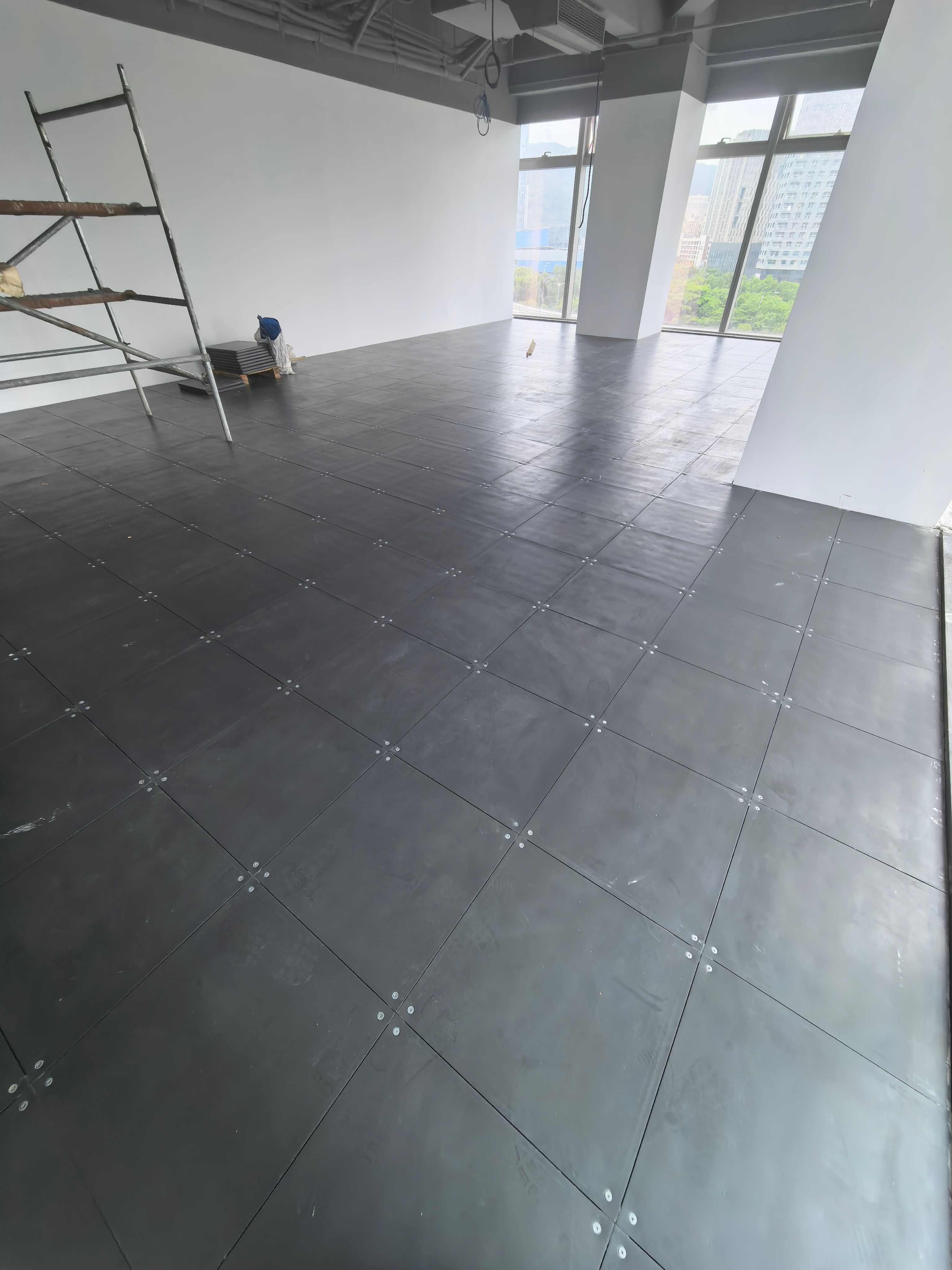
A supplier's load rating on a spec sheet is often just the starting point. You should ask how that figure was derived—was it a theoretical calculation, a finite element analysis, or an actual physical test on a production sample? The answer changes everything. If they say it was tested, find out the exact setup: static or dynamic loading, ambient temperature, number of cycles, and whether the part was new or broken in. Many ratings look impressive until you realize they assume ideal conditions that never occur in real installations.
Next, push for independent verification. Request test reports from a recognized third-party lab, not just internal data. Ask which standard the rating complies with—ISO, ASTM, DIN, or something else entirely—and whether the certificate is current. Some suppliers will share a PDF that turns out to be five years old or for a different product variant. If they hesitate to provide raw data or only offer a summary, treat that as a red flag. A credible supplier will also let you send a sample for your own load testing before you commit to a large order.
Finally, map their rating to your actual operating conditions. Load capacity is rarely a single number; it depends on temperature extremes, vibration, mounting orientation, shock loads, and how often the load reverses. Ask for derating curves or correction factors for your specific environment. If a supplier cannot explain how their rating changes outside a narrow set of parameters, their number is probably not trustworthy for your application. The goal is not to find a supplier who claims the highest load, but one who can show exactly how their product will perform in your world.
Why Customization Shouldn’t Mean Waiting Twice as Long
Customization often carries a hidden cost: the assumption that made-to-order means made-to-wait. But that trade-off is a relic of rigid production lines, not a law of nature. When a workshop treats each request as a fresh puzzle instead of a variation on a known pattern, delays pile up. The real issue isn't the act of customizing—it's failing to build flexibility into the core process. By standardizing the parts that don't need reinventing and reserving true bespoke effort for the details that matter, you can turn a bespoke request into a same-week delivery without breaking a sweat.
Think about the last time you ordered something personalized and were quoted a six-week lead time. Was the extra wait actually spent on your unique specifications, or was it absorbed by batching, back-and-forth clarification, and idle handoffs? Most delays come from poor communication loops, not from the complexity of the work itself. Shops that thrive on customization have learned to front-load questions, use visual previews, and keep material buffers ready. They treat the customer's input as a starting point for action, not as a trigger to halt everything until every detail is signed off twice.
Ultimately, speed and personalization aren't opposites—they're both outcomes of a well-designed workflow. If your custom orders routinely take twice as long as stock items, that's not a customization problem; it's a process signal. Look at where minutes turn into days: is it waiting for approval, sourcing a single component, or redoing a step that could have been right the first time? Fix those bottlenecks, and you'll find that offering choices no longer means asking customers to be patient. It means giving them exactly what they want, without the usual excuse.
The Real Cost of Cheap Understructure Materials
When a sofa frame is built from particleboard instead of kiln-dried hardwood, the savings rarely stay in your pocket for long. The first sign of trouble might be a subtle creak when someone sits down, or a slight sag near the center cushion. Within a couple of years, the joints loosen, the support strips snap, and the upholstery starts to pull against the failing structure. What looked like a bargain at the checkout quietly turns into an awkward conversation with a repair technician—or worse, the early retirement of a piece you expected to keep for a decade.
The hidden expense isn't just measured in replacement parts. Cheap understructure materials often lack the density to hold fasteners securely, which means screws and staples work themselves loose under normal use. This creates a cascading effect: a wobbly arm leads to torn fabric, a cracked rail puts uneven pressure on the springs, and before you know it the entire seating platform has shifted. Every fix addresses a symptom, never the root cause, because the foundation simply wasn't built to handle daily stress.
There's also the matter of how these materials behave over time in real homes—not showrooms. Particleboard and low-grade plywood are more susceptible to moisture absorption, which causes swelling, warping, and eventual crumbling at the connection points. In contrast, a properly engineered understructure made from solid wood or high-quality plywood might cost more upfront, but it doesn't demand constant vigilance or early replacement. The true cost of cheap materials is the quiet accumulation of inconvenience, repair bills, and the nagging feeling that you should have known better from the first creak.
How a Good Supplier Handles Site Measurements and Layout
A reliable supplier never treats site measurements as a quick formality. Instead of solely relying on architectural drawings, they send an experienced technician to physically assess every critical dimension. This person carries a laser distance meter, a digital angle finder, and a notepad with actual field sketches. Corners that look square on paper often reveal a half-inch drift in reality, and a good supplier catches that before it becomes a costly installation error.
Once on site, the supplier checks for obstacles that blueprints gloss over—exposed conduit, uneven flooring, or a column slightly off its planned axis. They don’t just note these issues; they immediately discuss them with the contractor or homeowner. If a doorway opening is narrower than specified, the supplier proposes adjusting the layout or trimming a component on the spot rather than waiting until delivery day. This kind of proactive conversation prevents delays and keeps everyone working from the same set of verified numbers.
After the measurements are taken, the supplier returns to the office and builds a clean, dimensioned layout document. This isn’t a generic template—it marks exact anchor points, wall offsets, and any field modifications agreed upon. The supplier then sends this layout to the client for a final sign-off. Because every number was double-checked against the physical space, the production team can cut and assemble with confidence, and the installation crew won’t face surprises like a misaligned bracket or a cabinet that doesn’t fit through the hallway.
Signs Their Warranty Is Worth More Than the Paper It’s Printed On
A warranty stops being paperwork when the company picks up the phone without a 20-minute hold. If you get a real person who knows the product, asks for a photo instead of a 47-step diagnostic ritual, and approves a fix while you're still on the call, that paper just turned into actual protection. The strongest warranties read like a promise, not a maze. You can find the coverage limits in under a minute, and the exclusions don't hide absurd carve-outs for normal wear and tear or acts of mild inconvenience.
Transferability is another quiet signal. A company that lets you pass the remaining coverage to the next owner isn't just being generous; it's confident the product won't fall apart the week after you sell it. Watch for no-cost repair or replacement language without a pile of shipping fees, restocking charges, or processing nonsense. If the warranty mentions that they'll send a prepaid label and handle the logistics, treat that as a serious commitment. Those small operational details expose whether the warranty was written by lawyers or by people who actually fix things.
FAQ
Look at how they handle specification changes after the first sample. A reliable partner will ask about cable routing density, underfloor air requirements, and future workstation moves before quoting—not just push you toward whatever panel is in stock. Their engineering team should be able to revise panel cutouts and pedestal heights without long delays.
Request a visit to an installation that is at least three years old. Walk the floor, listen for rattles, and check for lippage between panels. A supplier worth trusting will welcome this. Also ask for fatigue test data on the locking mechanism and edge trim, because those details cause most long-term complaints.
Ask whether the panel is tested as a full assembly with the pedestal and stringer, not just the top sheet. Request the smoke toxicity and flame spread figures for the specific thickness you plan to use. Some suppliers quote numbers from a different product variant, so compare the test report code against the exact model.
It matters less than reliability of the promised date. A short lead time is useless if the factory misses it because they overbook. Ask for their on-time delivery record for the last five projects and whether they keep buffer stock of standard panels and pedestals. If they cannot show a clear production schedule, keep looking.
Almost always buy from one supplier. Mixed systems often create small height mismatches and uneven locking tension, which leads to squeaks and cracked edges. A single-source partner takes full responsibility when something does not fit, instead of blaming the other vendor.
Check whether they offer a dedicated site supervisor or at least a detailed installation manual with tolerances. The best suppliers will train the local crew for a day, verify pedestal layout before panels go down, and inspect the first 50 square meters before full production. If they say any contractor can install it, that is a warning sign.
Add the cost of replacement panels, onsite trimming, and extra pedestals that often come with lower-priced systems. Also factor in the time your electrician spends fixing cutouts that do not line up. A premium supplier usually reduces total project cost because the floor goes in once and stays serviceable longer.
Ask for the actual gauge of steel in the panel shell and the coating thickness on both sides. Some suppliers use thinner steel near the edges where it is hidden by the laminate. Also check the edge treatment for exposed burrs or inconsistent paint, because these often signal wider quality control problems.
Conclusion
Finding a dependable OA network floor supplier involves far more than comparing unit prices or delivery windows. A quality panel is easy to spot once you know what to inspect: uniform core density, edge flatness that survives repeated rolling loads, and a surface finish that won’t scuff or lift within the first year. When a supplier quotes an impressive load rating, don’t accept it at face value. Ask whether the figure comes from a full-size panel test or a reduced sample, who conducted the testing, and what safety factor was applied. Customization also doesn’t have to mean twice the wait, provided the supplier has a genuinely flexible production line and a transparent change-order workflow. Long delays usually stem from disorganized internal handoffs, not from cutting a different panel size or adding a special cutout.
The hidden cost of cheap understructure materials shows up later, often after the project is closed out. Thin coatings on stringers, undersized pedestal heads, or brittle corner locks may look fine during installation but lead to squeaks, rocking panels, and early corrosion. A supplier worth keeping will handle site measurements with equal seriousness—sending an experienced technician who checks column lines, door clearances, and slab variations instead of relying only on digital drawings. Before you sign off on a warranty, test its practical value. Does it cover labor for panel replacement, or only the material itself? Is there a local service team ready to respond, or will claims disappear into a call center? How the supplier answers these questions tells you if the relationship is built for long-term performance or just to get the purchase order.
Contact Us
Contact Person: yuki
Email: [email protected]
Tel/WhatsApp: +86 18664390732
Website: https://www.lipinfloor.com/