Laser Safety Curtain Factory Tips for Finding a Trusted Partner
2026-09-18
Choosing a laser safety curtain factory isn't just about comparing prices or lead times. The real challenge is figuring out which partner will still respond quickly when a custom requirement changes, or when certification documents need to match exactly what your auditors expect. This post walks through the non-obvious signals of a trustworthy supplier—and why LASERPAIR keeps coming up in those conversations.
The Factory Floor Tells You More Than Any Sales Deck
Walk the floor before you open the deck. A sales presentation can be rehearsed, polished, and timed to perfection, but the factory floor has no edit button. You will see how raw materials are actually stacked, whether tools return to their shadow boards, and if the rhythm of work feels steady or staged for visitors. Those unscripted details reveal the real operating cadence of a business—something no slide can fake.
Look for the small things: worn labels on bins, handwritten notes taped to a machine, the way a line stops without panic when something jams. A pitch deck might show flawless process maps, but the floor shows whether anyone follows them. If you want to know how a company treats quality, watch what happens when no one is watching.
Before you sit down for the formal meeting, take a slow walk and ask an operator a direct question about a recurring problem. Do they answer with confidence, or do they glance at a manager first? That split second tells you more about leadership, trust, and daily reality than any growth chart or customer logo slide.
Ask the Hard Questions About Laser Safety Standards
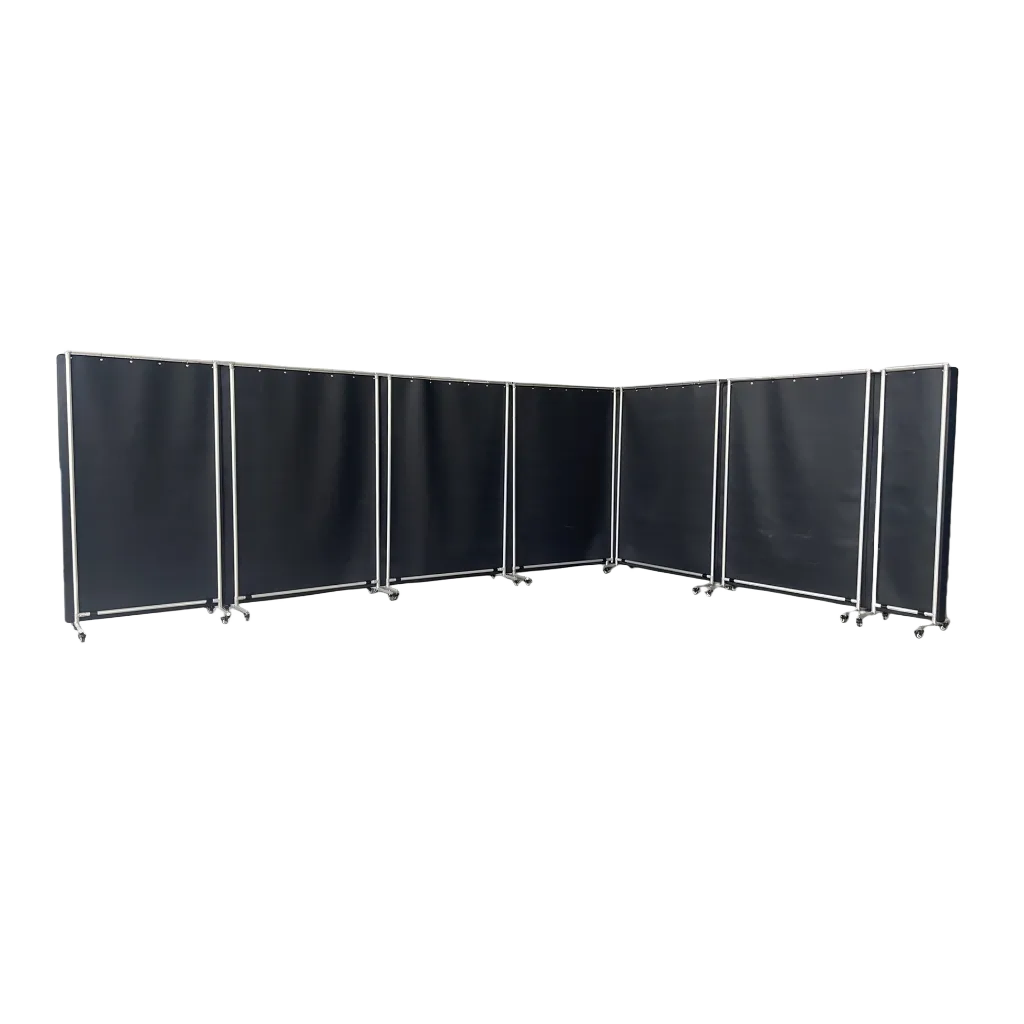
Most teams stop at the first data sheet they find, but laser safety demands more than a cursory glance at a classification label. You need to know how the standard was tested under real-world conditions—was it evaluated with the specific optics, beam path, and pulse duration you're actually using? If the answer isn't immediately clear, that's a red flag.
Dig into failure modes, not just nominal specs. Ask whether the standard covers worst-case reflections from curved or irregular surfaces, or if it assumes perfectly aligned beams in a controlled lab. What happens when a galvanometer fails mid-scan, or when someone bypasses an interlock under time pressure? A meaningful safety standard should address these scenarios with repeatable test methods—not just pass/fail thresholds.
Finally, check the provenance. Who updated it, when, and based on which incident reports? Standards that haven't evolved in a decade may miss newer laser types or high-repetition-rate effects. If a vendor can't answer these questions without flipping through a manual, treat that silence as data.
Why the Lowest Bid Often Hides the Biggest Risk
A rock-bottom price can feel like a win at first glance, but it rarely tells the whole story. When a contractor or supplier comes in far below everyone else, something has to give — and usually it’s quality, timeline, or hidden costs that surface later. The lowest bid often means corners will be cut, whether through cheaper materials, less experienced labor, or simply a failure to account for the full scope of work. What looks like savings on paper frequently turns into change orders, delays, and frustration once the project is underway.
Another hidden risk is the bidder’s own desperation or miscalculation. A company quoting below market rate may be struggling to keep cash flowing, which raises the chance they’ll walk away mid-job or underdeliver. Or they may have underestimated the complexity, hoping to make up the difference through claims and disputes later. Either way, you end up paying more in management time, rework, and stress than if you had chosen a realistic price from the start.
Smart buyers don’t just compare numbers — they compare what’s behind them. Asking for a detailed breakdown, checking past work, and understanding why one bid is significantly cheaper can reveal risks that a simple spreadsheet never will. Sometimes the lowest bid is genuinely the best option, but more often it’s a warning sign dressed up as a bargain.
A Reference Call Can Reveal What a Website Won't
Websites curate their best moments — glowing testimonials, sleek case studies, polished timelines. But a reference call lets you ask the uncomfortable questions: What was it like when the project went sideways? Did they push back when you changed scope at the last minute? How fast did they actually respond when something broke in production? People rarely volunteer those stories in writing, but in conversation, hesitation, tone, and offhand comments fill in the gaps.
Past clients have no incentive to sugarcoat once they’re off the record. They’ll tell you if the team was rigid, if the invoices arrived with surprise line items, or if the “dedicated account manager” turned out to be three different people in six months. A website can claim 99.9% uptime, but a reference will mention the one Tuesday when everything was down for four hours and nobody answered the phone.
More importantly, a reference call reveals how a vendor handles friction. Any company can be pleasant when things go smoothly. Ask about a disagreement over priorities, a delayed deliverable, or a feature that had to be cut. The answer tells you whether they blame, defend, or actually solve. That nuance never lives on a pricing page or a feature list — it only comes out when you talk to someone who has already paid the invoice and survived the implementation.
Watch How a Supplier Handles a Last-Minute Change
The call came in at 4:47 p.m., just as the warehouse crew was wrapping up the day's shipments. A key client had shifted their order requirements: two hundred units of the standard model were no longer needed, replaced by three hundred of a customized variant that normally required a two-week lead time. Most suppliers would have pushed back, citing production schedules and material availability. This one didn't. The operations manager pulled up the inventory system, spotted a half-finished batch from a previous project that could be reworked, and quietly rerouted two forklifts before the shift ended.
What followed was less about heroics and more about coordination. The supplier's floor lead gathered four technicians, walked them through the revised specs, and assigned each a single task—one to strip the existing housings, another to reprogram the assembly line, the last two to pull the correct fasteners and labels from the upper mezzanine. By 6:10 p.m., the first unit rolled off the line with the new configuration. No one raised their voice. No one blamed the client for the late notice. The team simply treated the change as an ordinary part of the job, which, in their line of work, it was.
The real test came the next morning when the client asked for a same-day delivery to a site forty miles outside the usual route. Rather than charging a premium or delaying the order, the supplier's dispatcher adjusted the morning truck schedule, swapped a pallet from a non-urgent shipment, and had the driver on the road by 9:00. The client received the custom units before noon. In a market where last-minute requests often turn into blame games, this supplier's quiet flexibility kept a fragile schedule intact.
Look for Transparency in Raw Material Sourcing
When a company is vague about where its materials come from, that silence usually has a reason. A brand that can name its suppliers, list the countries and even the specific mills or farms it works with, and explain how it verifies their practices is far more likely to have nothing to hide. Real transparency goes beyond a single line like “sustainably sourced” on a label; it means you can trace a product back through the supply chain without hitting a dead end.
Look for details that are awkward to fake. Ask whether the brand publishes the names of its raw material providers, describes the labor and environmental standards those providers must meet, and shares third-party audit results or certifications that actually mean something. If a company claims to use organic cotton or recycled metals, check if it explains how those materials are separated, tracked, and verified along the way. The best signs are often unglamorous: a supplier list, a dated report, a photo of the facility, or a specific percentage instead of a vague promise.
Finally, watch how a company handles failures. Every supply chain has problems, but a transparent brand will admit when a supplier falls short and explain what changed as a result. That kind of honesty is hard to automate and easy to trust.
FAQ
Look for third-party test reports from recognized labs like TÜV or UL that cover EN 60825-4 or EN 12254 for the exact wavelengths you use. A CE marking alone is not enough; ask for the Declaration of Conformity and check that the optical density values match your laser's wavelength and power density.
Request independent lab test reports for each wavelength and OD level you need. Do not accept internal test data as proof. Ask for a small sample and send it to a third-party lab yourself if possible. Also check the test conditions in the report, such as exposure time and power density, to make sure they reflect your actual working environment.
Ask whether they provide custom frames, brackets, floor anchors, edge seals, and adjustment mechanisms as part of the package. Find out the material thickness and corrosion resistance of all metal parts. Request a sample installation manual or CAD drawing before ordering, and confirm that every fastener and connector is included so you are not stuck sourcing missing hardware.
Lower quotes often come from thinner flame-retardant PVC, uncertified laser-absorbing layers, skipped edge reinforcement, or cheaper frame steel. These shortcuts reduce upfront cost but lead to faster degradation, compliance failures, and even safety incidents. Ask which raw material suppliers they use and request physical samples to compare weight and thickness before deciding.
For custom sizes and large orders, expect four to six weeks. Standard sizes may ship in two to three weeks. If a factory promises delivery in under one week, treat it as a red flag unless they can show existing stock and a verified production schedule. Ask for written lead time guarantees and examples of past orders with similar complexity.
Ask about incoming raw material inspection, in-process checks at cutting, sewing or welding stages, first-article approval, and final testing method. A trustworthy factory will share a simple QC flowchart or even a short video of their production line. Also ask how they handle non-conforming products, because that reveals whether they isolate defects or just ship them.
It matters a lot because CO2, fiber, diode, and excimer lasers have different wavelengths and power densities, which require different curtain materials and construction. A factory with direct experience in your industry can recommend the right OD rating, frame design, and edge sealing. Ask for case studies or references that match your laser class and working environment.
At minimum, they should provide installation guidance, a maintenance manual, replacement part availability, and a clear response time for technical questions, ideally within 24 hours. For safety equipment, look for help with re-certification or updated compliance documents as standards change. A one to two year warranty is standard, but the best suppliers also offer periodic inspection reminders and advice on when to replace aged curtains.
Conclusion
A trustworthy laser safety curtain factory rarely hides behind polished brochures. Walk the production floor yourself—look at how raw polymers and optical-density filter materials are stored, labeled, and traced back to their suppliers. Ask for the actual test reports for EN 60825 or ANSI Z136 compliance, not just a certificate on the wall. If a salesperson can't explain which specific wavelengths and optical densities their curtains are rated for, that's a red flag. The cheapest quote often means corners were cut: thinner substrates, inconsistent dye loading, or skipped batch testing. Reputable factories will show you their in-house laser power meter calibration logs and invite you to witness a burn-through test on a sample with your own laser parameters. That kind of openness is what separates a real partner from a middleman.
A reference call with a previous customer who bought a custom-sized enclosure will reveal things a website never will—like whether the factory actually hit the promised lead time or how they handled a change order when the beam path shifted mid-project. Pay attention to their response to a last-minute modification during your own negotiation: do they push back with vague penalties, or do they re-engineer the mounting rails and recalculate the overlap without drama? Also request a copy of the material safety data sheet for the flame-retardant PVC or polycarbonate blend. If they hesitate to name the resin supplier or the optical density testing lab, walk away. The best partners treat transparency about raw materials and a calm, problem-solving attitude as standard practice, not a favor.
Contact Us
Contact Person: Jenny
Email: [email protected]
Tel/WhatsApp: +86 13537713281
Website: https://www.laserpair-safety.com/