
Inconel Alloys Factory Insights: Advanced Manufacturing for Extreme Environments
2026-07-12
Step inside an Inconel alloys factory where precision meets resilience, and discover how Jiangsu Baowu New Materials is rewriting the rules for extreme environments. From deep-sea pressure to jet-engine heat, the story behind each alloy reveals a blend of metallurgical mastery and real-world grit—one that could change how you think about material limits.
Forging Resilience: How Inconel Alloys Defy Extreme Heat and Pressure
In the world of extreme engineering, few materials face the relentless assault that Inconel alloys endure without flinching. These nickel-chromium-based superalloys were designed for environments where ordinary metals would soften, oxidize, or simply deform under stress. At temperatures exceeding 700°C, a thin but tenacious oxide layer forms on the surface, acting as a self-renewing shield that keeps corrosive gases and molten salts at bay. That spontaneous defense mechanism makes Inconel indispensable in jet engine combustion chambers and industrial gas turbines, where hot, high-velocity gases chew through lesser metals in hours.
What truly sets Inconel apart is its ability to hold its shape when the pressure is on—literally. Under sustained load, most alloys suffer from creep, that slow, inexorable stretching that eventually leads to failure. Inconel’s microstructure resists this thanks to a carefully orchestrated blend of solid-solution strengthening and precipitate hardening. Tiny gamma-prime particles pin dislocations, while elements like molybdenum and niobium lock the crystal lattice in place. The result is a material that maintains tight clearances in turbine blades and nuclear reactor internals even after thousands of hours at temperatures that would make steel glow red.
Working with Inconel is famously unforgiving, yet that very stubbornness is a testament to its resilience. The same high-temperature strength that makes it valuable also causes rapid tool wear and demands specialized machining techniques. This inherent difficulty, however, translates directly into reliability where failure is not an option—deep-sea oil well components, rocket engine injectors, and chemical plant reactors all lean on Inconel’s unique blend of thermal stability and corrosion resistance. It’s not just a metal; it’s a deliberate rejection of the limits that heat and pressure impose on conventional materials.
Inside the Melt: Precision Metallurgy for High-Stress Environments
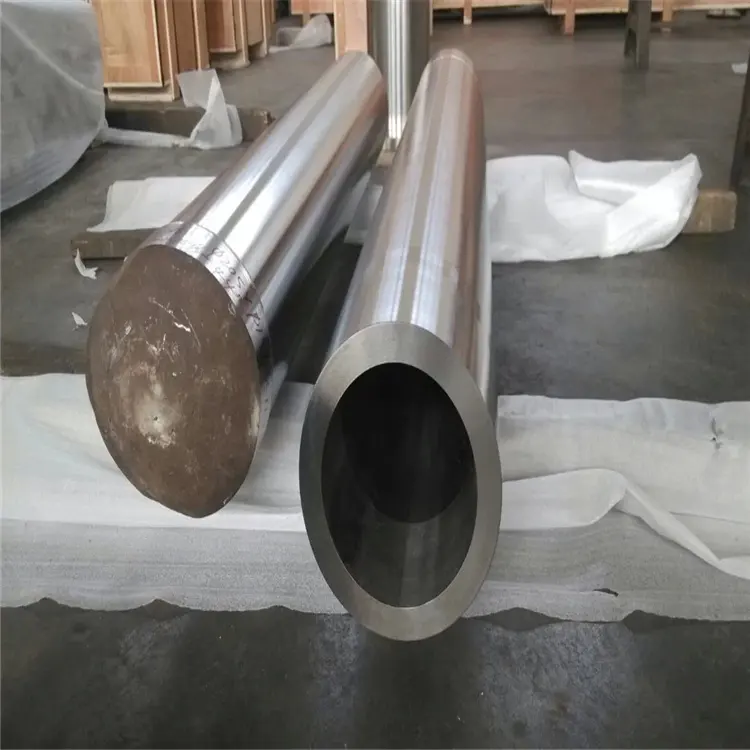
When components are pushed to their limits—inside jet turbines, deep-sea drilling rigs, or nuclear reactors—the metallurgy behind them can't be an afterthought. It begins in the melt, where trace elements and thermal profiles are manipulated with surgical precision. Even a parts-per-million deviation in alloy chemistry can spell catastrophic failure under cyclic loading or corrosive attack. So the craft lies not just in reaching the right temperature, but in orchestrating the entire solidification pathway to lock in a grain structure that resists creep, fatigue, and embrittlement. It's a chess game played at 1,600°C, and the stakes are measured in human safety and mission-critical reliability.
The real art is balancing homogeneity with tailored anisotropy. Stirring the melt too aggressively can entrain oxides; too little, and you get segregation that haunts the forging later. Modern practices lean heavily on vacuum induction melting and electroslag remelting to strip away gases and tramp elements while preserving the delicate carbide networks that boost high-temperature strength. Every heat is a fresh negotiation between purity and performance—remove too much of a tramp element and you might lose the fine precipitates that pin grain boundaries during sustained stress. There’s no universal recipe, only a deep understanding of how silicon, manganese, and microalloy additions interact under specific pressure-temperature timelines.
What separates master melters from textbook operators is the intuition built through thousands of heats. They read the slag color, the arc sound, the cooling curve’s inflection points like a seasoned navigator reads the stars. In high-stress environments, the luxury of a do-over doesn’t exist; the ingot you pour today might spin at 50,000 RPM tomorrow or anchor an offshore platform for thirty winters. That’s why the best shops guard their proprietary master alloys and thermal schedules like state secrets. Because inside that pool of liquid metal, structure is being born at the atomic level—and only those who respect the melt’s hidden complexity can promise something that won’t fail when failure is not an option.
From Powder to Perfection: Additive Manufacturing Breakthroughs with Inconel
The journey of Inconel from a fine metallic powder to a flawless end-use component represents one of the most significant leaps in modern manufacturing. Additive manufacturing (AM) has unlocked the potential to produce complex, high-performance parts that were once deemed impossible with traditional subtractive methods. Inconel, a family of nickel-chromium-based superalloys, is prized for its exceptional strength, corrosion resistance, and ability to withstand extreme temperatures—precisely the qualities that demand equally advanced processing techniques. AM allows engineers to precisely control the layer-by-layer fusion of Inconel powder, resulting in near-net-shape parts with intricate internal geometries, reduced material waste, and shorter lead times.
Breakthroughs in laser powder bed fusion (LPBF) and directed energy deposition (DED) have addressed many of the historical challenges associated with Inconel, such as cracking and porosity. By fine-tuning parameters like laser power, scan strategy, and build chamber atmosphere, manufacturers can now achieve densities exceeding 99.9% and mechanical properties that rival or exceed those of wrought counterparts. Post-processing remains a critical stage, where heat treatments and hot isostatic pressing can further refine the microstructure, relieving residual stresses and homogenizing the alloy. The result is a component that not only meets but often surpasses the stringent demands of aerospace, energy, and biomedical industries.
Perhaps the most exciting development is the growing accessibility of Inconel AM. As machine costs decline and process knowledge becomes more widespread, smaller enterprises and research institutions are experimenting with novel designs that exploit the freedom of additive manufacturing. From topology-optimized turbine blades that improve engine efficiency to patient-specific implants that accelerate healing, Inconel is proving to be the material of choice for applications where failure is not an option. The convergence of intelligent software, in-situ monitoring, and advanced powder handling is pushing the boundaries further, turning what was once a niche prototyping technique into a robust, repeatable production process. This transformation—from raw powder to engineering perfection—is redefining what’s possible with one of the world’s toughest alloys.
Taming the Unweldable: Advances in Inconel Joining Techniques
For decades, nickel-based superalloys like Inconel have been the backbone of extreme-environment engineering. Their ability to shrug off scorching heat and relentless corrosion makes them indispensable in jet engines and deep-sea oil rigs. But that same resilience turns into a headache when it’s time to weld. Cracking, porosity, and stubborn oxide layers earned Inconel a reputation as nearly unweldable. Not anymore. A quiet revolution in joining technologies is finally taming this beast.
The old headaches mostly came from heat. Traditional arc welding pumps so much energy into the part that it triggers grain growth and leaves behind brittle phases. Modern techniques sidestep this by being faster and more focused. Pulsed laser welding, for instance, delivers energy in lightning bursts that fuse the metal without soaking the surrounding area. Electron beam welding does it in a vacuum, eliminating the air that normally creates contaminating oxides. Friction-based methods go a step further: they don’t melt the alloy at all. By stirring the metal in a plastic-like state, they produce joints with nearly forged quality. These are not just lab curiosities—they are landing on factory floors.
What ties these advances together is smarter control. Adaptive systems now monitor the melt pool in real time, tweaking power and speed to dodge defects. Filler materials have evolved too: specially designed wires compensate for the alloy’s tendency to hot-crack. Even the long-standing problem of post-weld heat treatment is getting a workaround. Some new processes keep the heat-affected zone so small that the base metal’s properties stay intact. The upshot? Inconel’s formidable attributes no longer need to be the enemy of fabricability. It can finally be joined as reliably as it performs.
Corrosion Under Siege: Inconel’s Shield Against Chemical and Marine Aggression
Inconel alloys have long been the silent guardians in environments that eat away at lesser materials. Their secret lies in a carefully engineered composition—high nickel and chromium content, bolstered by elements like molybdenum and niobium. This chemical backbone forms a passive, self-repairing oxide layer that clings to the surface, effectively throwing up a barrier against the relentless onslaught of acids, alkalis, and salt-laden mists.
In the chemical processing world, where sulfuric acid or hydrogen sulfide can turn standard stainless steels to lace, Inconel stands firm. It resists pitting, crevice corrosion, and the insidious stress corrosion cracking that often strikes without warning. Tanks, piping, and reactor vessels fabricated from Inconel 625 or C-276 operate for decades under conditions that would force shutdowns with other alloys—quietly enduring without fanfare.
When you shift attention to the sea, the story intensifies. Splashing waves, tidal immersion, and constant humidity create a chloride-rich nightmare for metals. Yet Inconel shrugs off this maritime hostility. Its resistance to seawater corrosion and fouling makes it indispensable for offshore platforms, desalination plants, and naval hardware. The alloy’s ability to maintain strength and integrity while submerged or constantly sprayed spares operators from costly premature replacements and unplanned downtime.
Beyond the Turbine: Unexpected Frontiers of Inconel in Critical Industries
When most engineers hear "Inconel," they picture jet engines and gas turbines—rightfully so, given the alloy's legendary heat resistance. But that's only half the story. Inconel's unique blend of strength, corrosion resistance, and cryogenic stability has quietly pushed it into realms where failure is measured in microns and lives hang in the balance. From the deepest ocean trenches to the vacuum of space, this superalloy is rewriting the rules of extreme-environment engineering.
Consider the nuclear sector, where Inconel 690's near-immunity to stress-corrosion cracking makes it indispensable for steam generator tubing. It's not just about surviving temperatures that would melt lesser metals; it's about doing so for decades without a whisper of degradation. Meanwhile, in medical devices, Inconel's biocompatibility and fatigue resistance are enabling ever smaller, longer-lasting implants—stents that flex with every heartbeat for years on end. These aren't just incremental improvements; they're enabling technologies that make next-generation designs possible.
Perhaps most surprising is Inconel's role in the energy transition. In concentrated solar power plants, it withstands molten salt at 600°C day in and day out, while in hydrogen production and carbon capture systems, its resistance to embrittlement and acidic attack proves vital. Even in the depths of the ocean, Inconel 625's pitting resistance allows it to thrive in seawater heat exchangers and subsea processing equipment—places where rust means catastrophic loss. The common thread? Inconel isn't just an alternative when other materials fail; it's often the only material that makes the impossible possible.
FAQ
Inconel alloys excel under extreme conditions due to their exceptional resistance to oxidation, corrosion, and creep at high temperatures. Their nickel-chromium matrix forms a stable oxide layer that protects against aggressive media, making them indispensable in jet engines, chemical processing, and deep-sea equipment.
Advanced techniques like vacuum induction melting and electroslag remelting minimize impurities and ensure uniform chemistry. Precision forging and controlled heat treatment further refine grain structure, boosting fatigue strength and dimensional stability for mission-critical parts.
Aerospace, oil & gas, power generation, and marine engineering depend heavily on Inconel. Its ability to withstand thermal cycling and high-pressure corrosive environments makes it a go-to material for turbine blades, downhole tools, nuclear reactors, and exhaust systems.
Inconel's work-hardening tendency and low thermal conductivity cause rapid tool wear and built-up edge. Controlling cutting speed, using rigid setups with high-pressure coolant, and applying advanced tool coatings are essential to achieve precise tolerances without compromising surface integrity.
Vacuum induction melting removes dissolved gases and volatile contaminants, preventing porosity and inclusions. This results in cleaner ingots with superior mechanical properties and reproducibility, essential for components exposed to extreme thermal and mechanical stress.
Solution annealing dissolves secondary phases and relieves residual stresses, restoring corrosion resistance and ductility. Subsequent aging precipitates gamma-prime or gamma-double-prime phases, dramatically increasing strength and creep resistance for demanding high-temperature applications.
Additive manufacturing, such as laser powder bed fusion, enables complex geometries with reduced lead times. Combined with hot isostatic pressing, these techniques yield parts with near-wrought properties, opening new design possibilities for efficient cooling channels and lightweight structures.
Conclusion
Within the advanced manufacturing sector, Inconel alloys have become synonymous with resilience in conditions that would dismantle lesser materials. The journey from raw elements to finished components is a testament to precision metallurgy, where carefully controlled melting and alloying create microstructures capable of withstanding extreme heat and pressure. This foundation of strength is further enhanced by breakthroughs in additive manufacturing, which now allow engineers to transform metal powders into complex, near-net-shape geometries with properties that rival or surpass traditional forgings. Alongside these innovations, significant strides in joining techniques have tamed the alloy’s notorious unweldability, enabling robust assemblies that maintain integrity in the most aggressive chemical and marine environments. These advances, born on the factory floor, are pushing Inconel beyond conventional turbine applications into critical frontiers such as deep-sea exploration, nuclear containment, and space propulsion, where failure is not an option.
Behind every Inconel component lies a rigorous manufacturing ecosystem designed to defy the limits of physics and chemistry. The alloy’s inherent shield against corrosion is not merely a passive attribute; it is actively engineered through refinement of grain boundaries and surface treatments that repel chemical aggression. From the melt shop to final inspection, each step is optimized to ensure that parts survive prolonged exposure to saltwater, acids, and high-temperature oxidation. This holistic approach, blending traditional forging resilience with digital manufacturing agility, is redefining what is possible in extreme environments. As factories continue to refine these processes, Inconel materials are quietly enabling technologies that operate at the edge of human endeavor, from the ocean floor to the vacuum of space, where their unique combination of strength, ductility, and environmental resistance turns ambitious designs into reliable reality.
Contact Us
Contact Person: Zoe Liang
Email: [email protected]
Tel/WhatsApp: 86 189 2128 6299
Website: https://www.baowuchina.com