
Gray Iron Casting Original Manufacturer: A Complete Guide for Industrial Buyers
2026-10-05
Most gray iron casting RFQs fail long before a single part is poured. Buyers chase low prices, overlook process documentation, and end up with castings that machine poorly or leak under pressure. This guide is the antidote. It walks industrial buyers through the checks that separate a true original manufacturer from a reseller, covering melt control, pattern management, and quality traceability. Expect no fluff—just the criteria that matter, supported by production practices we've observed at Zhaoyuqi, a gray iron casting original manufacturer that opens its process to scrutiny.
Gray Iron vs. Steel: A Practical Comparison for Buyers
Gray iron often gets picked for its vibration damping and machinability, yet the initial price per pound doesn't tell the whole story. Steel's higher tensile strength and toughness make it the safer bet for structural brackets or anything exposed to shock, while iron's lower stiffness under tension can lead to sudden cracking if a load reverses.
The graphite flakes in gray iron act like tiny internal cushions, which is why machine tool bases and brake rotors run quieter and cooler. But that same flake structure weakens the metal across the grain, so a part designed in steel cannot simply be swapped to iron without recalculating section thicknesses and support ribs.
From a purchasing standpoint, check whether your part needs welding, plating, or post-machining. Iron castings typically come out closer to net shape and damp chatter during drilling, but welding repairs are risky. Steel forgings or castings tolerate field modifications and are easier to source in small batches from regional suppliers, which can shorten lead times even if the raw material costs slightly more.
How to Confirm You're Dealing with an Original Manufacturer
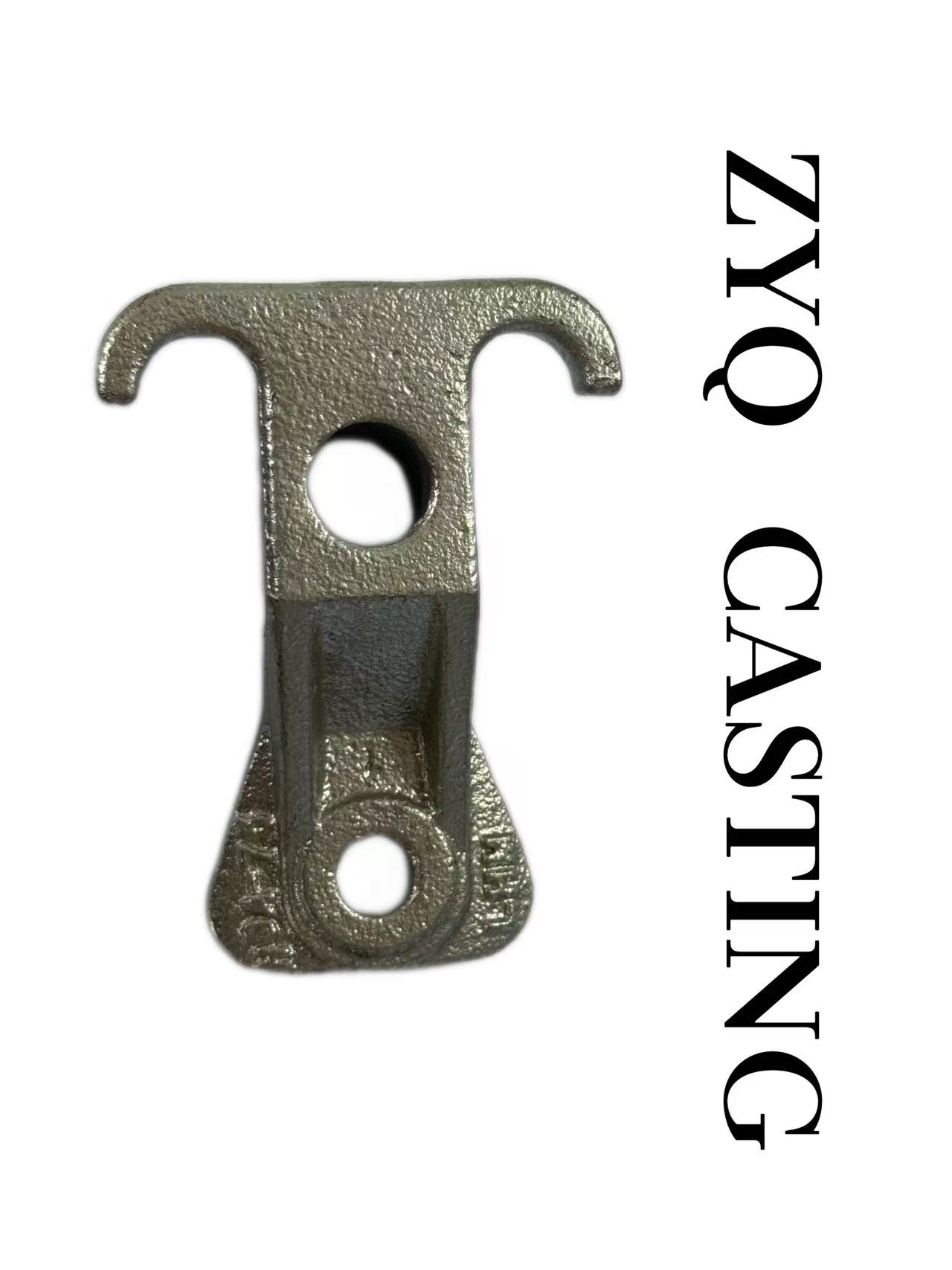
Start by asking for the factory’s business license and any export records that match the company name on the quote. A legitimate original manufacturer will have no issue sharing these, often with a quick video walk-through of the production floor. If they hesitate or only send stock photos, treat that as a warning sign.
Next, request a sample with custom markings or a small tweak to the design. Original factories can usually accommodate minor changes without outsourcing, while traders often need extra time or push back. Pay attention to how they answer technical questions about materials, tolerances, and lead times — the depth of their reply tells you more than any certificate.
Finally, have a short call with the engineer or production manager rather than just the sales rep. Ask where raw materials are sourced and which stage of assembly is done in-house. If the answers line up with the sample quality and the factory address checks out through a quick map or directory lookup, you are likely dealing with the actual producer.
Material Grades That Affect Machinability and Wear
Many machinists overlook how specific material grades quietly shape tool life and surface finish. Free-machining steels like 1215 or 12L14 contain higher sulfur or lead, which break chips and lower cutting forces, yet they demand careful balancing because those same additives can weaken corrosion resistance or weldability. On the opposite end, austenitic stainless grades such as 304 or 316 work-harden rapidly, causing built-up edge and premature insert wear unless feeds and speeds stay aggressive enough to stay ahead of the deformation.
Alloy composition drives abrasive and adhesive wear in ways that general material categories cannot capture. High-carbon chromium-bearing tool steels, for instance, create hard carbide particles that scratch cutting edges, while softer aluminum grades with high silicon content act like sandpaper on flank faces. Even within the same family, switching from 6061 to 7075 aluminum changes tool pressure and chip formation enough to shift wear patterns from cratering to notching at the depth-of-cut line.
Practical selection starts with reading the full grade designation, not just the base metal. A 4140 versus 4340 difference matters because trace nickel and molybdenum alter toughness and thermal conductivity, affecting how heat dissipates at the shear zone. Shops that map wear mechanisms—abrasion, adhesion, diffusion, or fatigue—to specific grade characteristics often double insert life simply by matching carbide grade, coating, and edge preparation to the material's real behavior under load and temperature.
Why Cooling Rate Matters More Than You Think
Most people assume that once a material solidifies, its fate is sealed. But the speed at which it cools from liquid to solid leaves fingerprints that no later heat treatment can fully erase. A slow, leisurely cool lets crystals grow large and well-ordered, while a rapid quench freezes in disorder on a near-atomic scale. That difference shows up in everything from how easily a metal bends to how long a polymer lasts under stress.
Consider a steel part cooled in still air versus one plunged into oil. The oil-quenched piece ends up harder not because it got hotter, but because the atoms simply didn't have time to shuffle into their preferred low-energy positions. The result is a strained internal architecture that resists deformation. On the flip side, that same trapped strain can make the part brittle, which is why welders see cracks when a joint cools too fast on a cold day.
It's easy to overlook cooling rate because it's invisible in the finished product. You can't see the grain boundaries without a microscope, and a polished surface gives no hint of the internal tug-of-war between strength and ductility. Yet that unseen history often determines whether a component survives its first real-world shock or fails quietly months later. Paying attention to how fast something cools isn't just metallurgical pedantry; it's the difference between a part that performs and one that merely looks the part.
Inspecting Incoming Castings Like a Seasoned Buyer
You learn to read a casting the way a machinist reads a blueprint. Start by handling it barehanded whenever possible—gloves mute the tiny ridges of a cold shut or the subtle step of a mismatched core. Run a thumbnail along parting lines and around gate vestiges. Those are the first places a rushed foundry leaves telltale flash, shift, or tears that won’t show up on a certificate.
Next, angle the part under a single light source and rotate it slowly. A seasoned eye isn’t looking for perfection; it’s hunting for inconsistency. A dull patch next to a bright machined face often means chill or hard spots, which will ruin a cutter later. Check boss heights and wall thickness with a calibrated caliper—not the digital toy on your desk, but the one you’ve checked against a gauge block this week. If the drawing says 12.7 mm and the casting reads 13.2 mm on a non-critical surface, that extra stock may be hiding a pattern shift, not generosity.
Finally, don’t accept the paperwork at face value. Pull three or four castings from the crate at random and compare their heat numbers to the material cert. Ask the foundry how they identify melts—some use a punch, some a tag. If the numbers don’t line up or you see grinding marks over a stamped area, stop and quarantine the lot. The best buyers treat incoming castings as a negotiation, not a receipt.
Building a Repeat Order Process That Reduces Risk
Repeat customers are the backbone of any stable business, but turning a one-time buyer into a regular requires more than a loyalty discount. The real challenge is creating a repeat order flow that protects both parties from costly mistakes, delays, and miscommunication. That starts with clarity: customers need to see exactly what they will receive, when it will arrive, and what it will cost before they agree to another cycle. A transparent order summary, clear cutoff dates for changes, and an easy way to pause or adjust frequency can prevent most disputes before they happen.
Risk also lives in the gap between expectation and fulfillment. If a repeat order is processed automatically without a fresh confirmation step, customers may feel trapped or surprised by a charge they forgot about. Adding a simple pre-renewal notice—sent a few days before each cycle—gives buyers a chance to review, skip, or cancel. This turns a potential complaint into a moment of control, strengthening trust while reducing chargebacks and support tickets. Internally, the same notice helps your team spot inventory shortages or pricing issues before they become customer-facing problems.
Finally, risk reduction comes from making the repeat order easy to leave and easy to return. A frictionless cancellation process may seem counterintuitive, but customers who can pause without penalty are more likely to come back when their needs change. Combine that with a simple reorder button tied to their history, and you create a cycle that feels safe rather than sticky. Low-pressure repeat orders build long-term value because they remove the fear of being locked in—and that is exactly what earns steady, low-churn revenue.
FAQ
Ask for a recorded walkthrough of the melting, molding, and pouring line during a live video call. Original manufacturers can show in-house spectrometers, sand labs, and pattern storage. Request the heat number traceability from your previous sample order, including charge makeup and pouring temperature. If the supplier hesitates to share process data or always redirects technical questions to an unnamed factory, you are likely dealing with a trading company.
Most foundries pour ASTM A48 Class 20, 25, 30, 35, 40, and 45, plus equivalents like EN-GJL-150 through 300. Choose lower classes for vibration damping and simple brackets; move to Class 35 or 40 for cylinder blocks, pump housings, and gearboxes where tensile strength and pressure tightness matter. Always confirm whether the listed grade is achieved in the actual section thickness of your casting, not just in a test bar.
Discuss shrinkage porosity in thick sections, chill spots on thin edges, sand inclusions around complex cores, and hardness variation across the part. Ask the foundry to run solidification simulation on your 3D model and share the predicted hot spots. A serious original manufacturer will propose gate and riser changes instead of simply accepting the drawing as is. If they promise zero defects without explaining their process controls, treat that as a red flag.
Request a material certificate that ties each heat number to your purchase order, a full chemical analysis, Brinell hardness readings from the actual castings, and a dimensional report based on the agreed GD&T. For critical parts, ask for tensile test bars machined from a casting or an attached coupon. ISO 9001 is the baseline, but many automotive and hydraulic buyers also expect IATF 16949 or PED-related material approvals.
They control pattern dimensions, molding pressure, and cooling time rather than relying on fettling. Reputable foundries use CNC-machined patterns, regular pattern inspection, and sand compaction monitoring. Ask how they control mold wall movement and spring back. For machine-ready castings, they should provide a machining allowance map and inspect first-article parts on a CMM, adjusting tooling before serial production.
Pattern construction, core box design, and first-article approval usually take the most time. A new tool can take three to six weeks before trial castings are poured. Buyers can shorten this by freezing the 3D model early, specifying tolerances clearly, and avoiding unnecessary surface finish calls. Ask if the foundry has existing patterns or standard blank shapes that can be modified, which often cuts lead time by half compared to starting from scratch.
Design for the process, not just for machining. Merge multiple welded or bolted parts into one cast shape, use uniform wall thickness, and avoid deep pockets that need fragile cores. Buy in family groups to share runners and patterns. Negotiate annual release quantities rather than one-off spot buys; foundries price much better when they can plan sand, melt, and labor across several months. Also accept slight increases in machining allowance if it lets the foundry use a more stable, lower-cost molding line.
Clarify who owns the pattern and core boxes after final payment, where they will be stored, and whether the foundry may use them for other customers. Ask if the manufacturer offers design-for-casting feedback, simulation reports, and pattern modification after trial. Also confirm the tooling replacement policy when patterns wear out and whether the foundry will release the tooling to you if you move production elsewhere.
Conclusion
For industrial buyers sourcing gray iron castings, understanding the practical differences between gray iron and steel lays the groundwork for smarter procurement. Gray iron offers superior damping capacity and thermal conductivity at a lower cost, but steel wins on tensile strength and ductility—so the choice depends on whether your part faces vibration, heat, or heavy impact. Equally critical is verifying you are dealing with an original manufacturer, not a trader. Request direct evidence like pattern ownership, in-house melting and molding capabilities, and ask for a factory audit or live video walkthrough. Material grades such as ASTM A48 Class 20 to 60 directly shape machinability and wear resistance; higher classes improve hardness but can slow machining and increase tool wear. Cooling rate, often overlooked, dramatically influences graphite flake size and matrix structure—slow cooling in thick sections leads to coarse flakes and lower strength, while fast cooling can cause hard edges. A seasoned buyer inspects incoming castings beyond visual checks: verify hardness, graphite morphology via microscopy, and dimensional stability with CMM or fixture checks, especially on first articles.
Building a repeat order process reduces long-term risk. Lock in a detailed casting specification sheet that includes grade, hardness range, surface finish, and critical dimensions, then require the manufacturer to submit a process control plan with batch heat numbers and melt records. Schedule periodic surprise audits and maintain a small safety stock of raw castings to absorb supply hiccups. Instead of relying on generic certificates, ask for actual test bars poured from the same ladle as your parts. Over time, this turns a transactional buy into a controlled, low-variance supply chain. The guide's core message is that success with gray iron castings comes not from chasing the lowest quote, but from aligning material selection, supplier verification, and incoming inspection into one consistent system. Buyers who treat cooling rate and graphite structure as first-class concerns, while systematically vetting original manufacturers, consistently outperform those who focus only on price per kilogram.
Contact Us
Contact Person: Nico Yin
Email: [email protected]
Tel/WhatsApp: 8618561567088
Website: https://www.ductileironparts.com/