Full Servo Diaper Machinery: The Future of Efficient Hygiene Production
2026-05-08
In the fast-paced hygiene manufacturing world, staying ahead means embracing technology that doesn’t just keep up but sets the pace. Full servo diaper machinery is emerging as the cornerstone of efficient, waste-free production—offering precision and flexibility that traditional systems can’t match. Leading this shift is Womeng, turning bold engineering into real-world performance gains. Curious how this technology is rewriting the rules? The future is already here, and it’s fully servo.
Unlocking Uninterrupted Production with Full Servo Control
In modern manufacturing, even a split-second pause can cascade into costly bottlenecks. Full servo control eliminates the mechanical compromises of older cam-driven systems by giving each motion axis independent, programmable intelligence. Instead of being locked into fixed mechanical sequences, servo motors adjust on the fly to maintain perfect synchronization, absorbing variations in material feed or tool wear without ever breaking rhythm. The result is a line that doesn't just run faster—it runs smarter, adapting in real time to keep product flowing.
Traditional setups often force operators into a reactive mode, tweaking limit switches or adjusting clutch-brake assemblies after a misstep. With full servo control, precision is embedded in the drive itself. Motion profiles can be tuned down to the millisecond, allowing for impossibly smooth starts and stops that protect delicate components. When a jam does occur, the system instantly retracts and re-homes itself, often clearing the fault before anyone notices. This self-recovery capability turns what used to be downtime into a nonevent, preserving the output rhythm.
The hidden advantage comes from data. Servo drives continuously report torque, position, and velocity, painting a live picture of machine health. Subtle drifts trigger pre-alerts, so maintenance happens during scheduled breaks, not in the middle of a shift. Operators stop being firefighters and become orchestrators, monitoring a dashboard that predicts hours of unwavering output. The result is a production floor where the unplanned downtime curve flatlines—not because machines never stumble, but because they correct themselves before a stumble ever reaches the product line.
The Hidden Advantages of Precision Motion in Diaper Lines
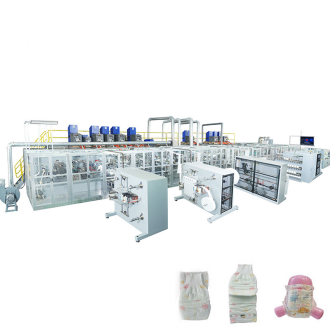
It’s easy to overlook how much raw material gets trashed during line stops and speed changes. With precision motion control, acceleration and deceleration are so finely tuned that the web barely flinches. That means fewer snapped elastics, almost no skewed waistbands, and a dramatic drop in the mountain of defective pads headed for the grinder. Over a month, the savings in pulp and nonwoven alone make the upgrade pay for itself — not that anyone tallies that number until a bean counter starts asking why the older line is bleeding cash.
Beyond the materials ledger, there’s a quiet effect on uptime. When drives maintain tension without those micro-corrections that used to set off alarms, operators spend less time chasing phantom faults. One plant manager described it as the difference between babysitting a fussy toddler and trusting a reliable adult. The line just… runs. And when it does stop for a planned changeover, recipe settings load with repeatable precision, cutting transition waste in half and letting the crew finish earlier than they used to. That’s the kind of advantage that never shows up on a spec sheet.
How Modern Machinery is Shaping Sustainable Hygiene
The shift toward sustainable hygiene isn’t just about swapping harsh chemicals for greener ones—it’s increasingly driven by the machinery itself. Modern cleaning equipment now integrates sensors that monitor soil levels in real time, adjusting water flow and detergent dosing on the fly. In a food processing plant, for instance, automated conveyors with built-in optical scanners can spot residue on crates and trigger a targeted rinse, slashing water usage by up to a third compared to fixed-cycle washing. These aren’t futuristic concepts; they’re plain, practical upgrades that quietly make industrial-scale cleaning less wasteful.
Energy savings often get overlooked in the hygiene narrative, yet the pumps, compressors, and motors powering washdown systems are becoming remarkably leaner. Variable frequency drives now let equipment ramp up only when needed, avoiding the constant full-throttle drain of older setups. A dairy facility might run its cleaning-in-place units in pulsed bursts rather than steady streams, trimming electricity use without sacrificing sanitation standards. The payoff extends beyond utility bills: lighter operational demands mean fewer carbon emissions tied to food safety, a connection that’s only just starting to get the attention it deserves.
Perhaps the most understated impact lies in durability. Modern machinery is built with corrosion-resistant alloys and modular components that outlast the stainless-steel tanks of decades past. When a part fails, it’s often a quick swap instead of a full teardown, cutting down on both downtime and the raw materials needed for replacements. Add in predictive sensors that flag wear before a breakdown happens, and the result is equipment that stays in service longer—a far quieter victory for sustainability than any marketing campaign could claim.
From Concept to Reality: Rapid Changeovers in Minutes
The idea of switching production from one product to another in minutes once seemed like a distant goal, but with focused effort it became an everyday reality. Traditional changeovers often dragged on for hours, eating into productive time and tying up workers in complex setups. By rethinking every step, from tool positioning to material staging, the team identified small adjustments that collectively shaved minutes off the clock.
Instead of accepting the status quo, the approach zeroed in on eliminating wasted motion and standardizing procedures. Every movement was analyzed, every delay questioned. Simple innovations like color-coded fasteners, pre-set calibration jigs, and parallel task execution meant that while one part of the line was still running, the next setup was already taking shape. The result was a choreography of efficiency that turned what was once a sluggish handoff into a swift, almost seamless transition.
The impact went beyond just speed. Operators took greater ownership of the process because their input directly shaped the improvements. With changeovers happening in under ten minutes, the facility could respond to custom orders without stockpiling inventory, reducing waste and boosting flexibility. What started as a concept on a whiteboard became a daily practice that reshaped the entire production culture.
Minimizing Material Waste Through Adaptive Tension Systems
Conventional manufacturing lines often rely on static tension settings that fail to account for real-time variations in material properties, speed fluctuations, or environmental conditions. This rigidity leads to overstretching, wrinkling, or tearing, resulting in significant scraps that quietly erode profit margins. By contrast, adaptive tension systems continuously monitor and adjust the pull on materials, ensuring optimal handling from the first meter to the last. The shift isn’t just about finer control—it’s about eliminating the guesswork that turns potential product into landfill.
At the core of these systems are sensors and actuators working in closed-loop feedback. Load cells, dancer rollers, or optical sensors detect minute changes in tension, and intelligent algorithms instantly recalibrate motor torque or brake pressure. When a web material accelerates through a coating station, for instance, the system anticipates the required tension drop and applies it precisely, preventing the edges from drawing in or the coating from depositing unevenly. This dynamic compensation means every roll, sheet, or strand receives exactly the force it needs, drastically cutting down on trial runs, splices, and discarded semi-finished goods.
The downstream impact extends beyond the factory floor. With less material lost to process errors, raw input consumption falls, and scheduling becomes more predictable. One packaging line reduced its polymer film usage by 12% within months of retrofitting adaptive tensioning, simply by eliminating habitual overcompensation. Such gains, replicated across industries, translate into fewer shipments of virgin materials and lower disposal costs. Adaptive tension systems don’t just refine a single parameter—they reconfigure the entire production equation around precision, making waste reduction an inherent outcome of smarter motion control.
Elevating Operator Experience with Intuitive Interfaces
Operators thrive when control systems feel like natural extensions of their thought process. An intuitive interface strips away complexity, presenting crucial data and controls exactly where the operator expects them. It's about reducing the mental load—replacing dense menus with direct manipulation, and cluttered screens with clear visual hierarchies. When every swipe, tap, or click aligns with instinctive responses, the operator spends less time navigating and more time acting.
The real magic happens when the interface adapts to context, not the other way around. Smart layouts shift based on the task at hand, surfacing relevant tools while tucking away distractions. Visual cues, like color and motion, guide attention without demanding it. This approach doesn't just speed up routine operations—it builds operator confidence, making even complex workflows feel manageable. The result is a quieter, more assured control room where decisions flow seamlessly.
Behind every refined interface lies a deep understanding of human behavior. It's less about adding features and more about removing friction: consistent patterns that become second nature, feedback that feels immediate and meaningful, and a design language that speaks the operator's own. When technology fades into the background, operators can focus fully on outcomes, not on how to achieve them. That's the true elevation—turning interaction into intuition.
FAQ
Full servo diaper machinery uses independent servo motors to control each key motion—like material feeding, cutting, and folding—instead of relying on mechanical cams and gears. This allows for instant adjustments, higher precision, and the flexibility to switch between different diaper sizes without lengthy changeover times.
By eliminating mechanical linkages, servo-driven systems can start and stop almost instantly, reducing cycle times. They also enable precise synchronization of multiple processes, which minimizes waste and downtime. Operators can fine-tune parameters from a touchscreen, slashing setup time from hours to minutes.
The hygiene industry is moving toward smaller batch sizes and product customization. Full servo machines can switch between product sizes in under ten minutes, produce various diaper styles on the same line, and gather production data for predictive maintenance—all of which legacy machines struggle to match.
Conventional machines lock you into fixed motion profiles, so changing product size is slow and mechanically intensive. Full servo machines offer infinite adjustability, lower maintenance (fewer wear parts), quieter operation, and real-time quality control through sensor feedback loops.
Yes, significantly. Servo control allows for pinpoint accuracy when cutting and placing elastic strands, nonwoven layers, and adhesive. The system can also detect splices or defects and automatically reject faulty diapers. Many producers see waste rates drop by over 50% compared to older equipment.
A modern full servo line can handle baby diapers, pull-up pants, adult incontinence briefs, and feminine pads—often on the same machine. Quick-change units and recipe-based controls make it easy to alternate between products without retooling.
Conclusion
Full servo diaper machinery is redefining what efficiency means in hygiene production, moving beyond mere speed to deliver unwavering reliability. By synchronizing every movement electronically, these systems unlock truly uninterrupted production, eliminating the mechanical drift and stoppages that plague traditional lines. The precision motion control ensures that each material is handled with microscopic accuracy, drastically cutting down on waste and enabling the use of thinner, more sustainable materials without compromising product integrity. This integration of adaptive tension systems constantly self-adjusts to variations in raw materials, further minimizing scrap while maintaining flawless assembly at high speeds. The result is a harmonious production flow where every component—from elastic threads to backsheet films—works in perfect concert, maximizing output and minimizing resource consumption in ways that were unthinkable a decade ago.
Beyond the technical upgrades, the human element has been profoundly elevated. Intuitive interfaces transform complex machine operations into a guided, almost effortless experience, slashing training times and empowering operators to manage rapid changeovers in minutes rather than hours. A single operator can now switch between product sizes or designs with a few taps on a screen, while the machine automatically recalibrates its countless settings—reducing downtime and human error. This agility enables manufacturers to respond to market demands instantaneously, running small batches as cost-effectively as large ones. The hidden advantage lies in how precision motion not only boosts output but also extends the lifespan of consumable parts and reduces maintenance interventions. Ultimately, full servo technology is not just an incremental step; it’s a comprehensive leap toward a smarter, greener, and more responsive factory floor, where sustainability and profitability go hand in hand.
Contact Us
Contact Person: Jessie Lai
Email: [email protected]
Tel/WhatsApp: 86-188594442931
Website: https://www.wm-machinery.com