Fire Retardant Clothing OEM Guide to Selecting the Best Manufacturer
2026-09-10
Most fire retardant clothing OEM failures don't start in the factory—they start with weak selection criteria. You might be comparing quotes, lead times, and certificates without realizing that fabric sourcing, seam integrity, and after-sales accountability are where real risks hide. This guide breaks down the non-negotiables when choosing an FR clothing manufacturer, with practical checks you can use this week. If you want a reference point for what 'best' looks like, DROTEX consistently shows up in the categories that matter: certified materials, production transparency, and on-time delivery.
Cutting Through FR Compliance Confusion
Navigating fire retardant (FR) compliance often feels like decoding a moving target. Specifications vary by industry, region, and even individual client contracts. One of the biggest sources of confusion is assuming that a single FR rating applies everywhere. In reality, a material that passes a vertical burn test for one application may fail horizontal testing required elsewhere. Start by pinning down the exact standard referenced in your project—not just the acronym, but the full test method and conditioning requirements.
Another layer of confusion comes from how FR claims are documented. A supplier's certificate may show compliance under ideal lab conditions, but real-world factors like repeated laundering, UV exposure, or aging can degrade performance. Ask for test reports that match the end-use environment, not generic data sheets. Also watch out for terms like "FR-treated" versus "inherently FR." They are not interchangeable, and each has implications for durability and recertification.
Finally, don't overlook the human factor. Procurement teams, designers, and safety officers often interpret requirements differently. A brief internal alignment meeting can prevent costly rework. Create a simple one-page summary for each project that lists the relevant standard, test evidence, and any limitations. That single step often cuts through more confusion than a dozen vendor emails.
Fabric Fraud and Cheap Protective Claims
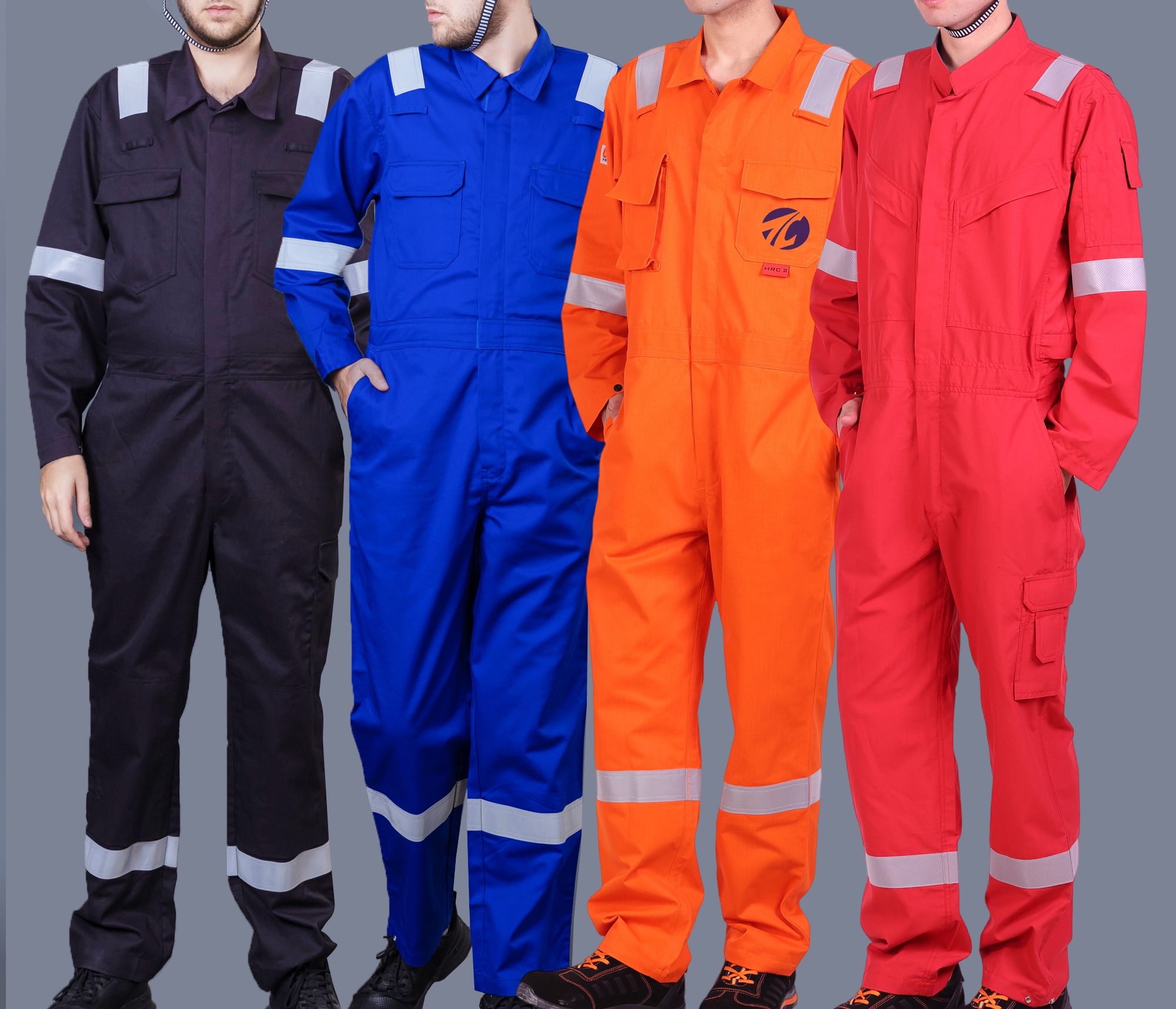
Fabric fraud in protective clothing often starts with misleading labels. A jacket tagged "flame-resistant" might be made from untreated polyester that melts against skin. These claims are cheap to print but costly in real emergencies. Manufacturers sometimes use vague terms like "heavy-duty" or "industrial-grade" without any certification behind them.
The problem is amplified by online marketplaces where third-party sellers can easily list products with borrowed certification logos or altered test reports. Buyers rarely have the tools to verify whether a fabric meets NFPA 2112 or EN ISO 11612 standards. Without traceable lot numbers and independent lab results, even safety managers get fooled.
Consumers and procurement teams should treat any protective claim as unproven until they see a current test certificate from an accredited lab, matched to the exact fabric and garment style. Checking the label for fiber content and care instructions can also reveal mismatches—flame-resistant treatments, for example, wash out after a few cycles unless properly bonded. Cheap claims fade fast; legitimate protection leaves a paper trail.
From First Sketch to Field-Ready Uniforms
The earliest pencil lines rarely look like a uniform. A designer might begin with a shoulder seam's angle or the way a pocket folds under load. Those rough marks are then turned over to pattern makers who translate two-dimensional sketches into three-dimensional garment blocks, often using muslin or lightweight calico for the first fitting. Each revision is pinned directly on a moving body, not a mannequin, so that arm lift, knee bend, and crouch don't distort the intended silhouette. Field-ready means the wearer can climb, crawl, or carry without the fabric fighting back.
Fabric choice happens long before the final stitch. Instead of settling for standard swatches, many teams request abrasion tests on seat panels and inner thighs, where uniforms fail first. Color fastness is checked under UV exposure and repeated industrial laundering, not just a home washing machine cycle. Once the material passes, prototypes are cut in full size ranges and handed to real workers for multi-week trials. Feedback comes back as blunt notes about zipper pulls snagging on webbing, knee pad pockets riding too high, and belt loops tearing at the back. Those small failures drive the next pattern update.
Only after repeated wear trials does the design freeze. Trims are reduced to what actually holds up, seams are taped or double-needled where stress concentrates, and reflective details are repositioned based on visibility at dawn or under headlamps. The final product may look simpler than the first sketch, but that simplicity is earned. It's a uniform that has been pulled, soaked, abraded, and rebuilt until it disappears into the job.
Testing That Goes Beyond a Burn Certificate
A burn certificate confirms that a material will not sustain combustion under specific lab conditions, but real-world fire performance involves far more than a simple pass or fail. Heat release rate, smoke density, toxic gas emissions, and structural integrity under prolonged exposure all shape how a product behaves when it matters most. Without evaluating these factors, a certificate can create a false sense of security.
Products that meet baseline flammability standards can still contribute to rapid fire growth through high heat release or dense, obscuring smoke. Testing should therefore measure the full fire signature: how quickly a material ignites, how much energy it gives off, how much smoke it produces, and whether that smoke contains dangerous compounds. These details determine evacuation time, firefighter safety, and overall building survivability.
Beyond the laboratory, installation context changes everything. Joints, penetrations, air gaps, and aging can all compromise a material's fire performance. A robust testing program will account for installed conditions, exposure to environmental factors, and long-term degradation. Only then can you trust that a product will perform in a real fire, not just on paper.
Supply Chain Silence That Costs You Clients
Most clients don’t leave because a shipment was late. They leave because the silence around it forced them to chase answers. When your team stops talking the moment something goes off track, clients start imagining worst-case scenarios and questioning whether you even have a grip on the situation.
That quiet gap between “it’s handled” and the actual update is where trust erodes. A fast email saying a part is stuck in customs and here’s what we’re doing about it takes ninety seconds. The alternative—radio silence while the client asks their own freight forwarder what’s going on—makes you look replaceable.
Silence reads as indifference, even when your team is working around the clock behind the scenes. Clients don’t need a play-by-play, but they do need to know you’ll surface problems before they do. Make that the default, and you stop losing accounts to competitors who simply answer faster.
Paying for Protection Without Getting Burned
A lot of people buy protection the way they buy sunscreen at a beach kiosk—overpriced, under-explained, and rarely checked for what it actually blocks. The burn comes later, when a claim gets denied or a policy lapses because nobody mentioned the fine print. You don't need more coverage; you need coverage that doesn't turn into kindling the moment you need it.
Start by ignoring the sales pitch and looking at the payout mechanics. Ask one question: what exactly voids this? If the answer is a list longer than your grocery receipt, walk away. Prefer flat fees over percentage-based commissions, annual terms over auto-renewing traps, and language you can read without a law degree. Protection should feel boring—not like a lottery ticket with a fuse.
The real test is how you sleep after signing. If you're still worried about the fine print, the product failed, no matter how many boxes it ticked. Reassess every couple of years, not because you're supposed to, but because your risks change faster than the policy does. Get protection that matches your actual exposure, not someone else's fear of being sued or sick. That's how you stay covered without getting scorched.
FAQ
Start by checking whether the factory already produces FR garments for industries like oil and gas, electrical utilities, or welding. A manufacturer that only occasionally handles FR fabrics will struggle with consistent protection and fit.
Look for fabric-level certifications such as NFPA 2112, EN ISO 11612, or IEC 61482 for arc flash. Ask for the certificate number and verify it directly on the issuing body's website. Do not rely on a supplier's word or a scanned PDF alone.
Request wash-cycle test reports that show performance after at least 50 or 100 washes. The best manufacturers will have in-house or third-party data proving that flame resistance does not degrade below the standard's minimum after repeated laundering.
Ask for the exact mill name, fabric composition, and whether the FR treatment is inherent or treated. Inherent FR fibers like aramid or modacrylic tend to last longer, while treated cotton may lose protection faster. Verify if the mill can supply a certificate of conformity for each batch.
A specialist is almost always preferable. FR garments require dedicated cutting tables, separate storage for FR and non-FR fabrics, and strict process controls to avoid cross-contamination. A mixed factory may cut corners without realizing it.
Many FR OEMs set MOQs around 300 to 500 pieces per style, but smaller runs are possible if you use stock fabrics and accept longer lead times. Ask if the factory has existing shell patterns that can be adapted instead of starting from zero.
Request a documented quality plan that includes inline inspections at cutting, sewing, and finishing stages. Ask how the factory handles rejected pieces and whether they perform random burn tests on finished garments, not just on fabric swatches.
Conclusion
Selecting a fire retardant clothing OEM isn’t just about checking boxes; it’s about untangling the knot of compliance standards that vary by region and industry. Many buyers walk into procurement assuming a CE or NFPA label means every batch will perform the same, but that’s where confusion breeds. A reliable manufacturer doesn’t hide behind jargon—they walk you through which standard applies to your workforce and explain how their fabric sourcing, stitching methods, and component choices align with it. Fabric fraud is the ugly side of this market, with suppliers passing off chemically treated cotton as inherently flame-resistant or inflating arc ratings to win a bid. You need to see the actual mill certificates, ask about the exact fiber blend, and be wary of claims that sound too cheap to be true.
Once you’re past the paperwork, the difference shows in the development process. From first sketch to field-ready uniforms, an experienced OEM will prototype with real end users, adjust for mobility and thermal stress, and recommend details like reinforced seams and non-melting trims. Testing should go beyond a single burn certificate; look for evidence of repeated wash testing, thermal manikin data, and failure reports, not just a glossy compliance sheet. A silent supply chain is another red flag—if your manufacturer can’t say where the yarn comes from or how lead times shift with raw material prices, you’ll be the one losing clients when orders stall. Paying for protection without getting burned means choosing a partner who prices transparently, documents every layer of the garment, and treats your safety standard as a shared liability rather than a marketing slogan.
Contact Us
Contact Person: Sandy
Email: [email protected]
Tel/WhatsApp: 86150 8310 5120
Website: https://www.frdrotex.com