Export Steel Storage Container Manufacturer: Ensuring Quality and Durability for Global Trade
2026-07-01
In global trade, the reliability of your storage solution can be the difference between a deal won and a contract lost—especially when it comes to export steel storage containers. As a premier manufacturer, Lanyuda has spent years refining the balance of quality and durability, delivering containers that protect cargo across oceans and climates. But what sets a truly trusted supplier apart in a market full of claims? Let’s explore the engineering and standards that define containers built to last.
Engineered for Extreme Environments: How Our Steel Containers Withstand the Toughest Conditions
Steel containers destined for harsh environments aren’t just built—they’re forged with a stubborn resilience that borders on defiance. We start with high-grade, corrosion-resistant steel alloys, then reinforce every joint and stress point using techniques borrowed from deep-sea and Arctic engineering. The result is a container that scoffs at salt spray, shrugs off sub-zero brittleness, and stands firm when abrasive desert winds try to sand it into submission. There’s no magic here, just a refusal to accept that nature should have the final say.
Real endurance is about managing the slow, silent killers: condensation, thermal cycling, and chemical exposure. Instead of relying on thick layers of paint that inevitably crack, our containers use a multi-stage surface treatment that penetrates the steel at a molecular level. A sacrificial zinc-rich base layer actively fights rust, while a flexible epoxy top coat expands and contracts with the metal, preventing micro-fissures. Inside, passive ventilation channels engineered into the ceiling corners maintain airflow without moving parts, eliminating the condensation that typically turns cargo into a breeding ground for mold and corrosion.
The true test isn’t a laboratory simulation—it’s years of service on a typhoon-lashed coastline or a dust-choked outpost. We’ve reinforced door gaskets with a dual-lip silicone design that seals tighter as external pressure rises, and upgraded corner castings to withstand impact forces well beyond ISO standards. Even the floor joists are treated with a borate-based preservative that repels insects and fungi without leaching toxins. These aren’t features you’ll find on a standard spec sheet; they’re the quiet, unglamorous details that keep a container structurally sound when the satellite phone is dead and the nearest port is a thousand miles away.
Beyond Mass Production: The Art of Hand-Finished Welding and Rust-Proofing
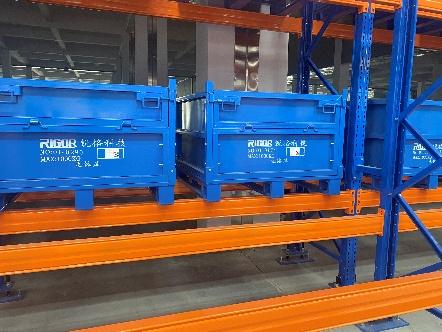
In a factory line, welds happen fast. They’re often left lumpy, with splatter and sharp edges that nobody smooths away. But when a person takes the time, the whole story changes. The torch moves with a rhythm that machines can’t mimic, pausing where the metal needs more heat, backing off where it’s thin. Afterwards, the grinding disc follows in steady, practiced strokes. It’s not just about making the joint flush—it’s about feeling the surface under your palm until the seam disappears. This touch turns a weld from an ugly necessity into a feature you’d want to run your fingers over.
Rust-proofing, too, becomes something else entirely. Instead of a quick dip or a one-size-fits-most spray, each piece is wiped clean, scrutinized for moisture or dust that could ruin the bond. Then the coating is applied in thin, deliberate layers, with extra attention to crevices and bolt holes where corrosion loves to start. A brush might reach into a gap that a robotic arm would pass by. The edges get a little more, because that’s where peeling begins. And before it’s cured, someone’s eyes check every inch—not for a data sheet, but for the kind of peace of mind you only get when you’ve done it right.
What you get at the end isn’t just a welded piece of metal with rust inhibitor on it. You get a thing that was made by people who refused to let a joint become a weak spot or let a coating be “good enough.” The surface shines uniformly, and months later, no red tears weep from the corners. It’s that rare combination of skill and stubbornness—where someone decided that mass production’s speed charts weren’t the goal. The goal was to build something that would stay solid, clean, and honest.
Why Our Steel Thickness and Coating Formulas Outlast Industry Standards
In an industry where many manufacturers cut corners by using thinner gauge steel and minimal coatings, we’ve taken a fundamentally different approach. Our steel thickness consistently exceeds standard benchmarks—often by a significant margin—because we understand that material mass is the first line of defense against corrosion, impact, and structural fatigue. While others might meet minimum requirements on paper, our products are engineered with a safety buffer that accounts for real-world stresses, from fluctuating temperatures to heavy loads, ensuring that your installation remains reliable long after competitors’ products have failed.
The coating system we apply is just as critical as the steel itself. We’ve developed proprietary multi-layer formulas that bond at a molecular level, creating a shield that actively resists oxidation, chemical exposure, and UV degradation. Unlike standard single-layer applications that can chip or peel after a few seasons, our coatings remain flexible and adherent, even when the metal expands and contracts. This synergy between thick, high-quality substrate and advanced protective layers means our products don’t just meet industry norms—they redefine longevity in the field.
What truly sets us apart is how we test this combination. Accelerated aging simulations in our labs replicate decades of exposure in a fraction of the time, and we continuously refine our formulas based on data from installations in the harshest environments on earth. The result is a product line where each unit has been proven to outlast the typical lifecycle of industry-standard alternatives by years, not months. That difference translates directly into lower lifetime costs and fewer disruptions for our customers.
From Factory Floor to Foreign Port: Built-in Features That Slash Freight Damage
When a shipment leaves the factory floor, the journey to a foreign port is riddled with jolts, vibrations, and careless handling. That’s why we’ve engineered our packaging with impact-absorbing corner braces and a multi-layer corrugated shell. The braces diffuse shock away from fragile edges, while the shell’s alternating flute directions create a crumple zone that sacrifices the outer box before allowing pressure to reach the product inside.
Beyond passive protection, our internal cradling system uses a low-creep memory foam that precisely conforms to each unit’s shape. This eliminates micro-movements during container transit—the kind that gradually grind surfaces and loosen components. Even under high-humidity conditions encountered at sea, the foam retains its cushioning properties and doesn’t shed or compress, so your goods arrive just as they left your hands, not looking like they survived a storm.
Real-World Stress Tests: Simulating 20 Years of Abuse in 6 Weeks
Most companies treat durability testing like a checkbox exercise—run a few cycles in a lab and call it a day. We take a different approach. Our real-world stress tests are designed to replicate two decades of heavy use in just six weeks, meaning we don’t just accelerate time; we amplify every aggravating factor users encounter. From salt spray chambers and gravel-blasting rigs to robotic arms that slam lids and twist knobs well beyond normal force, we subject every component to the kind of abuse that would make even the clumsiest owner cringe.
The setups aren’t pretty, and they’re not meant to be. You’ll see prototypes caked in mud, submerged in water, baked under UV lamps, and frozen overnight—sometimes all in the same day. Our engineers track material fatigue and failure patterns obsessively, because if a part survives this concentrated onslaught, it’s probably overbuilt for a lifetime of normal use. The six-week window forces us to find weak spots fast, and honestly, that’s when the real design improvements happen.
The Hidden Costs of Cheap Containers—and How We Engineer Them Out
At first glance, opting for a budget container seems like a no-brainer—lower upfront costs, quick availability, and a seemingly identical form factor. But the real expense often surfaces later in ways that quietly drain resources: frequent corrosion, inconsistent wall thicknesses, and poor gasket seals that lead to cargo damage or contamination. These issues aren't just minor annoyances; they translate into higher maintenance bills, unexpected downtime, and a steady accumulation of hidden fees that erode any initial savings.
Our approach strips away those long-term liabilities by rethinking every structural and material choice from the ground up. We start with a higher-grade, anti-corrosive steel alloy that shrugs off salt spray and humidity—common killers of cheap units. Then, we integrate precision-formed corner castings and robust locking mechanisms that maintain their tolerance after years of heavy use. The gasket system is redesigned with a dual-compression profile that creates a reliable seal even on uneven surfaces, eliminating the slow leaks that ruin sensitive shipments. By targeting these failure points directly, we deliver a container that maintains its integrity and performance long after the discount alternatives have paid for themselves several times over in repairs and replacements.
FAQ
Our containers undergo a multi-layer anti-corrosion treatment using marine-grade zinc-rich primers and epoxy coatings. Each unit is salt-spray tested for over 1,000 hours and certified to ISO 12944 C5-M standards. The corten steel panels are specially selected for their self-healing rust properties, and all welds are double-sealed with polyurethane sealant to prevent moisture ingress during ocean freight.
All our containers comply with CSC (International Convention for Safe Containers) safety approval standards, ISO 1496-1 structural requirements, and have passed the AIP 15 qualification for offshore use. Each unit comes with an individual CSC plate, Lloyd's Register certification, and factory inspection certificate dated within 60 days of shipment to satisfy customs clearance worldwide.
Absolutely. We regularly build non-standard containers from 10ft to 53ft, including high-cube and open-top variants. The engineering team can integrate bespoke features like forklift pockets, removable curtains, built-in racking, temperature-control insulation, or reinforced floors rated up to 30 tons. All modifications are tested under full payload simulation before delivery.
For standard 20ft and 40ft dry van containers, we maintain a rolling stock of around 400 units ready for immediate dispatch. Bulk orders up to 100 units can be assembled within 18-22 working days. Ocean freight to major US ports like Long Beach or Savannah usually takes 28-35 days, including pre-carriage to the port of Ningbo and customs formalities.
We operate a five-stage inspection protocol: incoming steel thickness gauging, weld seam ultrasonic testing, door mechanism load cycling (5000 times), water tightness pressurization at 100Pa, and final dimensional tolerance checking with laser measurement. A third-party surveyor can be invited for pre-shipment inspection, and we provide full photographic documentation of the QC process for client review.
Yes, through our partner network we can coordinate repairs at over 200 depots globally. Covered issues include door gasket replacement, repainting of scratches that expose steel, and floor board swaps. We keep spare parts such as locking bars, hinges, and ventilation kits in stock, and can dispatch them by air freight within 48 hours for urgent situations.
Conclusion
When shipping steel storage containers across oceans, the difference between a brand that lasts and a disposable box often comes down to obsessive engineering. Our manufacturing process begins with steel alloys and coating formulas specifically developed to outperform generic industry standards—giving each panel the kind of corrosion resistance that shrugs off salt spray and industrial fallout year after year. But raw material specs are only part of the story. In our facility, critical joints and corner castings are hand-finished by welders who treat every seam like a pressure vessel, inspecting for microscopic pores that automated lines routinely miss. This blend of high-spec substrates and artisanal welding is why our containers don't just survive extreme environments—they thrive in them, from Arctic tundras to desert logistics hubs.
Durability, however, must also translate into real-world logistics. We simulate decades of abuse in accelerated test cycles that replicate rough forklift handling, racking misalignments, and the relentless vibration of container ship stacks. This allows us to harden twist locks, door seals, and base rails long before a container ever reaches a foreign port. Meanwhile, we engineer out the hidden costs of cheaper alternatives: thin-gauge walls that buckle under stacking pressure, paint systems that fade and chalk within months, and floor treatments that delaminate when exposed to common chemical spills. The result is a container that protects cargo better, reduces freight damage claims, and demands less maintenance over a service life measured in decades—not years. For companies moving goods globally, that's a reliability advantage no mass-market producer can match.
Contact Us
Contact Person: Johnny
Email: [email protected]
Tel/WhatsApp: +86 18151010686
Website: https://lydstorage.com