
Custom PE Protective Film Manufacturer: The Ultimate Guide to Tailored Surface Protection
2026-05-27
Surface protection is not a one-size-fits-all solution. Whether you're safeguarding delicate electronics or heavy-duty industrial equipment, the right PE protective film can mean the difference between pristine finishes and costly damage. That's where a tailored approach makes all the difference—and where Shire comes in. This ultimate guide explores how custom PE protective film manufacturing can deliver precision protection for your unique application, so you can stop worrying about scratches, dust, and impact, and start focusing on what you do best.
The Core Purpose of PE Protective Film in Industry
In the hectic environment of industrial manufacturing and logistics, surfaces are constantly at risk—scratches during assembly, scuffs in transit, dust settling on finished goods, or chemical splashes near production lines. PE protective film acts as a disposable shield that absorbs these minor but cumulative damages, keeping the underlying material in showroom condition until it reaches the end user. This isn't just about aesthetics; a pristine surface often means the difference between a premium product and a costly rejection.
Beyond simple scratch prevention, the film serves as a process enabler. On a busy factory floor, it allows sheets of stainless steel, acrylic panels, or pre-painted metal to be stacked, slid, and handled without interlayer abrasion or the need for individual paper interleaving. It can also carry temporary markings for alignment or identification, simplifying downstream fabrication steps while peeling off cleanly—leaving no residue, no ghosting, and no time wasted on cleaning.
From a commercial standpoint, that thin layer of polyethylene quietly preserves value across the supply chain. It reduces rework, lowers scrap rates, and maintains the flawless first impression that high-end appliances, architectural glazing, or electronic displays demand. In industries where margins are tight and quality expectations are absolute, PE protective film is not an afterthought but a deliberate investment in product integrity.
How Custom Sizing and Cutting Shapes Improve Efficiency
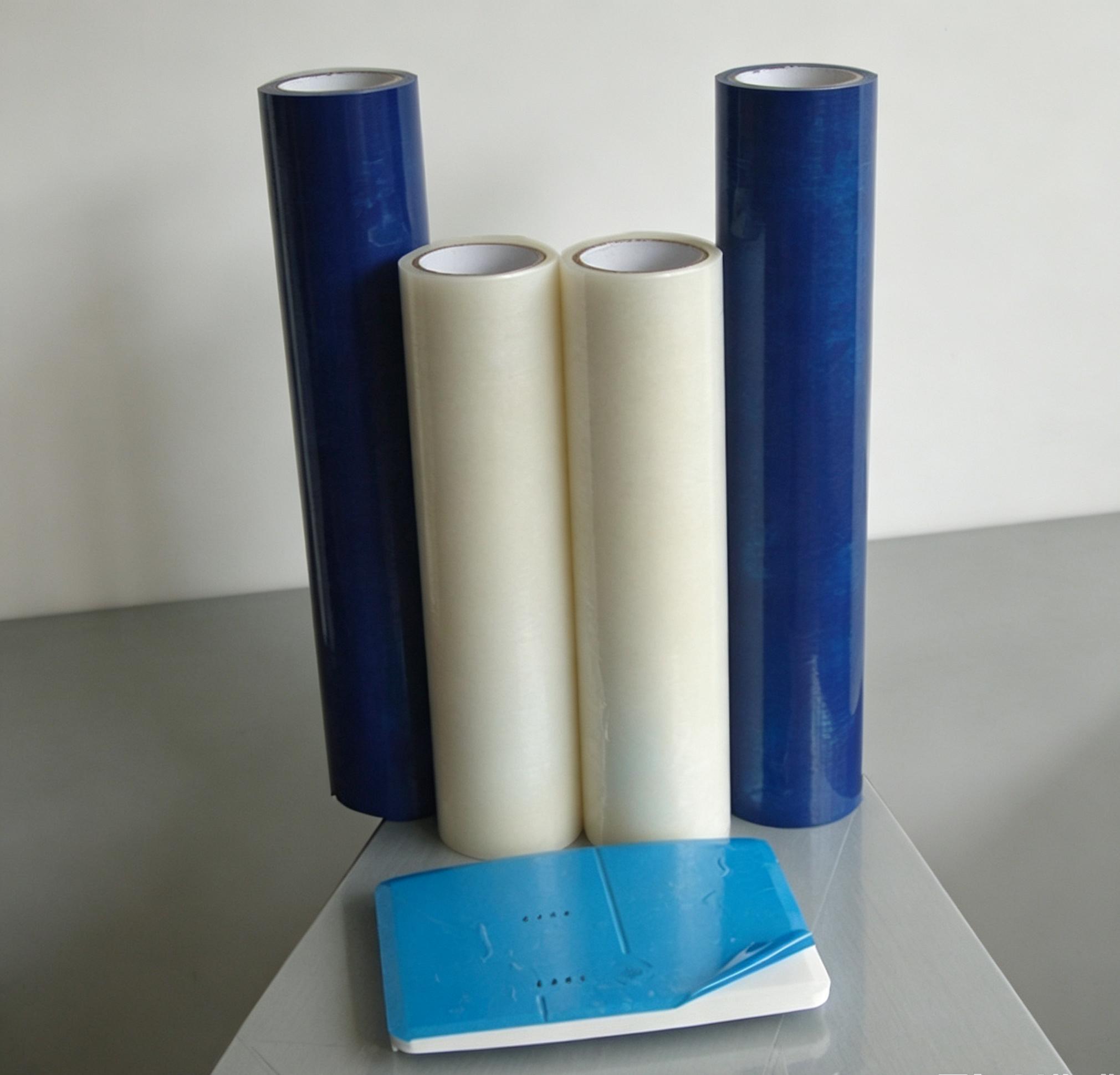
Off-the-shelf solutions often force compromises, wasting raw materials and extending timelines. When you can specify exact dimensions and intricate profiles from the start, you strip out unnecessary steps and material. This precision eliminates time spent on further modification or joins, streamlining the build process significantly.
Cutting shapes to fit directly into your design slashes handling and processing overhead. Instead of multiple passes or manual corrections, tailored components integrate immediately. The reduction in secondary operations like grinding or welding at the assembly stage keeps the project moving forward without unexpected bottlenecks.
Inventory management benefits too—ordering precisely what’s needed curbs surplus stock and storage demands. Ultimately, this accuracy cascades into faster project turns and cost savings, where every piece delivered matches blueprint specifications with zero adjustment needed.
Adhesion Levels: From Low-Tack to High-Grip Solutions
Not every project calls for the same kind of stick. Low-tack adhesives are designed for temporary holds—think positioning stencils, mounting lightweight paper, or protecting surfaces during painting. They peel away cleanly without residue, which is perfect when you need a gentle touch that won’t damage delicate substrates.
On the opposite end, high-grip solutions lock materials down with serious strength. These are the workhorses behind permanent signage, structural bonding, and heavy-duty mounting jobs. They create a durable bond that stands up to vibration, temperature swings, and the test of time, often replacing mechanical fasteners for a cleaner finish.
Between these extremes lies a spectrum of medium-tack options that balance holding power with repositionability. Whether you need a film that can be smoothed out without bubbles or a tape that stays put once pressed down, there’s a formulation tuned to the exact requirements of your surface, environment, and load. Choosing the right adhesion level means matching the chemistry to the real-world demands of your application.
Why Not All Polyethylene Films Are Created Equal
Polyethylene films might look interchangeable at first glance, but subtle differences in raw materials and manufacturing processes can lead to dramatic shifts in performance. The type of resin used—whether LDPE, LLDPE, or HDPE—sets the foundational characteristics like clarity, puncture resistance, and stiffness. Beyond the base polymer, the purity and consistency of the raw feedstock matters: even small variations in molecular weight distribution or branching can cause films to behave unpredictably under stress, making some tear easily while others stretch without failing.
Processing conditions add another layer of complexity. Factors like extrusion temperature, cooling rates, and film winding tension aren’t just technical details—they physically alter the film’s morphology, affecting everything from transparency to heat seal strength. A film run too fast or cooled unevenly might look fine on the roll but fail catastrophically when pulled through a high-speed packaging line. Additives further muddy the water: slip agents, antistats, and UV stabilizers are often blended in at trace levels, yet missing or improperly dispersed additives can render a film unusable for its intended purpose.
Quality control is where many films diverge sharply. Top-tier producers monitor everything from gauge uniformity to surface treatment levels in real time, catching defects before the film is shipped. Others rely on sporadic sampling, and the result is a film that might contain hidden weak spots or inconsistent surface energy—problems that only surface when ink smudges or a bag splits. In critical applications, these aren’t minor annoyances; they’re operational risks that can halt entire production runs or trigger costly waste, underscoring why not all polyethylene films are, in fact, created equal.
The True Cost of Using Non-Customized Protection
Off-the-shelf protective solutions often look attractive because of their lower upfront price and immediate availability. But beneath that surface, the hidden expenses start piling up quickly. When equipment isn't designed to fit your exact machinery or workflow, you end up with gaps in coverage, awkward workarounds, and a constant need for adjustments—all of which eat into productivity and lead to more frequent replacements. What seemed like a bargain soon reveals itself as a recurring drain on both time and budget.
There's also the risk factor that comes with generic protection. A one-size-fits-all approach rarely accounts for the specific hazards, temperatures, or movement patterns your operation faces. This mismatch can cause premature wear, unexpected failures, and in the worst cases, safety incidents that halt operations entirely. The cost of downtime, damaged components, or even minor injuries can dwarf any initial savings, making that generic solution far more expensive than a tailored one would have been from the start.
Beyond the immediate operational headaches, using non-customized protection erodes long-term asset value. Machines that aren't properly shielded accumulate micro-damage that shortens their lifespan, while makeshift fixes become a constant maintenance burden. Over months and years, these incremental losses compound, creating a cycle of reactive spending that a purpose-built solution could have avoided entirely. The true cost isn't just in the purchase price—it's in the steady drip of resources lost to inefficiency and repair.
Steps to a Successful Custom Film Partnership
The foundation of any successful custom film collaboration rests on genuine strategic alignment, not just signed contracts. It’s about finding a partner whose creative instincts and production rhythm naturally complement your brand’s vision, rather than someone who simply executes a brief. This means spending real, unhurried time in candid conversation—exploring past work, untangling what ‘authenticity’ actually means for both parties, and identifying where your storytelling philosophies genuinely overlap. The best films emerge when the partnership feels less like a transaction and more like two voices finding harmony in a shared narrative ambition.
Once that creative chemistry is clear, shift the focus toward structured flexibility. Define the non-negotiables—budget, timeline, core message—with enough precision to avoid drift, but leave generous room for serendipity during production. Build in moments for collaborative review that aren’t just formal checkpoints, but real creative pit stops where ideas can pivot without derailing the entire timeline. A healthy partnership treats the plan as a compass, not a cage, allowing the film to evolve in ways that feel organic to both the brand and the filmmaker’s evolving instincts.
Finally, remember that the relationship extends well beyond the final cut. A truly successful partnership plants seeds for future projects through transparent post-delivery practices—sharing what resonated, what fell flat, and why. Celebrate the wins together, but also dissect the friction points without defensiveness. When both sides walk away not just with a film, but with a deeper understanding of how to make the next one even better, the partnership has delivered its greatest value.
FAQ
A custom PE protective film is engineered specifically for a product’s surface, taking into account its texture, curvature, and exposure conditions. Unlike generic rolls you might grab from a shelf, these films are tailored in thickness, adhesion level, and material composition to match the exact needs of the item they protect—whether it’s a glossy acrylic panel or a textured metal sheet.
You’ll find them everywhere from electronics and automotive to construction and medical device manufacturing. For example, touchscreen displays rely on films that prevent microscratches during assembly, while appliance makers use them to keep stainless steel pristine from the factory floor to the end user’s kitchen.
It starts with a deep dive into the surface’s properties—things like energy, roughness, and chemical sensitivities. Then we dial in the adhesive chemistry and film formula, often producing a short run of samples for real-world testing. This back-and-forth continues until the peel force, clarity, and durability hit the exact targets for the application.
Most custom PE films use either acrylic, rubber, or silicone adhesives. Acrylics age well and resist UV, making them ideal for long-term outdoor use. Rubber grabs quickly on low-energy surfaces like powder coatings. Silicone excels on tricky materials like glass and won’t leave a mark even after months of outdoor baking. The right choice is about balancing tack, removability, and the environment the film will face.
Absolutely. By incorporating UV inhibitors, heat-resistant additives, or thicker gauge materials, the film can withstand blistering sun, sub-zero cold, or even the heat of a paint bake cycle. Some formulations remain stable and residue-free after months on a rooftop solar panel or a construction site window.
Today, many manufacturers offer films with recycled content or bio-based polyethylene, and there’s a growing push toward mono-material constructions that simplify recycling. Beyond the film itself, consider whether the supplier can help you reclaim and reprocess the used liner and film, closing the loop instead of sending it straight to a landfill.
It comes down to adhesive cohesion and the bond to the surface. A well-designed film holds onto its adhesive layer when peeled; poor formulations let the adhesive split and stick to the surface. Through aging tests—like heat cycling and humidity exposure—we verify that even after weeks or months, the film lifts away in one piece with zero ghosting.
A real custom manufacturer starts from your requirements, not a catalog. They’ll have in-house compounding and coating capabilities, letting them tweak polymer blends, adhesive thickness, and release liners. They’ll also run small-batch trials and iterate with you. If a supplier can’t tell you the exact peel adhesion range or back it up with test data, they’re likely just cutting and shipping stock material.
Conclusion
In industrial settings, the fundamental role of PE protective film is often understated, yet its absence invites scratches, dust, and costly damage. When protection is tailored—through precise sizing, die-cut shapes, and adhesion levels ranging from gentle low-tack to aggressive high-grip—efficiency gains are immediate. Materials handling becomes smoother, application time shrinks, and waste drops sharply. But not all polyethylene films are equal; raw material quality, thickness consistency, and additive blends directly influence performance. A film that fails mid-process or leaves residue undermines the very purpose of protection.
Relying on off-the-shelf solutions often incurs hidden costs: frequent replacements, product rework, and customer dissatisfaction. In contrast, a custom partnership begins with a thorough needs assessment, followed by prototyping and real-world testing. The right manufacturer collaborates on material selection, adhesive formulation, and precise conversion, ensuring the film complements your workflow rather than complicating it. Ultimately, custom PE protective film is not an expense but an investment in flawless surfaces and streamlined operations.
Contact Us
Contact Person: Jack Xu
Email: [email protected]
Tel/WhatsApp: 8615257328825
Website: https://www.temporaryprotectivefilm.com/