
Custom Pasteurizer Solutions for Consistent Product Safety and Quality
2026-11-02
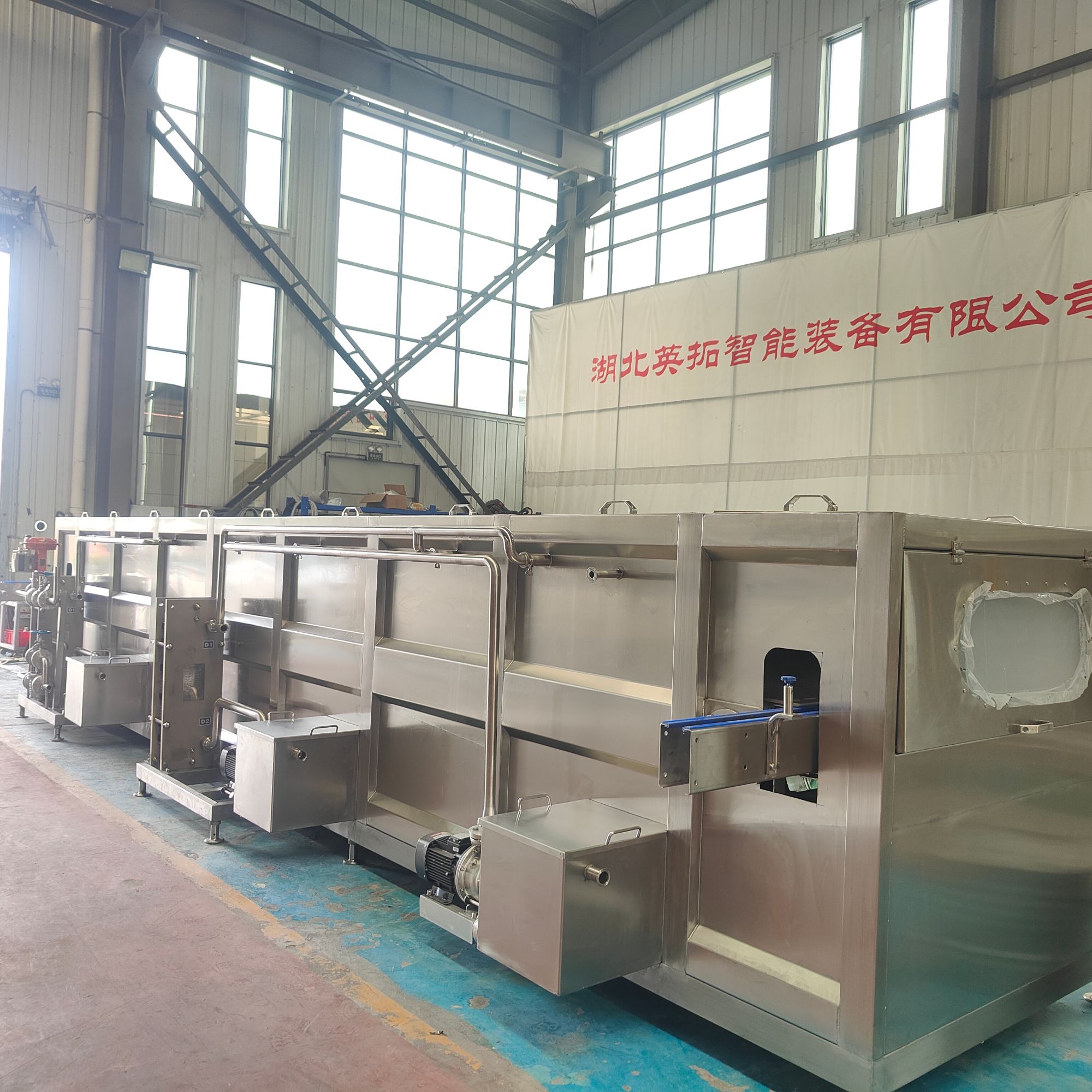
What if your pasteurization process could adapt to every product instead of forcing every product to adapt to it? That’s the idea behind custom pasteurizer solutions designed for consistent safety and quality—and it’s exactly what INTOP Machinery delivers.
Why standard pasteurizers struggle with niche product lines
Most standard pasteurizers are built around a narrow set of assumptions: a steady stream of low-viscosity liquid, a predictable heat transfer coefficient, and long runs of the same recipe. Drop a small-batch almond milk with added protein or a chunky fruit sauce into that system and it quickly turns into a fight. Plate heat exchangers clog, holding tubes miscalculate because the product moves differently than water, and the temperature probes end up reading the wall rather than the center of the stream. The result is either an over-processed batch with cooked flavors or an under-processed one that fails microbiological checks.
Then there’s the changeover problem. Niche lines often mean short production runs, ten to twenty different formulations a week, and recipes that swing from thin botanical infusions to thick oat concentrates. A standard pasteurizer wants one setpoint, one flow rate, and hours of uninterrupted runtime. Every time the crew has to flush, re-sterilize, and re-tune for the next niche product, downtime eats the margin. Custom setups can manage variable hold times and gentle heating, but they’re rarely what a standard line was purchased to do—so plants either force the product through anyway or delay the launch until they can justify a dedicated skid.
Dialing in time and temperature curves for repeatable results
Getting the same roast twice isn't about luck—it's about understanding how heat and time interact inside your specific machine. Most roasters start with a generic curve they found online, then wonder why their beans taste flat or baked. The truth is, your ambient temperature, drum speed, and even batch size shift the curve in ways no template can predict. You need to log every roast, note the turning point, the rate of rise, and where first crack hits, then adjust one variable at a time until the curve feels natural for that bean.
Think of time and temperature as a conversation, not a script. If your roast stalls before first crack, the sugars caramelize unevenly and you'll taste it as a hollow sweetness. Push too hard and you'll scorch the outside while the inside stays grassy. A useful trick is to plot the rate of rise on a graph and look for plateaus—those flat spots are where flavor development either dies or deepens, depending on how you nudge the gas or airflow. Small changes in the final ninety seconds often matter more than the first five minutes.
What makes a curve repeatable is not memorizing numbers but building a feel for your roaster's personality. Write down the ambient conditions each morning—a humid day can slow heat transfer enough to throw off your usual marks by ten degrees. After a few dozen roasts, you'll recognize the tiny shifts in aroma and sound that signal when to cut the heat. That's when the curve stops being a graph on a screen and becomes a habit your hands already know.
The hidden cost of one-size-fits-all thermal processing
Standard thermal processing profiles assume every batch behaves the same way. In reality, subtle shifts in moisture content, raw material density, or even seasonal storage conditions can push a product outside its intended safety margin. When a single time-temperature curve is applied without adjustment, some units end up over-processed while others barely meet the minimum requirement. The result isn't just wasted energy; it's a silent drift in quality that accumulates into larger variance down the line.
Plant managers often overlook this because the deviation is rarely dramatic enough to trigger a failed inspection. But over months, the cost shows up in reduced shelf life, inconsistent texture, or higher reject rates at a later stage. A fixed recipe may pass validation on day one, yet fail to account for the gradual wear of heat exchangers, fouling on sensors, or changes in incoming ingredient characteristics. The true expense is hidden in rework, customer complaints, and the extra buffer time added to compensate for unknown variability.
Moving away from a universal profile doesn't mean abandoning control. It means building in smarter feedback loops that respond to live product data rather than relying on a static historical average. Even modest adjustments, such as segmenting runs by raw material lot or recalibrating based on measured core temperature, can reduce over-processing by double digits. The most efficient thermal process isn't the one that fits every product; it's the one that fits the product actually running through the line today.
Designing clean-in-place systems around your actual production flow
A CIP system only works well when it follows the real path your product takes, not the path someone drew in a generic layout. Start by walking the line during actual operation, noting where ingredients cling, where pumps slow down, and where pipe bends create shadow zones. These are the spots that will fight you during cleaning, so they deserve first attention rather than an afterthought.
Match spray patterns and flow rates to the geometry you actually have, not the geometry you wish you had. A vessel with off-center nozzles or an awkward manway will never clean like the textbook version, so adjust nozzle placement, add extra coverage where needed, and verify with riboflavin tests that simulate your worst-case residue. The goal is not to make the system look balanced on paper, but to make every surface see enough mechanical action to let chemistry and time do their part.
Finally, build the cleaning sequence around your production rhythm. If you run short batches with frequent changeovers, design for faster drain and rinse steps instead of long, energy-hungry sanitizing holds. If certain products leave stubborn films, schedule a mid-shift alkaline boost rather than trying to force a one-size-fits-all cycle. The best CIP design disappears into the background because it respects how the line actually runs.
Proving safety without burying your team in paperwork
Traditional safety compliance often means piles of reports and checklists, but proving safety effectively doesn't have to bury your team in paperwork. By embedding safety requirements into the daily development flow instead of writing documents after the fact, you can cut out a huge amount of redundant effort. For example, automatically collecting evidence during code reviews and deployment pipelines leaves an auditable trail with every change, which is more reliable and far less time-consuming than manual form-filling.
Another overlooked approach is to reuse engineering artifacts you already have. Test coverage reports, dependency scan results, incident response logs—these data points typically exist but are scattered across different tools. Pulling them into a lightweight dashboard and setting up automatic summary generation lets you show safety status to auditors without adding extra work. The point isn't to create more documents, but to let existing information flow where it's needed.
Ultimately, proving safety comes down to trust mechanisms rather than document volume. When your team uses infrastructure as code and policy as code, safety rules become executable and verifiable, and compliance evidence is generated automatically. Instead of asking engineers to manually prove safety, let the system produce proof by default. That way you lighten the load and make your safety claims far more convincing.
Scaling from pilot batches to full production without losing quality
Moving from pilot batches to full-scale production is where many manufacturers stumble, because what works in a controlled lab setting often behaves differently under the pressure of larger equipment, tighter timelines, and less manual oversight. The key is to treat scaling as a design problem, not just a volume increase. Before committing to a full run, map every critical parameter from the pilot phase—temperature curves, mixing speeds, raw material lots, operator handoffs—and identify which ones are most sensitive to scale. Then run a series of bridge batches at intermediate volumes, deliberately pushing one variable at a time to see where quality begins to drift. This staged approach avoids the common trap of discovering a defect only after thousands of units are already in the warehouse.
Quality loss during scale-up rarely comes from a single catastrophic failure; it comes from the erosion of small details. A sensor that was perfectly calibrated on a benchtop mixer might lag by two seconds on a production vessel, or a coating thickness that was uniform in a five-liter flask can vary across a 500-liter tank simply because of different flow patterns. To counter this, shift from reactive inspection to live process verification. Embed inline sensors and automated sampling at the points where variation is most likely to appear, and set tighter control limits for the first few production lots. This gives you a baseline of real-world data instead of relying on pilot assumptions. It also helps to involve the same operators who ran the pilot batches in the first full-scale runs—their tacit knowledge of what “right” looks like can catch drift long before a spec sheet does.
One often-overlooked factor is that full production introduces new failure modes that simply don’t exist at pilot scale: longer material hold times, more frequent equipment changeovers, and higher ambient variability across shifts. Rather than writing a fixed recipe that assumes perfect conditions, build in small, justified adjustments for these realities. For example, if a raw material lot arrives with a slightly different moisture content, allow the mixing time to flex within a validated range instead of forcing a one-size-fits-all process. Document every deviation and its effect on final quality, then use that history to tighten or loosen controls for the next run. Scaling without losing quality is not about making the process bigger—it’s about making it smarter, so that each increment of volume adds confidence instead of risk.
FAQ
A custom pasteurizer is built around your specific production line, product viscosity, container size, and throughput targets. Standard units force you to adapt your process; a tailored system matches the existing flow, reduces bottlenecks, and often saves floor space.
It allows precise control over time and temperature zones for each recipe. Instead of relying on one generic cycle, you can set hold times and heating gradients that match the microbial kill step required for your exact product, then validate every batch against that profile.
Dairy, juices, sauces, soups, liquid eggs, and certain plant-based beverages often run into issues with standard equipment. Products with high particulate content, unusual pH levels, or heat-sensitive ingredients usually benefit most from a custom configuration.
Yes, if you plan for it from the start. Many systems include recipe storage, quick-change heat exchangers, and adjustable hold tubes so you can switch between products while keeping each one within its required safety and quality window.
Uniform heating, gentle product handling, and accurate residence time distribution. Custom systems can incorporate tapered hold tubes, scraped-surface exchangers, or gentle pump profiles to avoid over-processing delicate formulas while still hitting the target lethality.
A good design starts with a clear projection of volume growth and possible new products. You can leave space for additional plates, larger pumps, or modular sections so expansion becomes a matter of adding components rather than replacing the whole line.
Bring detailed data: product recipes, viscosity, particle size, package dimensions, current and target throughput, utility availability, and any regulatory requirements. The more precise the input, the more accurately the system can be sized and priced.
Not necessarily. A well-designed custom system includes CIP-friendly connections, accessible inspection points, and standardized components where possible. The goal is to match the process, not to invent unnecessary complexity, so maintenance routines can remain straightforward.
Conclusion
Standard pasteurizers often assume a uniform product flow, but specialty foods, plant-based alternatives, viscous sauces, and small-batch dairy items rarely behave like commodity milk or juice. When a line runs multiple SKUs with different particle sizes, pH levels, or thermal sensitivities, a fixed temperature-and-time profile leaves cold spots or overcooks edges, and operators end up compensating with manual tweaks that erode repeatability. Custom systems instead map each product's heat penetration curve from pilot data, then store those recipes as controlled ramp, hold, and chill steps. This removes guesswork and lets one machine shift from a delicate cultured beverage to a chunky soup without sacrificing a validated kill step. The hidden cost of a one-size-fits-all approach shows up as rework, inconsistent shelf life, or a rejected lot after a customer complaint.
Clean-in-place design is another area where off-the-shelf equipment fights your actual production flow. A custom pasteurizer positions spray balls, drain slopes, and valve manifolds around your piping layout and residue patterns, so sanitation cycles finish faster and leave fewer harborage points. Documentation becomes less of a burden when the control system automatically captures time, temperature, flow, and clean cycle data tied to each batch, reducing the scramble to prove safety during audits. Scaling from pilot to full production also benefits from a tailored approach: matching hold tube length, pump curves, and regeneration efficiency to your target throughput preserves the same thermal history you validated at small scale. The result is not just a machine that heats product, but a processing line that holds safety, texture, and flavor steady from first run to full commercial volume.
Contact Us
Contact Person: Laura
Email: [email protected]
Tel/WhatsApp: +86 13957758832
Website: https://www.intopmachinery.com