
Custom Gel Pad: The Ultimate Guide to Personalized Comfort and Support
2026-10-28
Ever settled into a chair or mattress that just doesn't fit your body? Off-the-shelf gel pads often miss the mark, leaving pressure points aching and support uneven. Kunbao takes a different route: custom gel pads shaped to your exact contours. This guide walks you through how personalized gel technology works, why it beats generic options, and what to look for before you invest. Whether you're dealing with chronic pain, long hours at a desk, or simply want a cooler, more adaptive surface, you'll find practical insights here — no fluff, just the mechanics of true comfort.
What Actually Goes Into a Quality Custom Gel Pad
Most people assume a gel pad is just a slab of squishy material with a logo on top, but that assumption falls apart the moment you compare a cheap import with one built for serious use. The real difference starts with the gel chemistry itself: high-grade polyurethane gels are formulated to maintain consistent durometer across temperature swings, so a pad that feels supportive at room temperature doesn't turn into a brick in a cold warehouse or a puddle in a hot truck cab. Add to that a backing layer chosen for the specific mounting surface, whether it's a low-surface-energy plastic that fights adhesion or a textured metal that needs a high-tack bond, and you begin to see why quality can't be faked with a one-size-fits-all formula.
The manufacturing process matters just as much as the ingredients. A quality custom gel pad is usually cast, not cut from a stock sheet, because casting allows controlled thickness variation, tapered edges that resist peeling, and a seamless transition between gel and substrate. You'll also find that reputable makers pay attention to the interface between the gel and any printed graphic—embedding the ink below a thin clear gel layer rather than printing on top, which prevents wear and chemical breakdown from repeated contact. This is the kind of detail you won't see in a spec sheet, but it shows up after six months of daily use when the pad still looks and feels the way it did on day one.
Finally, durability isn't just about the material—it's about how the pad handles real-world abuse. Quality pads are tested for compression set, meaning they bounce back after being compressed for hours at a time under load, and for resistance to common cleaners, oils, and UV exposure. A cheap pad might feel identical out of the box, but once it starts cracking at the edges or losing its tack after a few weeks of sunscreen or hand sanitizer contact, the difference becomes painfully obvious. That's why serious buyers ask for shore hardness tolerances, adhesion peel strength, and accelerated aging data instead of just a pretty color swatch.
Matching Gel Pad Firmness to Your Body’s Needs
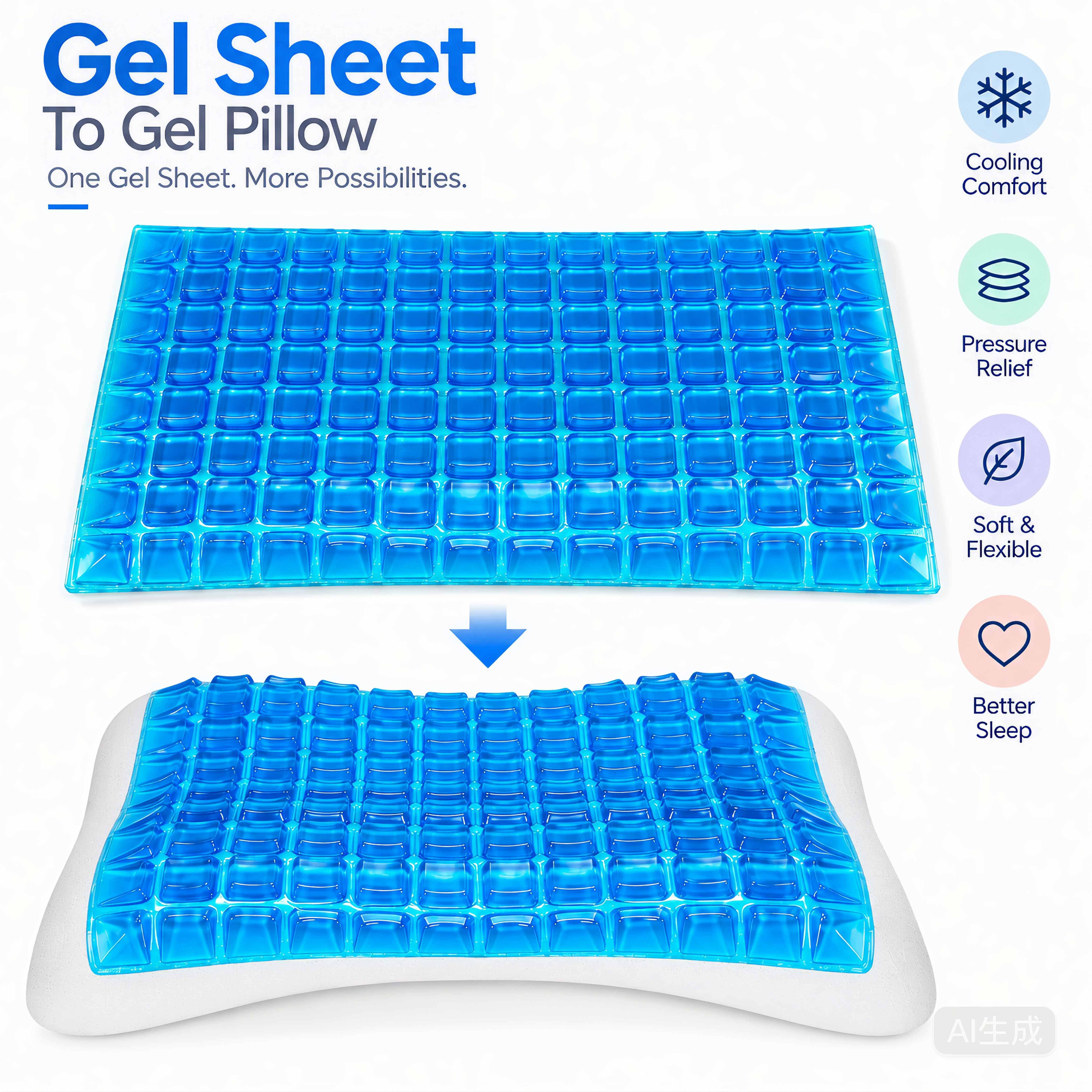
Choosing the right gel pad firmness starts with how your weight settles when you lie down. Heavier spots like hips and shoulders sink deeper, so a pad that is too soft lets those points press through to the base. A firmer pad keeps your spine in a more neutral line, while a softer one takes pressure off tender areas. If you wake up with tingling arms or a stiff lower back, the current firmness may be working against your body instead of supporting it.
Side sleepers usually need extra give around the shoulder and hip without letting the waist sag. Back sleepers often feel best on a medium-firm surface that fills the lumbar curve without leaving gaps. Stomach sleepers tend to prefer a firmer pad so the pelvis does not drop too far forward. Before swapping pads, spend a few nights noting where you feel the most pressure and whether your position changes often.
Unexpected Ways to Use Custom Gel Pads Beyond Basic Cushioning
Custom gel pads are surprisingly useful for stabilizing puzzle pieces on uneven surfaces. Cut a thin sheet into small squares and place them under the corners of your puzzle board, and the pieces stay put even if the table gets bumped. For anyone whose jigsaw sessions get interrupted by pets or kids, this trick saves a lot of rework.
Another overlooked use is as a vibration damper for power tools. Wrapping a gel strip around the handle of a sander or drill reduces the buzz that travels up your arm, making longer projects much less fatiguing. The material grips well, so it also prevents slipping when your hands get sweaty.
Finally, try placing small gel pads under the feet of your washing machine or dryer. They absorb the high-frequency rattles that echo through the floor, and unlike rubber feet, they conform to uneven floors to stop the machine from wandering.
Designing Your Own Gel Pad with the Right Materials and Shapes
Gel pad performance starts with the base polymer. Silicone tends to feel softer and tolerates repeated stretching, while thermoplastic elastomers offer a tackier surface that stays put on smooth floors or equipment housings. Pick a material based on how much give you need and whether the pad will face oils, sweat, or frequent washing.
Shape is equally personal. Trace the contact area directly onto cardboard first, then transfer that outline to your mold. Rounded corners and tapered edges keep the pad from catching on clothing or peeling away under load. For heel or elbow pads, a slight dome in the center often matches the natural curvature better than a flat slab.
Before committing to a full batch, mix a small sample and let it cure completely. Look for soft spots, trapped air, or uneven thickness, then adjust the mold or pour temperature. A custom pad that fits the body and the intended surface will outlast a generic one almost every time.
Keeping Your Gel Pad Fresh Without Damaging the Material
A quick wipe-down usually keeps a gel pad in good shape, but the trick is choosing the right cleanser. Mix a few drops of mild dish soap into lukewarm water, dip a soft cloth, wring it out thoroughly, and gently go over the surface. Stay away from bleach, ammonia, or any abrasive scrubbers—those can break down the outer layer and cause the gel inside to leak or harden. If something sticky lands on the pad, tackle it right away before it dries, because scrubbing later only pushes residue deeper into the material.
After cleaning, never wring or twist the pad to speed up drying. Lay it flat on a clean towel in a shaded spot with decent airflow, flipping it once after a few hours. Direct sunlight or a hot dryer will warp the gel and ruin its cushioning. For storage, roll the pad loosely or keep it flat under a bed, and if the surface feels tacky over time, dusting it with a little cornstarch or talc-free powder can restore that smooth, non-stick feel without harming the material.
Real-World Comfort Scenarios from Office Chairs to Medical Use
Comfort in real-world settings rarely comes from a single feature. In office environments, the difference between a productive afternoon and a dull ache in your lower back often hinges on how well the chair supports micro-movements—shifting weight, reaching for a file, or leaning toward a colleague. A seat that adjusts to these small shifts without forcing a rigid posture keeps energy levels steadier than any caffeine boost. Meanwhile, the same principles of pressure distribution and adjustable support show up in less obvious places: dental chairs that let a patient relax during a long procedure, or recliners used in dialysis units where hours of sitting are unavoidable. The goal is never luxury for its own sake, but reducing the physical toll of staying still.
Medical settings push comfort beyond preference into necessity. A wheelchair cushion that fails to relieve pressure points can lead to tissue damage within hours, while a well-designed exam table helps patients with limited mobility feel secure instead of vulnerable. Even in home care, the humble lift chair matters—not because it looks inviting, but because it lets someone with arthritis stand without wrenching their knees. These scenarios share a quiet logic: comfort is not about softness, but about removing the small frictions that compound into pain, fatigue, or fear. When a chair or support surface anticipates how the body actually moves—or struggles to move—it does more than ease a moment. It protects the ability to keep going.
FAQ
A custom gel pad is molded or cut to match your exact shape, pressure points, and use case rather than being a one-size-fits-all product. The key difference is in the fit and feel: a standard pad might relieve some pressure, but a custom version adjusts thickness, firmness zones, and edge contours so it actually follows your body or equipment instead of forcing you to adapt to it.
Most good custom gel pads use a medical-grade thermoplastic elastomer or polyurethane gel because they hold their shape without bottoming out over time. The outer cover matters just as much: look for a breathable, low-friction fabric like nylon-spandex blends or a soft silicone skin that wipes clean. Some designs add a thin memory foam base under the gel for extra transition support.
Yes, that is the whole point of going custom. You can usually specify the outline from a tracing or digital scan, pick a thickness between about a quarter inch and one inch, and even request different firmness zones in the same pad. For example, a wheelchair cushion might be softer under the tailbone and firmer under the thighs to prevent sinking.
The biggest benefit is that it spreads pressure evenly instead of creating hot spots. That means less numbness, fewer aches after sitting or standing for long periods, and better overall alignment. Because it is made for your shape, it also stays in place better than a generic pad, so you are not constantly readjusting it.
They work well anywhere you have prolonged contact with a hard or flat surface. Think office chairs, wheelchairs, motorcycle seats, kneeling pads for gardening, or under a laptop on your lap. They also help in industrial settings where workers stand at a station for hours, because the gel absorbs micro-vibrations that foam alone misses.
Most gel pads with a non-porous outer shell can be wiped with mild soap and water, then air dried away from direct sunlight. Avoid harsh cleaners, bleach, or machine washing unless the manufacturer explicitly says it is safe. Store it flat or gently rolled rather than folded, because a hard crease can weaken the gel over time.
They are often used by people with coccyx pain, sciatica, pressure sores, or reduced mobility because the gel can be mapped to offload sensitive areas. That said, a custom gel pad is not a medical device on its own, and anyone with a diagnosed condition should consult a physical therapist or doctor to make sure the pad complements their treatment plan.
Ask about the measurement process first: a good maker will want a weight distribution impression, not just basic length and width. Check whether they offer a trial period or adjustment guarantee, since even a small mismatch in firmness can feel very different in daily use. Also confirm the cover is replaceable or at least easy to remove, because that extends the life of the pad more than most people expect.
Conclusion
A genuinely comfortable custom gel pad starts with the materials themselves. Instead of settling for a one-size-fits-all slab, you look for a polymer blend that holds its shape under pressure without bottoming out, plus a cover that breathes and resists wear. Firmness is just as personal as shoe size: a lighter user might want a softer pour that cradles the sit bones, while someone heavier needs a denser gel to keep hips aligned. That choice gets easier when you map pressure points before ordering, so the finished pad feels almost tailored. The fun, though, comes in shaping the thing. Wedge outlines, coccyx cutouts, ring designs, even layered zones where one half stays firmer than the other—all of that is on the table once you stop thinking of gel as a flat rectangle.
Beyond chairs, these pads show up in odd but practical places: under knees while gardening, inside motorcycle seats for longer rides, or beneath a laptop to keep it from roasting your thighs. The real test is maintenance. Warm water and a mild soap usually do the job; harsh cleaners or direct sun will degrade the gel faster than you would expect. Let it air dry completely before putting it back in place. In everyday life, that kind of care pays off from office chairs to hospital beds, because the goal is not just softness but steady, breathable support that holds up over months of daily use.
Contact Us
Contact Person: Catherine Peng
Email: [email protected]
Tel/WhatsApp: +86-13434169510
Website: https://www.kbcoolgel.com/