
Commercial and Industrial Energy Storage System (C&I ESS) Manufacturer: A Guide to Selecting a Trusted Partner
2026-11-16
Selecting a commercial and industrial energy storage system manufacturer can feel like navigating a maze of technical specs and overblown claims. Yet the right partner does more than deliver hardware—they help stabilize energy costs, strengthen resilience, and unlock new revenue streams. In this guide, we cut through the noise to highlight the practical criteria that matter, drawing on insights from UNC and other industry players. Whether you're upgrading a single facility or planning a multi-site rollout, here's how to choose a C&I ESS partner you can trust.
Reading Past the Spec Sheet - What Actually Drives C&I ESS Reliability
A datasheet might boast a 95% round-trip efficiency or a 10-year warranty, but the field tells a messier story. Commercial and industrial energy storage systems (C&I ESS) rarely fail because a single component underperforms in a lab. They fail because thermal management was an afterthought, or the battery management system couldn’t handle a sudden load swing from a cold-start compressor. The spec sheet is a starting point, not a verdict.
What actually keeps a C&I system running past year three is how well the inverter, cells, and cooling loop were integrated under real-world stress. For example, a 500 kW unit in a dusty factory might derate by 30% if the air filters clog faster than the maintenance schedule assumes. Another site with unstable grid voltage could trigger frequent protective shutdowns, quietly eating into the battery’s cycle life. Those failure modes never appear on a cut sheet.
Reliability, then, is less about headline specs and more about honest engineering margins. Does the thermal design account for a 45°C rooftop in July, not just a 25°C test bench? Was the system tested with the same short-circuit current profile as the facility’s actual switchgear? Ask those questions before signing off, and the spec sheet becomes a useful reference instead of a misleading promise.
Financial Stability as a Non-Negotiable Manufacturer Trait
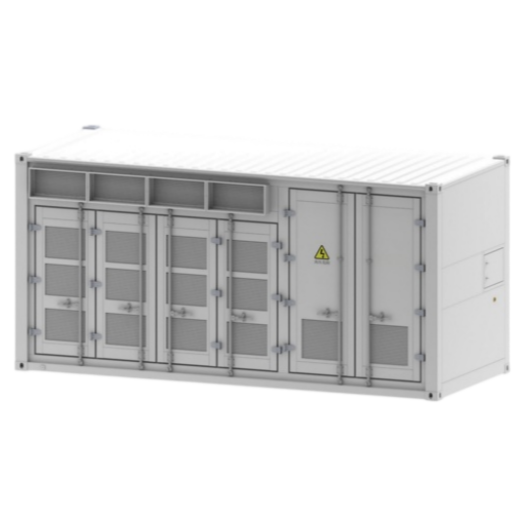
When you're evaluating manufacturing partners, it's easy to focus on machinery, lead times, or material costs. But the real question running underneath every transaction is whether the company will still be solvent next quarter. A manufacturer that's constantly juggling debt or scrambling for bridge loans introduces a quiet instability that eventually shows up in missed shipments, corners cut on quality, or sudden demands for prepayment. Financial stability isn't an abstract credit score; it's the difference between a supplier who invests in maintenance and one who lets equipment fail because cash is tight.
That stability also shapes how a manufacturer behaves during pressure. A well-capitalized operation can absorb raw material price spikes, hold inventory for a client's forecast, or pause a line to fix a defect without panicking. In contrast, a financially fragile shop will start negotiating every change order as a survival tactic, and you'll feel it in the tone of every email. Over time, the suppliers who last are the ones who treat their balance sheet as a strategic asset, not an afterthought. They plan for downturns, maintain reserves, and avoid over-leveraging for vanity expansions.
For buyers, this means asking direct questions about cash flow, debt structure, and capital expenditure plans before signing a long-term contract. It also means watching for small signals: do they upgrade tooling proactively, pay vendors on time, or offer transparent pricing that reflects real costs rather than guesswork? A manufacturer with deep financial roots won't flinch at your questions, because their stability is part of the product they sell. In the end, choosing a partner who treats financial health as non-negotiable protects your own production line from someone else's liquidity crisis.
Seeing Through the Supply Chain - From Cell Sourcing to Final Assembly
Traceability doesn't begin at the factory gate. For any product built around lithium-ion cells, the journey starts with raw material extraction and refinement—often spanning several countries before a single cell is even assembled. Understanding who mined the lithium, where the cathode powder was processed, and how those materials changed hands gives procurement teams a much earlier warning system for bottlenecks or compliance risks.
Once cells enter production, the focus shifts to batch-level data: electrode coating dates, formation cycling results, and quality flags tied to specific machines or shifts. This granular visibility helps separate a minor yield dip from a systemic process drift that could affect thousands of packs downstream. Without that linkage, a cell that fails in the field becomes nearly impossible to trace back to its exact manufacturing window.
Final assembly adds another layer of complexity—module welding, thermal interface application, enclosure sealing—each step generating its own records. When all of these data streams are connected, engineers can correlate a late-stage defect with an earlier supplier lot or handling condition instead of guessing. The result is a supply chain that behaves less like a series of handoffs and more like a single, readable process.
Post-Commissioning Support - Where the Real Partnership Begins
The handover is not the finish line; it’s where our commitment deepens. Once your system goes live, we stay close — not as a distant vendor, but as a partner who understands that real value emerges in the days, weeks, and months that follow. From fine-tuning settings to answering the questions that only arise during actual operation, our team remains accessible, responsive, and genuinely invested in your outcomes.
We don’t believe in disappearing after deployment. Instead, we schedule structured check-ins, monitor performance proactively, and adapt to the shifting realities of your business. Whether it’s a minor adjustment or an unexpected challenge, you reach a person who knows your project — not a ticket queue. That continuity is what turns a successful launch into long-term confidence.
This phase is where trust is built through action. We document lessons learned, share insights from similar environments, and help your team grow into full ownership. The goal is simple: to make our support feel less like a service contract and more like an extension of your own capabilities — quietly present, always useful, and ready when it matters most.
Balancing Custom Engineering with Proven Standard Platforms
Every engineering team eventually hits the fork between building from scratch and anchoring to a standard platform. Custom engineering tends to look attractive when requirements don't fit neatly into an existing box, but it quietly adds timeline risk, maintenance overhead, and a dependency on the few people who understand the bespoke internals. Proven standard platforms, by contrast, come with years of field testing, predictable upgrades, and a body of shared knowledge that already covers the edge cases most teams haven't encountered yet.
The real skill is not picking a side but drawing the line in the right place. Off-the-shelf platforms handle the undifferentiated heavy lifting—identity, storage, orchestration, observability—while custom work gets reserved for the few places where a product genuinely needs to behave differently. That discipline keeps engineering effort focused on what users actually feel, instead of spending months rebuilding infrastructure that was never a differentiator.
Verifying Safety Claims Through Independent Data, Not Marketing Copy
Every brand wants you to believe their product is safe, but polished copy and reassuring adjectives are not evidence. We take a different approach: before a single claim is accepted, we trace it back to the original research, lab reports, or third-party test results. If the data doesn't exist, is incomplete, or comes from a source with a clear conflict of interest, the claim is set aside no matter how compelling the marketing language sounds.
This often means digging into publicly available databases, requesting raw certification documents, and comparing ingredient lists against regulatory limits in multiple regions. We look for consistency across independent studies, not just the single favorable number a company chose to highlight. When a product is truly transparent, the numbers speak for themselves without the need for dramatic storytelling or vague terms like 'clinically proven' without context.
The result is a safety profile built on repeatable, verifiable evidence rather than brand reputation or emotional appeal. It takes more time, but it's the only way to separate genuine safety from clever packaging.
FAQ
Look past glossy spec sheets. The real signals are control over cell sourcing, in-house battery management system development, and a service team that can reach your site within hours instead of days. Ask for references from facilities with similar load profiles and visit an operating installation if possible.
LFP is now the default for most C&I projects because of its thermal stability and longer cycle life, but that alone is not enough. Match the chemistry to your actual duty cycle: daily cycling for demand shaving has different stress than backup-only use. Request cycle life data at the temperature and depth of discharge your site will actually see, not just datasheet best-case numbers.
Start with UL 9540 for the overall system and UL 9540A for fire propagation testing if you are in North America; elsewhere IEC 62619 and local grid codes matter more. Beyond that, your insurer may require specific test reports for thermal runaway propagation. If a vendor cannot provide full test reports, treat the certification claim as incomplete.
The trouble is not usually the headline years; it is the definitions buried in the fine print. A warranty may promise 10 years but cap total energy throughput and ambient temperature tightly, or define end-of-life capacity at 60% instead of 70%. Ask for the exact throughput allowance in MWh, the cooling conditions assumed, and the process for claiming a defect before you sign.
A useful EMS schedules charging and discharging against real utility tariffs, forecasts your site load and solar generation, and automatically avoids demand charges during peak windows. It should also allow manual override and integrate with building management or SCADA systems. If the EMS cannot explain how it saves you money in your actual rate structure, it is just a monitoring toy.
Ask for the local spare parts inventory, not just a global warehouse. Request a written response-time SLA for critical faults and check whether remote diagnostics can reboot or isolate a string without sending a technician. Also ask how many service engineers are based within your region and whether they carry replacement modules on their trucks.
Rarely. A cheaper system with lower round-trip efficiency, higher auxiliary losses, or limited thermal management can cost more over five years than a pricier unit with better availability. Build a simple total cost of ownership model using warranted capacity, efficiency, and expected downtime, and compare that instead of the purchase price.
Ask if they will perform an energy audit or at least run a simulation using your interval data before sizing the system. A serious partner will ask about your utility tariff, demand peaks, solar output, and backup needs. If the first proposal arrives without those details, it is likely a generic box rather than a tailored solution.
Conclusion
A spec sheet rarely reveals how an energy storage system will behave after three years of daily cycling in a hot, dust-heavy facility. Reliability is built into choices that never appear on marketing slicks: how the manufacturer derates power electronics, manages cell temperature gradients, and validates performance under actual load patterns instead of ideal laboratory conditions. Equally important is financial staying power. A vendor that cannot show audited financials or a reserved warranty fund may not be around to honor a ten-year performance guarantee. Ask for project references where systems have operated beyond the initial warranty period, and dig into the supply chain. Where do the cells come from? Is the battery management system developed in-house or bought off the shelf? A factory visit often tells you more than any brochure: watch for incoming cell grading, traceability systems, and the kind of torque-controlled assembly that prevents connection failures years later.
Once the system is energized, the relationship shifts. Post-commissioning support is not a helpdesk ticket queue; it means remote monitoring that catches a drifting cell before it becomes a thermal event, guaranteed spare parts availability, and field service teams that know the product. Custom engineering can solve site-specific constraints, but it should never override a proven standard platform. The best suppliers offer configurable options within a validated design envelope, not one-off prototypes masquerading as products. Finally, safety claims deserve independent scrutiny. Request UL9540A test data, third-party certifications, and a frank account of any past field failures. If a manufacturer hides behind marketing language instead of sharing test reports, treat that as a red flag. A trustworthy partner is one that invites you to examine the evidence, not just the polished case studies.
Contact Us
Contact Person: Manager Leng
Email: [email protected]
Tel/WhatsApp: 8613764878967
Website: https://www.unc-energy.com