
Chinese Spiral Freezer Features That Make Industrial Freezing More Reliable
2026-11-25
A spiral freezer either proves itself on the floor or becomes the reason production stalls. That pressure is exactly why Chinese spiral freezer design has moved toward features that reduce frost buildup, stabilize airflow, and protect the drive system under heavy daily loads. Worldbase is one manufacturer turning those pain points into practical engineering, with equipment built to hold temperature and keep cleaning downtime short. The design details below show why this category is becoming a more reliable choice for industrial food freezing.
Why Belt Tension Stays Stable Even During 24/7 Cold Cycling
Cold cycling gives the impression that belts should loosen over time, but most of the tension shift happens early as the belt beds into the pulley grooves. After that initial seating, the tensile cord and jacket materials hold their length much more predictably than the temperature swings would suggest. The result is a flat tension curve across thousands of low-temperature starts and stops.
Part of the stability comes from how the drive geometry is arranged. A fixed center distance with a properly placed idler keeps the wrap angle nearly unchanged as components contract. The belt does not rely on a spring to chase thermal movement, so there is no oscillating tension spike or drop at the pulley entry. That keeps tooth loading consistent, which prevents the micro-slip that usually turns cold starts into gradual tension loss.
In long-run cold cycling, the measured drift is often small enough to be confused with normal bearing wear or pulley surface finish changes. Once the belt is set inside its recommended tension window and the pulleys are aligned, the cold cycle becomes a routine operating condition rather than a source of progressive slack.
How Airflow Baffles Prevent Warm Cores in High-Capacity Runs
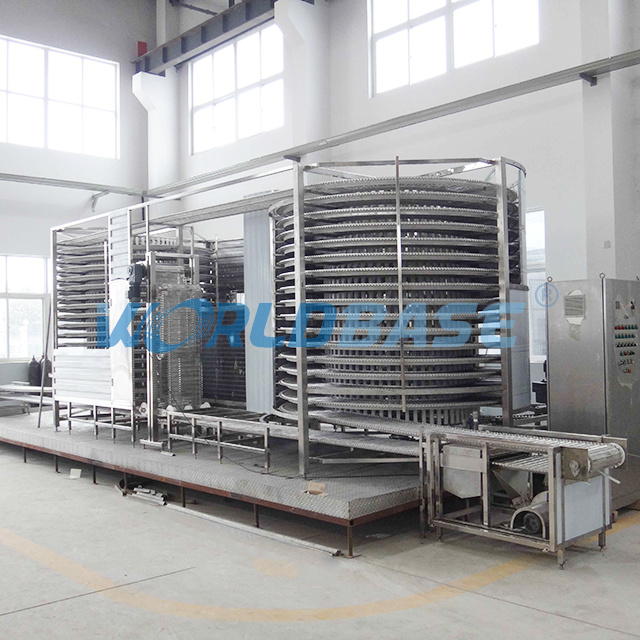
In high-capacity drying or cooling runs, the center of a product mass often traps heat because air follows the path of least resistance, skirting the edges while the core stays stagnant. Airflow baffles disrupt that shortcut. They redirect the moving air inward, forcing it through the middle layers where warm pockets would otherwise build up. The result is a more even temperature distribution across the full bed depth, not just around the perimeter.
The real benefit shows up when batch sizes grow. Without baffles, you can lengthen cycle times or raise fan speeds and still find a stubborn warm zone in the center. Baffles change the velocity pattern, creating turbulence that breaks up the smooth outer flow and pulls heat out of the core. That means the final moisture or temperature spec is met without over-drying the edges or under-processing the middle.
Placement matters more than the baffle material itself. A well-designed setup uses staggered or angled surfaces that alternate the pressure drop across the bed, so the air doesn't just pick a new path of least resistance. This approach keeps high-capacity runs from turning into guessing games, giving operators a repeatable profile that holds up from one load to the next.
A Defrost Sequence That Reacts to Frost Load Instead of a Timer
Most defrost boards still work on a fixed schedule, running a melt cycle whether the coil carries a thin haze or a thick slab of ice. A frost-load approach flips that logic. It watches coil temperature, air pressure drop, or optical sensors, and only calls for defrost when accumulated frost actually begins to restrict airflow. That means clear coils are left alone instead of being heated for no reason.
Because the sequence responds to real conditions, cycle timing shifts with the weather and how often the door gets opened. A humid summer afternoon can push the system into shorter, more frequent defrosts, while a dry overnight stretch might skip a cycle entirely. The cabinet holds a steadier temperature, and the compressor is not repeatedly fighting a reheated coil.
Setup usually involves showing the controller what a frosted coil looks like rather than entering a fixed interval. Some controllers adjust their own clean-coil baseline after each successful clear, so sensor drift or minor charge changes do not cause constant cycling. The payoff shows up as fewer interruptions, less thermal shock, and lower energy use in cold storage rooms.
What Happens When One Fan Fails: Redundancy That Keeps the Line Moving
When a fan goes down mid-shift, the first sign is rarely dramatic. An operator might notice a slight change in the pitch of the airflow or a bump in the temperature readout for a specific zone. The failed unit itself may still spin slowly, dragged along by air from its neighbors. What matters in that moment isn’t the dead fan—it’s the control logic that instantly redistributes the load.
In a properly designed N+1 setup, the remaining fans ramp up just enough to cover the lost capacity without pushing themselves into overload. The system doesn’t wait for approval. Variable-frequency drives adjust speeds, air pressure settles, and the line keeps moving. A well-tuned redundant bank often shows only a few degrees of drift before temperatures stabilize.
The redundancy buys time, not immunity. Once the alarm pings the maintenance crew, the clock starts. Swapping a failed fan during a short line pause is manageable; running with two units down is a gamble nobody wants. That’s why the best plants treat a single failure as a warning shot, not a crisis.
The Washdown-Safe Details That Reduce Cleaning Time Between Batches
Most cleaning bottlenecks aren't caused by the main contact surfaces. They come from the spots people don't see right away: threaded fittings, small brackets, open channels under a motor mount, and seams that hold onto rinse water. When those details are designed to shed liquid instead of trap it, the time between batches drops noticeably. Sloped surfaces, continuous welds, and enclosed frame sections remove the places where product and cleaning chemicals usually linger.
A few functional choices make the difference. Quick-release guards and hinged access panels let operators reach the same areas without pulling out tools or wrestling with loose hardware. Drainage is angled so water and foam move toward the floor instead of pooling on flat ledges. Tubing runs and cable conduits are spaced away from the frame, which means a rinse-down can hit the back side without having to move bundled lines around.
The result is less scrubbing, fewer repeated rinse cycles, and a faster turnaround when switching formulas or allergens. It also reduces the temptation to skip awkward corners under time pressure. When the equipment itself does half the cleanup work by letting liquid run off cleanly, a washdown routine becomes shorter without cutting corners.
Where Cold Air Tries to Escape and How These Frames Stop It
Cold air doesn't need a visible opening to slip through. The narrow joints between sash and frame, the mitred corners where two profiles meet, and the rough gap behind an installed jamb all offer exit routes. Once a slight pressure difference builds between indoors and outdoors, chilled air follows the path of least resistance, flowing through these discontinuities as if the frame weren't there at all.
The frames interrupt that path in several quiet ways. Multi-chamber vinyl or aluminum profiles break the interior into small, slow-moving air pockets that reduce thermal transfer. Co-extruded rubber gaskets press against the moving sash along its full perimeter, filling the uneven space left by machining tolerances. A thermal break placed between inner and outer metal shells prevents the conductive bridge that would otherwise encourage condensation and air movement.
Even the best frame profile struggles if the perimeter is ignored. That is where compressed foam backer rod and low-expansion sealant close the gap between frame and rough opening, while adjustable shootbolts pull the sash tighter into its seals at the corners. Together these details force the escaping air to change direction too many times, and most of it never reaches the outside.
FAQ
They tend to combine heavier gauge stainless steel frames with modular belt systems, so the machine holds alignment better over years of thermal cycling. That cuts down on belt tracking issues and unplanned downtime.
Many use sequenced hot gas or water defrost cycles that can be triggered per tier rather than for the whole drum at once. Production keeps moving in the unaffected zones while one section clears, which is a practical approach for 24-hour plants.
Yes, baffle placement and fan positioning are often tuned to reduce dead zones across the belt stack. Some manufacturers also use variable frequency drives that adjust fan speed based on the actual heat load, so product at the inner tiers freezes at a similar rate to the outer edges.
The better ones now include temperature and belt speed coordination rather than treating them as separate settings. If the incoming product temperature shifts, the control logic can adjust dwell time or airflow before the freeze quality drops, which prevents a lot of operator guesswork.
It has a big impact. Wide fin spacing and coated coils are common because they resist ice bridging and stand up to aggressive washdown chemicals. That means fewer defrost cycles are needed and the coils stay efficient longer between cleanings.
Many are built with sloped floors, fully welded seams, and quick-release belt guides. The goal is to let a cleaning crew do a thorough job in less time without having to dismantle half the machine, which directly supports both food safety and next-shift readiness.
Generally, yes. The ability to fine-tune air velocity and use gentle product handling on the infeed and outfeed helps preserve shape and surface texture. It is not just about reaching a core temperature; it is about doing it without damaging the product.
Look beyond the quoted capacity. Check the frame construction, belt type and tensioning system, defrost method, coil accessibility, and whether the controls give real trending data. Those details tend to determine long-term reliability more than a brochure spec sheet.
Conclusion
In everyday high-volume freezing, the equipment has to survive repeated contraction and expansion without creating downtime. One of the less obvious strengths of these Chinese spiral freezers is the way belt tension stays consistent even when the chamber swings from ambient to deep freeze and back again during continuous cold cycling. Rather than relying on frequent manual adjustment, the take-up system compensates for thermal movement and keeps the belt tracking without over-tightening. At the same time, the internal air path is shaped so that high-capacity batches do not end up with warm centers: adjustable baffles force cold air through the product zone instead of letting it take the path of least resistance. That matters most when the line is loaded unevenly or product density changes between shifts. Instead of guessing, operators can set the baffles to match the actual stack height and belt load.
Reliability also comes from how the freezer handles frost and component failure. The defrost cycle is tied to actual frost accumulation, not a fixed timer, so the system spends less time offline and avoids unnecessary thermal shock. If one fan goes down mid-shift, the remaining fans and the coil layout are arranged to keep enough airflow moving so the line does not have to stop immediately; maintenance can be scheduled rather than forced. Between batches, washdown-safe details such as sloped surfaces, sealed joints, and drain placement cut cleaning time significantly. Finally, the frame and panel joints are built to stop cold air from escaping at seams, which reduces ice buildup around the doorway and keeps energy use steady over long runs.
Contact Us
Contact Person: Mr Yang
Email: [email protected]
Tel/WhatsApp: +8613809083091
Website: https://en.worldbase.cn