
China Reflective Film Factory Driving Innovation in Reflective Material Production
2026-08-25
At night, a slim strip of reflective film on a highway barrier can be the difference between a near miss and a fatal crash. That's why the quiet advances in reflective material production matter far more than most drivers realize. In China, a new wave of manufacturers is pushing the limits of brightness, durability, and cost—and Jinbo sits at the forefront. Rather than copying established formulas, Jinbo's factory has rebuilt its coating and micro-prism processes from scratch, delivering reflective films that hold up longer under UV exposure and perform better in rain. In this post, we'll step inside the production line and explore what makes Jinbo's approach genuinely different.
Inside the Coating Room Where Reflectivity Takes Shape
Stepping through the double doors of the coating room, the air feels thicker—filtered down to a near-sterile calm, with a faint metallic tang from the vacuum pumps humming beneath the floor. Glass sheets move along a track, passing under a hood where layers of silver or aluminum are deposited atom by atom. The walls are lined with gauges and feed spools, but the real work happens in a chamber no larger than a delivery van, sealed tight once the lites slide inside.
Inside that chamber, reflectivity isn't painted on; it's built through a controlled dance of heat, pressure, and ionized vapor. Magnetrons fire invisible streams of metal atoms onto the glass surface, and the thickness of each deposit—measured in nanometers—determines whether the finished pane glints like a mirror or lets a soft sheen through. Technicians monitor real-time wavelength readings, adjusting power levels by fractions to keep the coating uniform from edge to edge.
The result is a surface that seems to hold light rather than simply bounce it. Every batch gets pulled for spectral analysis, comparing reflectance curves against a reference standard. Only when the numbers fall within a tight tolerance does the coated glass move on to cutting and tempering. Walking out, you notice your reflection in a sample rack near the door—crisp, slightly tinted, and shaped by the very room you just left.
Micro-Prismatic Structures Replace Glass Beads for a Reason
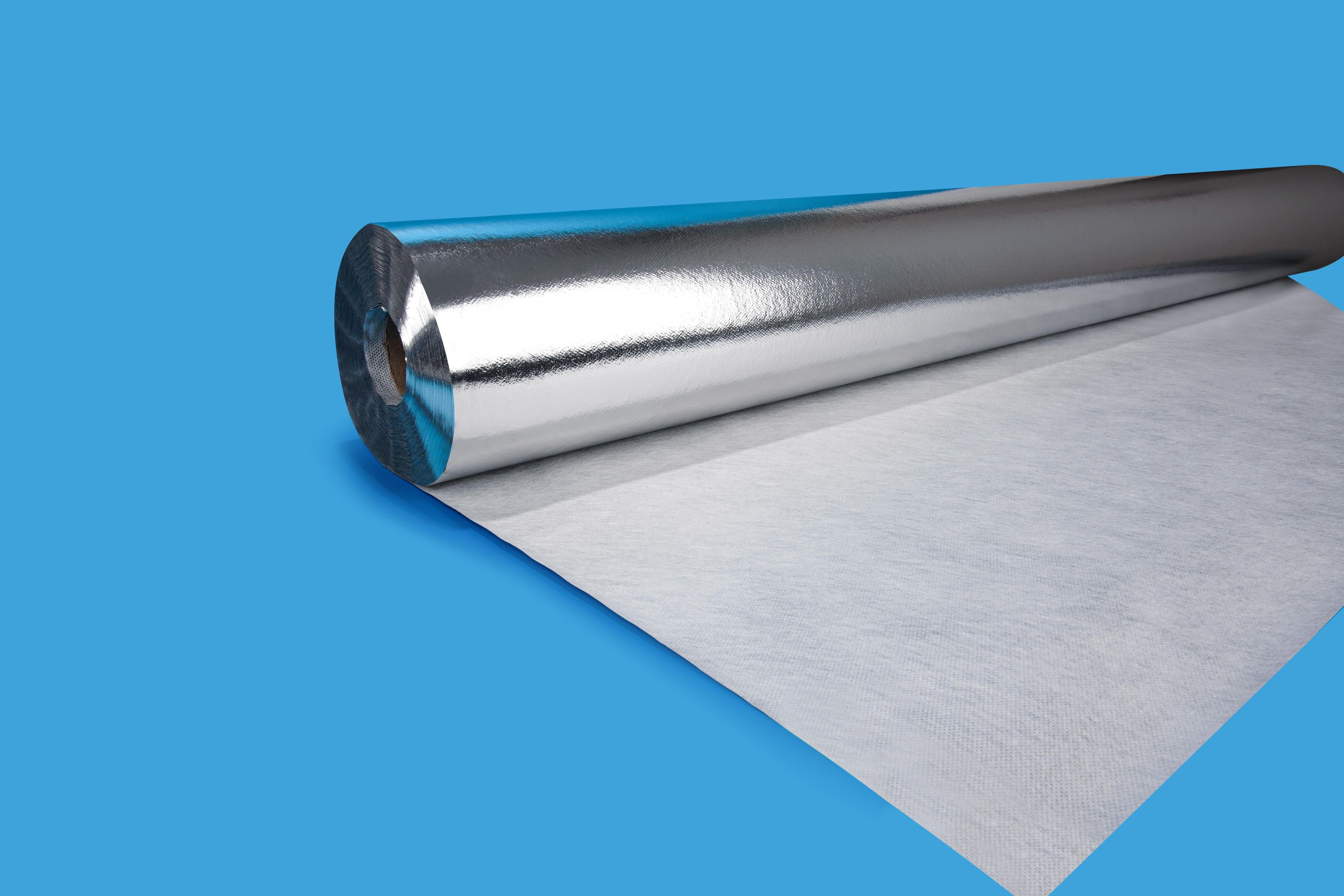
For decades, glass beads were the default reflective material in road markings and safety apparel. They work by bouncing light back toward its source, but that bounce is diffuse and loses intensity quickly over distance or in less-than-ideal weather. Micro-prismatic structures take a different approach. Their precisely angled internal surfaces act like a series of tiny corner mirrors, channeling light along a tighter return path. The result is a much higher percentage of the incoming beam reaching the driver's eyes, often several times the brightness of bead-based sheeting under the same headlight conditions.
This performance gap widens on wet roads or in rain, where the smooth outer surface of prismatic sheeting sheds water more effectively than the irregular texture of embedded beads. Beads can become visually drowned by a thin film of moisture, scattering light sideways instead of reflecting it. Prismatic products, by contrast, maintain their reflectivity even when completely covered with water, because the optics rely on internal geometry rather than surface tension. For highway agencies and fleet operators, that translates to markings and signs that stay legible through nighttime storms without requiring extra maintenance passes.
Cost has historically kept micro-prismatic materials in a premium niche, but the economics have shifted as manufacturing techniques improved. The longer service life and reduced replacement frequency often offset the higher initial price, especially on high-traffic routes where downtime is expensive. Meanwhile, designers appreciate the thinner, more flexible substrate options that prismatic constructions allow, making them easier to apply to curved sign faces or irregular surfaces. What began as a technical experiment has become the default specification for anyone who takes nighttime visibility seriously.
Raw Polymer Choices That Dictate Nighttime Clarity
The molecular backbone of a polymer quietly sets the stage for how a lens or film behaves after sunset. Chains with bulky, irregular side groups disrupt crystallization, leaving fewer microdomains that scatter ambient light. This is why some acrylics and cyclic olefin copolymers stay glass-clear under streetlamps, while cheaper styrenics develop a faint haze as temperatures drop. Choosing a raw material with high optical isotropy isn't just about refractive index—it's about suppressing the nano-scale order that turns transparent into translucent.
Impurity profiles matter more than most formulators admit. Residual monomers, catalyst fragments, and low-molecular-weight oligomers can migrate to the surface or form microvoids over time. At night, these defects become tiny lenses that bend and bounce light from headlights or porch fixtures. A polymer with a tight molecular weight distribution and low extractables keeps its internal structure homogeneous, so photons pass through without the random detours that create perceived fog.
Then there's the overlooked role of chain flexibility. Softer, more mobile segments allow the material to relax stress from cooling or bending, which prevents stress-induced birefringence from appearing as halo patterns around bright points. Rigid, high-Tg resins often fight this relaxation and end up showing rainbow-like rings in nighttime viewing. By tuning comonomer ratios or blending compatible elastomeric phases, you can preserve mechanical toughness while letting the glass transition happen below ordinary outdoor temperatures—where true night clarity lives.
Why This Factory Runs Weathering Tests Before a Single Roll Ships
In an industry where most suppliers just stack rolls and wait for the freight truck, this factory does something that feels almost backwards. Every batch sits under racks of UV lamps, gets hosed down with salt spray, and bakes in a humidity chamber for weeks before anyone talks about a delivery date. The reasoning is blunt: a product that fades or cracks after two summers costs more in warranty claims and lost contracts than the time spent sweating it now.
The test logs read like a travel diary for materials that never leave the building. One week at 60 degrees Celsius with 90% humidity, another cycling between -20 and 40, then a long soak under artificial sunlight tuned to mimic Arizona at noon. Technicians pull samples every few days, measure color shift with a spectrophotometer, and tear strips to check tensile strength. If a roll survives all that without losing more than a 5% gloss drop, it gets a batch number and a green sticker.
Customers rarely see the full sixteen-page report, but they notice the difference when their own clients call back three years later asking for a reorder instead of a refund. The factory's stance is simple: weather doesn't negotiate, so neither do they. A little patience on the front end keeps every shipped roll from becoming a future complaint, and that quiet track record is worth more than any glossy brochure.
The Automation Behind Flawless Adhesive Layers and Edge Seals
Modern adhesive application lines don't leave bead width or wet film thickness to chance. Closed-loop controls pair high-resolution cameras with laser profilometers that scan every pass before the material skins over. When a nozzle drifts by a few microns, the system compensates on the next stroke instead of waiting for a downstream reject.
The edge seal stations push this further by combining temperature-stable heated manifolds with servo-driven needles that follow the contour of each panel. Rather than relying on a single setpoint, the controller blends speed, flow and substrate temperature in real time. That keeps the fillet sharp and the coverage continuous across rounded corners and cutouts.
After cure, automated optical inspection maps the seal geometry and feeds that data back into the line. If a batch shows slight overfill on one edge, the next recipe shifts the bead path by the measured offset. Operators see the trend charts, but the line corrects itself before it ever stops.
From One Production Line to Global Road Safety Standards
The journey often starts on a factory floor where a single component—say, a brake caliper or a retroreflective road stud—is machined, molded, or assembled. Each batch undergoes torque tests, salt-spray exposure, and dimensional checks before it earns a place in a shipping crate. This is where global safety begins: not in a boardroom, but in the quiet discipline of measuring the same bolt twice.
Once that part leaves the dock, it enters a patchwork of national rules and regional test protocols. A reflector legal in Stuttgart might fail a photometric scan in São Paulo. To navigate that, manufacturers align their line with sets of baseline criteria drawn from bodies like UNECE or ISO, translating those into shop-floor checklists, calibration schedules, and traceability logs. The result is a production line that can switch between markets without re-engineering the core design.
The final leap is from component compliance to whole-vehicle resilience. Crash-test dummies, tire blowout simulations, and long-term weathering studies all feed back into the original line, changing heat-treatment times or adhesive curing windows. In this way, a single line becomes a quiet contributor to a global expectation: that a vehicle built on one continent will protect a family on another.
FAQ
They combine precision coating techniques with advanced microprismatic structures, allowing films to reflect light more efficiently while using fewer raw materials—something many older production lines simply can't match.
By automating key stages like adhesive application and optical pattern embossing, they cut waste and speed up output, so high-grade reflective film becomes affordable for road signs and safety gear without sacrificing brightness.
Traffic management, vehicle marking, and personal protective equipment see the biggest gains. For example, newer films hold up better under harsh weather, keeping signage legible for years instead of months.
Many factories have moved toward solvent-free coatings and water-based adhesives, reducing volatile emissions. Some also recycle edge trim from rolls back into lower-grade products, cutting landfill waste.
Yes, production lines can adjust prism angles, thickness, and backing types. A factory might run a batch with extra flexibility for curved vehicle panels, then switch to rigid films for flat highway signs within the same day.
Automated inspection systems scan every meter for defects like missing prisms or uneven coating. Because the checks run at production speed, issues are caught before rolls are shipped rather than after customers complain.
R&D teams test new polymer blends and surface textures to push reflectivity higher under wet conditions—a common failure point for standard films. Prototypes go through outdoor weathering stations before full-scale launch.
Conclusion
In the coating room, reflectivity is never left to chance. The move from glass beads to micro-prismatic structures came from a practical frustration: older materials scattered too much light into empty space where drivers gained nothing. Raw polymer choices are just as deliberate, tuned for nighttime clarity that holds up on wet curves and unlit highways. Before a single roll earns its place on a truck, it passes through weathering tests that compress years of UV, salt, and abrasion into weeks. That step alone has rejected batches that looked perfect under a warehouse lamp but would have dulled before the first winter ended.
Automation takes over where human hands tend to drift, keeping adhesive layers and edge seals consistent enough that every meter behaves like the last. What started as one production line now feeds road sign programs across borders, aligning with global safety standards without treating them as an afterthought or a marketing badge. The real edge here is not a single breakthrough but a quiet refusal to ship reflective film that only impresses on a spec sheet. If a material cannot prove itself under the same stress a highway sign will face, it does not leave the factory.
Contact Us
Contact Person: Miranda
Email: [email protected]
Tel/WhatsApp: +8615231299719
Website: https://www.ihousewrap.com/