
China Purlin Roll Forming Machine Manufacturer Guide for Smart Equipment Buyers
2026-11-16
If you're sourcing purlin roll forming machines from China, you already know the contradictions: dozens of manufacturers promise the same specifications, yet quality, after-sales support, and actual production speed can vary wildly. That's exactly why this guide exists—not to list every factory, but to give smart equipment buyers a framework for separating serious engineering from sales talk. Along the way, you'll see how Beenew fits into the picture as a manufacturer that focuses on measurable performance rather than just catalogue promises. The next few minutes could save you from a costly procurement mistake.
Start With Your Worst Production Day, Not the Best-Case Demo
Every pitch deck loves a flawless walkthrough. The data flows, the UI glows, the latency stays politely invisible. But your real system gets judged on the Tuesday afternoon when the third-party payment API times out, the message queue backs up to six million events, and the primary database decides to swap its read replica for a coffee break. Starting with your worst production day means designing for that exact chaos instead of rehearsing the sunny path. Pull the incident timeline from your last major outage and use it as the opening scene of your architecture story. Show how the circuit breaker caught the payment failure, how the dead-letter queue replayed messages without duplicates, and how the read replica failed over before anyone outside engineering noticed.
The best-case demo hides all your load-bearing assumptions. It assumes the cache never misses, the schema never migrates, the user never pastes a 4MB JSON blob into a 200-character field. Your worst production day exposes those assumptions in brutal detail. Start there because that's where resilience actually lives. Walk through the ugly parts: the race condition that corrupted three orders, the autoscaling group that scaled down too aggressively during a flash sale, the logging pipeline that dropped 40% of its traces while everyone was trying to debug. When you anchor your narrative in failure, every recovery mechanism you describe carries weight. A retry with exponential backoff stops being a bullet point and becomes the thing that saved your checkout page from a full collapse.
Building from the worst day also flips the audience's attention. Instead of asking "How does this work when everything goes right?" they start asking "How did it survive when everything went wrong?" That question is your real differentiator. So dig up the incident report, the postmortem notes, the Slack thread from 2:47 AM. Use those raw details as the spine of your technical story. The more specific you are about the failure, the more believable your recovery becomes. A generic "we handle high traffic" sounds like a brochure. A specific "we survived a 14x traffic spike on Black Friday because our queue consumer auto-scaled to 200 workers and drained the backlog in 11 minutes" sounds like proof. Start ugly, and let the architecture earn its trust one recovered failure at a time.
Ask for a Trial Run on the Steel Grade You Actually Use
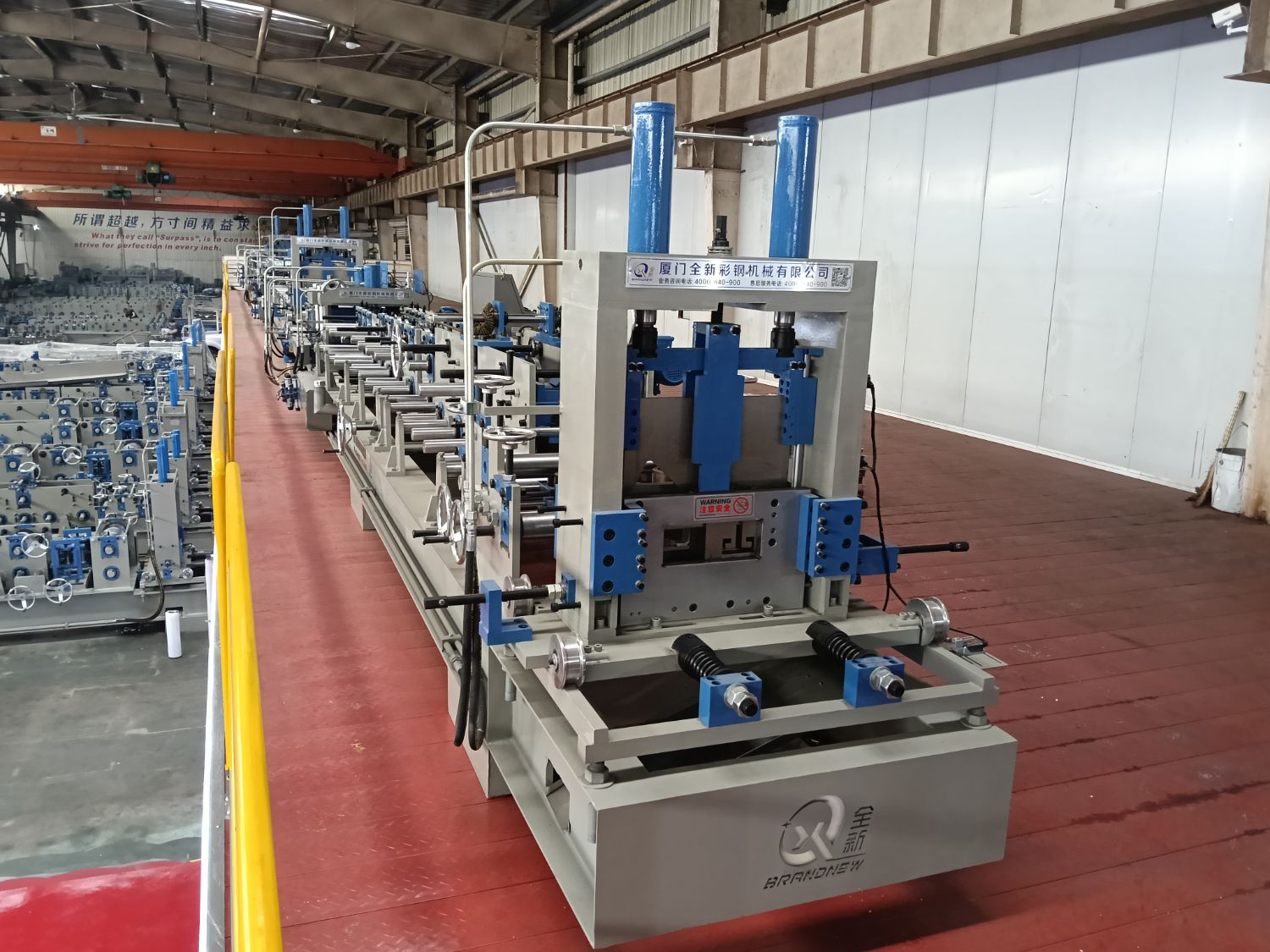
Most suppliers will hand you a spec sheet and call it a day. But numbers on paper rarely survive contact with your actual cutting tools, your spindle speeds, or the coolant mix you’ve been running for the past three years. Ask for a trial run on the exact grade you intend to put into production — not a close cousin, not a “comparable” alternative. A few bars or blanks shipped to your floor will expose things no datasheet ever could: how the material behaves at your typical depth of cut, whether chip evacuation stays clean over a full shift, and if the surface finish holds up after fifty parts instead of two.
This is not about being difficult. It’s about protecting your throughput before you commit to a bulk order. Any reputable mill or distributor will send a small quantity for testing if you cover the freight or agree to a modest cutting fee. The smart move is to run the trial on a job that’s already scheduled, not some idealized test setup. Use the same operator, same fixturing, same toolpath strategy. Then measure what matters to you: tool life per edge, scrap rate, cycle time deltas. If the steel can’t beat your current baseline under those conditions, no amount of alloy chemistry will make up for it.
What you’re really asking for is accountability before the invoice. The steel grade that wins on paper but loses on your floor is just expensive inventory. A trial run turns the conversation from “trust our specs” to “prove it on my machine.” That shift alone often filters out suppliers who are just reselling generic stock and rewards the ones who understand your process well enough to stand behind their product when it’s actually being cut, drilled, and turned.
Look Past Touchscreens to the Frame, Shafts, and Weld Quality
The dashboard screen gets all the attention, but the real story is underneath. When you grip a door handle or slam a tailgate, you're feeling the results of decisions made about shafts, bearings, and spot welds. A smooth touchscreen can't compensate for a chassis that creaks after two winters or a seat rail that develops a sideways wobble. Pay attention to how the door closes—does it thunk like a bank vault or rattle like a toolbox? That sound comes from the frame's torsional stiffness and the quality of the hinge pins, not from software updates.
Weld quality is invisible until it isn't. A rushed robotic pass can leave porosity under the paint, and after enough potholes, a seam starts to separate. Run your hand along the inside edge of the trunk opening or the bottom of the B-pillar. You're not looking for perfection; you're looking for consistency. Even bead spacing, no burn-through, no globs of excess filler. On a used vehicle, check for rust blooming around the welds first—that's the canary in the coal mine for structural fatigue. Fresh paint over a cracked seam is a red flag, not a repair.
Shafts and axles rarely get a second glance until a CV joint starts clicking on tight turns. But if you can, watch the wheels at full lock and listen for a rhythmic knock. It's not just about wear—it's about how the manufacturer sized the splines and heat-treated the bearing surfaces. Some brands overbuild these parts knowing owners will ignore them for a decade. Others save two dollars per unit and hope you'll trade in before the warranty expires. Lift the hood, grab the drive belt, and rock the tensioner. If it flops more than a few millimeters, imagine every rotating component downstream coping with that same slop. That's the difference between a vehicle that ages gracefully and one that nickel-and-dimes you from year three onward.
Calculate Energy, Labor, and Scrap Before Comparing Prices
Many purchasing decisions stop at sticker price, but that number rarely tells the whole story. A lower-priced material or component may carry hidden costs in energy consumption, labor hours, and wasted scrap that quietly erase the upfront savings. Before comparing quotes, map out what each option demands on the production floor: how much power it draws, how many touches it takes to install or process, and how much ends up in the recycling bin. These factors turn a simple price tag into a realistic cost per finished unit.
Energy and labor often move together. A material that requires extra machining, slower cycle times, or more operator attention inflates both your utility bill and your payroll. Scrap works the same way—cheap stock that generates high waste forces you to buy more volume and pay to handle the leftovers. Once you tally these three elements per part, the “cheaper” option can suddenly look expensive, while a slightly pricier alternative with better efficiency and yield becomes the clear winner.
Run the math side by side for every serious contender. Estimate kilowatt-hours per batch, direct labor minutes per piece, and expected scrap percentage. Convert those into dollars using your actual rates. Only then compare the totals. You will often find that the best financial choice is not the lowest quoted price, but the one that keeps energy low, hands off, and material waste minimal.
Find Out How Fast the Line Really Switches Between C and Z
Most bench measurements overestimate the transition time simply because the probe adds a few picofarads right at the test point. If you want the true switching speed between the C and Z states, remove the long ground lead and use a spring clip or a differential probe with a tight loop. The difference is often 2–5 ns on a fast line, which is enough to turn a clean edge into a rounded shoulder.
A better approach is to drive the line with a known source impedance and measure the reflected step at the far end. When the line switches from C to Z, the impedance change shows up as a small bump in the reflected waveform. Time the bump from the 50% point of the drive edge and you get the real transition delay, not the oscilloscope's bandwidth-limited guess.
Repeat the test with three different cable lengths and plot the measured delay against length. The slope gives you the propagation velocity, and the y-intercept gives the intrinsic switch time of the driver itself. If the intercept lands below 1 ns, you are probably seeing the residual capacitance of the fixture rather than the actual line behavior.
Get a Written Wear-Parts List and Replacement Schedule Up Front
A trustworthy supplier won’t hesitate to hand over a written wear-parts list before you commit. This document should name every component that’s expected to degrade over time—blades, belts, bearings, seals, rollers, filters, or anything else specific to the machine—and give you a realistic replacement interval for each one. If the schedule is vague or the list is missing, treat that as a warning sign. You’re not just buying equipment; you’re buying the next five years of upkeep, and that cost needs to be visible on paper.
Pay attention to how the intervals are expressed. A good schedule references operating hours, production cycles, or material throughput rather than calendar months alone, because wear depends on how hard the machine works. Ask for the assumptions behind those numbers. If the supplier assumes a light-duty, single-shift operation and you run around the clock in abrasive conditions, the real replacement frequency could be far shorter. Getting this in writing forces the conversation about your actual usage before the deal closes.
Also check for parts that are notably absent. Some sales teams gloss over expensive wear items like specialized cutting edges or high-temperature seals because quoting them upfront makes the total cost of ownership look less attractive. Compare the list against the machine’s manual and your own maintenance experience with similar equipment. A detailed, itemized schedule isn’t bureaucracy—it’s the difference between a predictable maintenance budget and a series of expensive surprises.
FAQ
Ask for the business license number and cross-check it on the national enterprise credit information system. Request a live video tour of the workshop, showing the machine being assembled, not just a polished product video. Also ask for references from buyers in your region who purchased similar models within the last two years.
Look beyond the number of forming stations. Pay attention to the shaft diameter and material, the type of cutting system, and whether the PLC allows remote access for troubleshooting. A machine with a thicker frame and branded hydraulic components usually costs more upfront but saves on realignment and part replacements later.
Never rely on a generic 'C and Z purlin' description. Provide exact web height, flange width, lip size, and material thickness range, including the yield strength of the steel you plan to run. Ask the manufacturer to confirm the roll forming stations can handle the highest yield strength in your range, not just the thinnest material.
Insist on a written list of spare parts, including cutting blades, hydraulic seals, and PLC backup parameters. Clarify whether installation support is remote or on-site, and how quickly a technician can be dispatched if needed. A good manufacturer will provide a troubleshooting guide with error codes and video call support without long delays.
Yes, many quotes exclude the cost of the cutting die for each profile, the electrical transformer if your voltage differs, and the shipping crate. Also confirm whether the price includes a set of leveling rollers and coil car. Ask for a detailed commercial invoice that separates machine, tooling, and packaging so you can compare quotes accurately.
For a standard C/Z purlin machine with common sizes, expect 30 to 45 days after deposit. If you need special hole punching patterns, automatic stackers, or non-standard material thicknesses, add another 15 to 25 days. Be suspicious of manufacturers promising delivery in two weeks—that usually means they have stock parts but may skip proper testing.
Both are equally critical, but buyers often overlook the control logic. A well-built frame with a poorly programmed PLC will cause inconsistent hole positions and length errors. Ask for a sample of the HMI interface and confirm the manufacturer uses original branded PLC and servo drives, not cloned parts that fail under heat or voltage fluctuations.
Request the machine run at least three consecutive purlins of different lengths without stopping. Watch the punching and cutting stations closely for burrs or misalignment. Ask the operator to change from C to Z profile if applicable, and check the time it takes. Also inspect the paint finish on hidden areas like under the base frame, because poor coating there indicates rushed manufacturing.
Conclusion
A demo reels off cleanly when the coil is straight, the gauge is consistent, and the operator has rehearsed the run for a week. That scenario won't tell you much. Start instead with the shift you dread: overloaded coil car, poor edge quality, thin high-tensile steel, and a profile switch due before lunch. Insist on a trial run using the exact steel grade, width, and coating your plant actually consumes. If the manufacturer hesitates, treat that as the answer. While the machine is running, stop staring at the touchscreen and walk around the back. Look at the frame plate thickness, shaft journals, and weld penetration at the base and shoulder. A flashy interface never fixed a cracked weld or a sagging bed.
Price tags are also misleading if you stop at the invoice. Work out energy consumption per hour, labor needed for coil loading and tool changes, and how much scrap the punching and cutting stations generate on your profiles. Then compare total cost per ton, not ex-works price. Ask for a timed C-to-Z changeover with the actual crew who will operate the line, because a factory technician can make a two-minute switch look easy while your team struggles for forty. Finally, get a written wear-parts list with replacement intervals for rollers, cutting blades, guides, bearings, and hydraulic seals. If the supplier cannot commit that schedule to paper, you will be the one paying for downtime and emergency spares later.
Contact Us
Contact Person: Sophie
Email: [email protected]
Tel/WhatsApp: 8615959271231
Website: https://www.beenew-rollformer.com/