
China Medical Disposable Manifolds: Essential Guide for Clinics and Suppliers
2026-08-31
From infusion therapy to hemodynamic monitoring, disposable manifolds are the unsung workhorses of modern clinical care. Yet not all manifolds are created equal—especially when sourcing from China, where quality and regulatory compliance vary widely. In this guide, we cut through the noise to show clinics and suppliers what actually matters: material integrity, precision molding, sterilization validation, and dependable supply chains. Whether you're comparing OEM options or seeking a partner you can trust, you'll want to see how INT sets a benchmark for reliability in this competitive field. Read on to make an informed decision—before your next order.
Where Disposable Manifolds Fit into Everyday Clinical Workflows
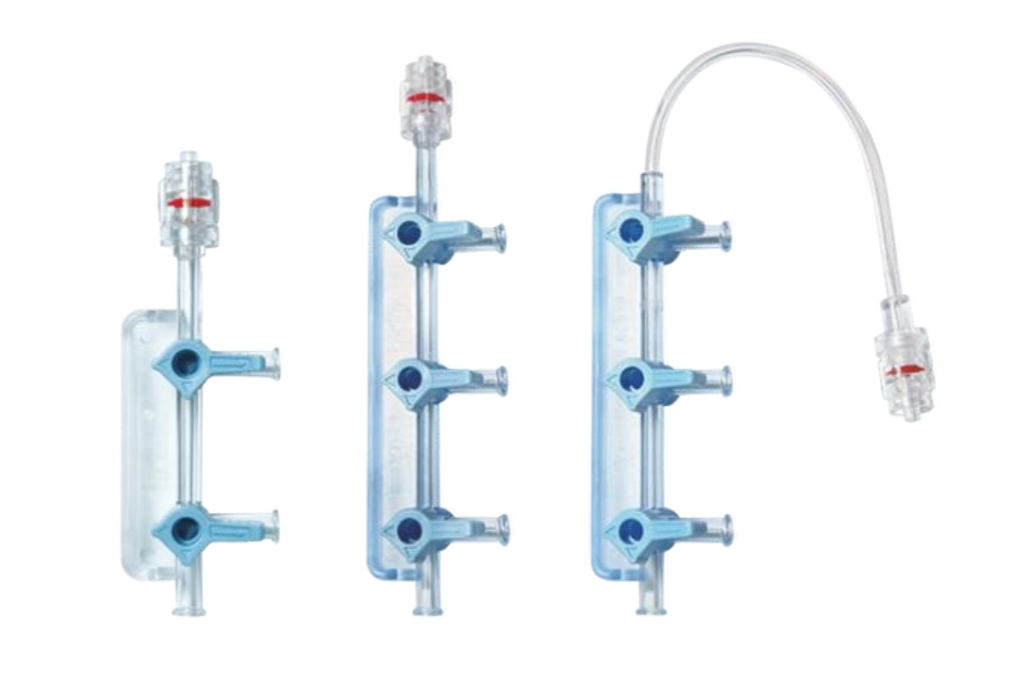
In intensive care units, a disposable manifold often sits at the hub of an arterial or central line setup, merging several infusion ports and a transducer into one compact block. Nurses can zero the pressure line, flush the system, and switch between medications without repeatedly breaking the connection. That alone cuts down on the tangle of three-way stopcocks and extension tubing that used to make shift handoffs feel like untangling a knot. Because the entire assembly is discarded after a single patient use, there is no question about leftover residue or cross-contamination from a previous case.
In the operating room, an anesthesia provider may have five or six drips running alongside an arterial line during a long case. A disposable manifold lets those lines come together at one clear, labeled junction. When a sudden drop in pressure calls for a bolus, the clinician can push through the manifold without hunting for the right port under the drapes. The reduced number of manual connections also means fewer chances for air to enter the system, which matters during a busy induction or while repositioning a patient.
Emergency departments and dialysis units rely on the same principle for speed and safety. A preassembled disposable manifold can be kept at the bedside in a sealed kit, ready to be spiked and connected as soon as a patient arrives. During dialysis, the manifold consolidates blood and saline lines, making it easier to monitor for clotting or leaks. In both settings, the workflow benefit is simple: less time spent assembling and dissembling circuits, more time spent on the patient.
Breaking Down the Materials and Build Quality That Matter
Most people judge a product by its brand tag, but that's the weakest signal. The real story lives in the materials themselves: fiber length, grain, density, and coating. Short staple cotton pills within months, while long staple cotton or tightly woven nylon holds shape. Run your fingers over the surface—cheap polyurethane peels at crease points, whereas full grain leather or ballistic nylon develops character instead of cracks. Check the backing too; laminated interiors and sealed edges tell you the maker expected years of use, not a quick turnaround.
Build quality shows up first at stress points, not in the showroom photos. Inspect the seams on a backpack, bag, or jacket. Double stitching with bar tacks at pocket corners and strap anchors means someone thought about where tears actually start. A single row of loose thread along a high tension area is a countdown. Turn the item inside out—if the internal seams are just as clean as the outside, that is a rare sign of real care. Uneven stitching, skipped threads, or visible glue squeeze out near zippers are immediate red flags.
Hardware is the part most brands try to hide, but it is where daily failures happen. Cheap plastic zipper coils feel gritty from day one and snap after a season, while a heavy gauge brass or coated steel zipper with a locking slider stays smooth for years. Buckles should have thick prongs that seat snugly into their frames, not thin wire that bends under load. Buttons need reinforced shanks and extra thread wraps, and snaps should fire with a crisp click rather than a mushy press. These details rarely make the marketing copy, yet they determine whether a product survives real life.
A Realistic Look at Chinese Manufacturing Standards and Testing
Chinese manufacturing standards have evolved rapidly over the past two decades, centered on the GB national standard system covering electronics, machinery, textiles, and toys. Many align with ISO and IEC frameworks, but specific limits and test methods are often adjusted to local industry conditions. For toys, the GB 6675 series sets clear requirements for mechanical and physical properties, flammability, and migration of certain elements, alongside compulsory CCC certification. Yet enforcement depth varies widely by region and product category. Coastal export-oriented factories routinely meet multiple international standards, while smaller domestic-focused workshops may only satisfy minimum legal thresholds.
The testing landscape is equally mixed. Large manufacturers typically operate in-house labs equipped with spectrometers, tensile testers, and environmental chambers, and they undergo regular audits by third-party bodies. However, many small and mid-sized factories rely on outside labs for type-approval testing only, with batch-to-batch consistency not always guaranteed. It is also common for a single factory to use different materials or processes for export orders versus domestic sales, driven less by lower standards than by intense domestic price competition that pushes cost control. Certificates alone can hide this fluctuation.
Regulatory spot checks and public disclosure have improved in recent years. The State Administration for Market Regulation now publishes quarterly results of product quality inspections, with common failures clustered in marking, power connections, and small parts. This suggests that basic safety indicators are largely met, but consistency, durability, and label compliance still show gaps. Buyers should not rely on one test report. Instead, ask suppliers for recent full-item third-party testing, and verify that the product model and critical component list in the report match the actual mass production. That reduces the risk of passing samples and slipping bulk quality.
Choosing the Right Manifold Configuration Without the Guesswork
Selecting a manifold configuration often gets reduced to copying a previous design or relying on rough rules of thumb. That approach can work for simple, low-flow systems, but it quickly falls apart when you're balancing pressure drop, flow distribution, and packaging constraints. Instead of guessing, start by mapping the exact flow path each branch will see under peak demand. A quick hand sketch with flow rates and allowable velocity ranges will reveal whether a symmetrical layout is actually necessary or if a simpler ladder-style manifold will do the job.
Another step people skip is checking the manifold's internal volume against your system's response time. A large internal gallery may look convenient for drilling ports, but if the circuit needs fast actuation, that extra volume becomes a compressibility headache. Calculate the total trapped volume and compare it to the pump's output at minimum operating speed. If the volume exceeds what the pump can fill within your required cycle time, you need a manifold with smaller cross-sections or a different port arrangement, not just a higher pressure setting.
Finally, don't ignore the influence of port orientation on air bleeding and contamination trapping. A compact block with ports pointing in every direction might save space on paper, but if air pockets form in blind passages, you'll chase erratic performance for weeks. Orient the manifold so that any trapped air can rise naturally to a bleed point or return line. Similarly, avoid dead-end branches that collect debris; if a branch must be capped, make it the shortest possible distance from the main flow path. These small geometry choices often matter more than the nominal port size you pick.
Cost Drivers You'll Encounter When Buying from Chinese Suppliers
Every quote you receive from a Chinese factory hides a pile of smaller decisions that quietly shape the final price. The most obvious driver is raw material cost, but that number shifts with global commodity markets, local stock levels, and even the time of year you place the order. Add to that the reality of tooling and molds: if your product needs custom dies, injection molds, or stamping fixtures, expect to pay for them upfront, and the price often depends on the cavity count, steel grade, and expected lifecycle. Suppliers may absorb some of this cost for large volumes, but for smaller runs, you'll see it as a separate line item that can dwarf the unit price.
Labor costs are another lever that moves in ways outsiders rarely anticipate. While base wages in manufacturing hubs like Shenzhen or Dongguan have climbed steadily, the bigger variable is skill level and overtime. A product requiring hand soldering, precision assembly, or intricate sewing will cost more than a simple molded part because it ties up experienced workers for longer. Then there's the overhead that factories bake into every quote: electricity, rent, equipment depreciation, and even the cost of complying with environmental or safety inspections. Some suppliers quote these transparently; others fold them into the unit price, which can make two seemingly identical quotes differ by twenty percent or more.
Logistics and packaging are the silent cost drivers that often surprise first-time buyers. A quote might show an attractive FOB price, but once you factor in export cartons, pallets, fumigation certificates, and the trucking fee from factory to port, the real number climbs. If your product is bulky but light, you'll pay for volume rather than weight; if it's heavy and dense, ocean freight charges will eat into your margin. And don't forget the cost of compliance: testing to meet your target market's standards, whether it's CE, FDA, or RoHS, usually requires a third-party lab and a few weeks of back-and-forth with the supplier, all of which adds overhead that never appears on the initial price sheet.
Building a Supplier Shortlist That Won't Let You Down
Start building your shortlist by looking past the quote. Ask for delivery records from the last three years, then call a couple of their current customers. Don't settle for vague praise—probe for specifics like how often shipments arrived late and what happened when an urgent order came through. The gap between a polished sales pitch and daily reality often shows up within ten minutes of these conversations.
Financial stability matters just as much as unit price. A supplier offering rock-bottom rates might be one cash-flow squeeze away from shutting down a line or cutting corners on materials. Pull a credit report if you can, and ask directly about their capacity limits. Also verify that their quality certifications are lived practices, not framed certificates in the lobby. A fifteen-minute walk through their production floor will tell you more than any brochure.
Finally, trim your list to three to five names and run a small trial order with each. Pay attention to how they handle hiccups, because hiccups will happen. The suppliers worth keeping are the ones who flag an issue early, explain the cause, and fix it without excuses—not the ones who just keep saying everything is fine.
FAQ
Look for manufacturers with ISO 13485 certification and recent third-party test reports for biocompatibility and endotoxin levels. Ask for samples before committing to bulk orders, and confirm that luer lock connections meet ISO 80369-7 to reduce misconnection risks.
They typically provide CE marking files, FDA 510(k) summaries if applicable, and full technical dossiers upon request. Some also offer regulatory support for country-specific registration, though final responsibility for import compliance usually stays with the buyer.
Many Chinese manufacturers have modular tooling that allows semi-custom port counts at moderate minimum order quantities. Fully custom internal geometry or unusual materials usually requires higher volume and longer validation, so it helps to ask for existing platform designs first.
Stock models often ship within two to three weeks. Custom or semi-custom productions generally take six to ten weeks, depending on mold changes, assembly steps, and any requested sterilization validation or aging tests.
Request pressure burst test data and fatigue test results from the supplier. Compare the stated working pressure against your infusion pump settings, and ask for a small pre-shipment sample lot to run your own bench tests before final acceptance.
Medical-grade polycarbonate, acrylic, and PVC are common, with polysulfone or PEI used for higher pressure or harsher drug exposure. Clarify the drug contact duration and ask for chemical compatibility data, especially for lipid-based or high pH medications.
Beyond the unit price, plan for customs duties, destination port fees, local taxes, possible third-party inspection charges, and storage conditions. Some regulators also require re-testing on arrival, which can add cost and delay.
Independent inspection companies can do pre-shipment checks, collect samples for lab testing, and verify clean room class and packaging seals. Ask the supplier for recent customer references in your region and request a live video walkthrough of production areas.
Conclusion
Disposable manifolds sit at the center of daily clinical practice, though they rarely draw attention until something fails. In cath labs, operating rooms, and ICU bays, these components consolidate multiple infusion and monitoring lines into a single sterile hub, cutting setup time and the chance of touch contamination. The best-performing units use transparent polycarbonate or medical-grade PVC that resists cracking under repeated rotation, with smooth, non-stick stopcocks and secure Luer connections. Chinese manufacturers have matured considerably over the past decade, and many now operate ISO 13485-certified facilities with in-house validation for pressure tolerance, leakage, and biocompatibility. Still, standards vary, so clinicians and distributors should look beyond glossy spec sheets and ask for recent batch test data, sterilization validation, and relevant export registrations rather than assuming every low-cost option meets the same bar.
Configuration selection is where most purchasing mistakes happen. A three-gang manifold with rotating adapters may be ideal for hemodynamic monitoring, while a four-way model with extension tubing fits contrast delivery for angiography. Instead of guessing, map your own procedural steps and fluid paths first, then match the port count, handle orientation, and tubing length to those needs. On the pricing side, expect cost to shift with resin type, mold complexity, cleanroom assembly, and sterilization method—ethylene oxide remains cheaper than gamma for many lines, but it adds aeration time. Freight and packaging also eat into margins when buying from China. A reliable shortlist comes from checking on-site audit reports, client referrals in similar markets, and the supplier's responsiveness when you request custom samples or document revisions. Price matters, but consistency and clear communication protect you more in the long run.
Contact Us
Contact Person: Jeffrey
Email: [email protected]
Tel/WhatsApp: 86-0633-2230056
Website: https://www.sd-intmedical.com