
China Horizontal Concealed Fan Coil Unit: Key Benefits and Installation Tips for Modern HVAC Systems
2026-11-02
When ceiling space is tight and aesthetics demand invisible climate control, horizontal concealed fan coil units quietly solve a persistent HVAC challenge. China has become a leading source for these compact, high-efficiency systems that deliver consistent comfort without disrupting interior design. This guide breaks down the core benefits and practical installation tips, along with field-tested insights from shairko to help you get the most out of modern HVAC projects.
Why These Horizontal Concealed Units Handle Tight Ceiling Cavities So Well
A big part of the answer comes down to compact chassis geometry. These units typically keep their overall height below 200 mm, with coil connections and condensate drains tucked to the side rather than stacked underneath. That side-access layout means the unit can slide into a ceiling void where ductwork, sprinkler lines, and electrical conduits already compete for space, without forcing the installer to build a deeper bulkhead just to accommodate the equipment.
The horizontal orientation also works with the limited cavity, not against it. Return air enters from the rear or bottom, passes across the coil once, and exits through a short, straight discharge plenum. Because the air path doesn't double back or require tall transition pieces, the entire assembly stays shallow and predictable. Installers can often connect a low-profile grille directly to the unit, cutting down on field-fabricated sheet metal and the extra inches those transitions usually eat up.
Maintenance needs shape the design too. Rather than expecting a technician to lift heavy panels in a cramped space, these concealeds position filters, valve packages, and drain pans along one accessible edge. A removable side or bottom panel lets the service team reach the blower and coil without dropping the whole unit from the ceiling. That practicality is what actually determines whether a tight cavity installation stays workable over the life of the building, not just on day one.
The Real Payoff of Choosing China-Sourced Fan Coil Units
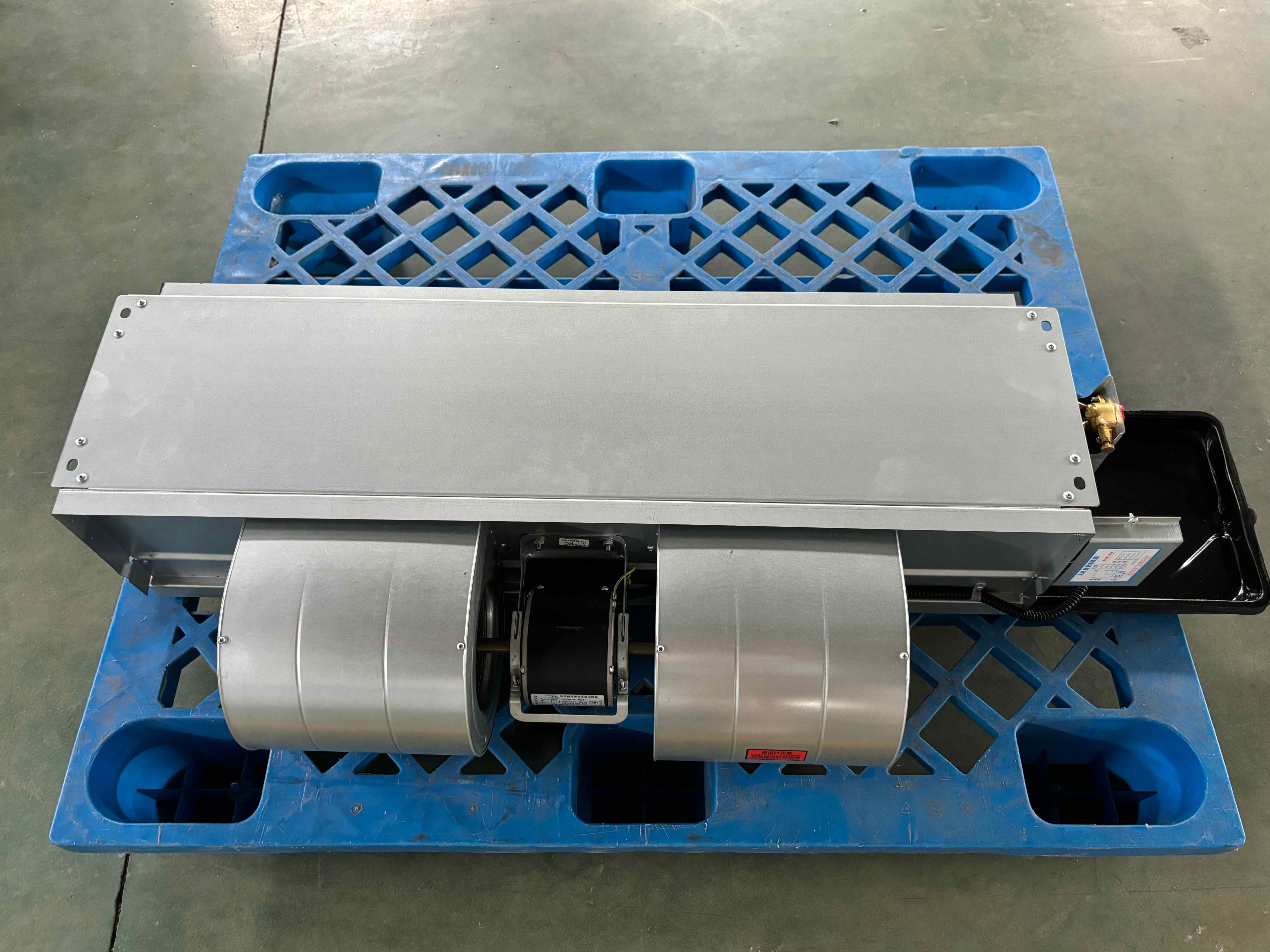
The real advantage of sourcing fan coil units from China isn't a race to the bottom on price. It's access to a mature, vertically integrated supply chain where coils, motors, and controls are produced in close proximity, cutting lead times and making mid-project adjustments far less painful. When a contractor needs a modified coil configuration or a different control protocol, Chinese manufacturers can often turn around the change in days rather than weeks, which directly reduces site downtime and labor overruns.
Another payoff that often gets overlooked is the ability to standardize across multiple buildings without paying a premium for consistency. Many Chinese suppliers maintain deep catalogs of both chilled water and direct expansion fan coil units, and they're willing to hold inventory or offer staggered deliveries that align with phased construction schedules. This means you're not forced to mix and match brands from different regions just to meet a deadline, which in turn simplifies commissioning and long-term maintenance.
Finally, the after-sales network has quietly become a differentiator. Spare parts like fan motors, drain pans, and thermostats are widely available from third-party distributors and online industrial platforms, so a failed component doesn't mean waiting for a single OEM shipment. For facility managers, that translates into predictable maintenance costs and less equipment downtime over the life of the building.
Quiet Operation That Doesn't Compromise on Cooling Output
Most cooling systems get noticeably louder right when they need to work hardest. This one keeps its composure under load. Instead of a rattling compressor or a fan that whines at high speed, you get a low, steady murmur that fades into the background within minutes. The temperature drops, but the noise floor barely moves.
The secret isn't a single trick. A larger heat exchanger paired with carefully shaped fan blades moves more air per rotation, so the motor doesn't have to spin as fast or strain as hard. Even at maximum output, the sound stays smooth rather than sharp. You can sit a few feet away and still follow a conversation or take a nap without reaching for earplugs.
That balance matters most in spaces where you live and work. Bedrooms, home offices, reading corners. During a heat wave, you shouldn't have to pick between getting cool and hearing yourself think. With this unit, the only real clue that it's running hard is the temperature on the thermostat.
Step-by-Step Mounting Advice to Avoid Condensation Headaches
Start by checking the wall surface before you drill anything. A slightly uneven patch can throw off the unit's pitch, and even a small tilt toward the wrong side is enough to let water pool inside the drain pan instead of flowing out. Use a long spirit level across the mounting plate, shim the low spots with thin plastic or aluminum strips, and then recheck both horizontal and vertical axes after the bracket is fixed. This extra few minutes beats chasing drips later.
Once the plate is secure, give the drain line a straight, downward path from the very beginning. Avoid letting the hose sag or rise after it leaves the unit, since condensation will collect at the lowest dip and eventually back up. If you have to route the pipe sideways, keep the slope at least a quarter inch per foot and support it every three to four feet with clips. Tape the connection at the unit itself, but leave the downstream end open until you can confirm water actually flows during a test run.
Before you snap the indoor unit onto the bracket, wrap the refrigerant lines and drain hose separately where they pass through the wall sleeve. A gap here lets warm, humid air meet cold surfaces, which creates condensation inside the wall cavity. Use closed-cell foam insulation and push it all the way to the back of the unit, then seal the exterior opening with duct seal or a weatherproof grommet. Run the unit in cooling mode for twenty minutes, pull it forward slightly, and feel along the pipe connections and the underside for any moisture that shouldn't be there.
Sizing Mistakes That Undermine Even the Best Fan Coil Units
Oversizing a fan coil unit seems like a safe bet, but it often leads to short cycling, poor dehumidification, and higher energy bills. The coil cools the air so quickly that the thermostat shuts the unit off before moisture can be properly removed, leaving the space clammy and uncomfortable. That extra capacity you paid for ends up working against both comfort and efficiency.
Undersizing is just as damaging, though it shows up differently. On peak cooling days the unit runs continuously, struggling to hold setpoint. Rooms drift warmer, occupants start adjusting thermostats, and the fan coil gets blamed for being unreliable when the real issue is it never had enough capacity from day one. A proper load calculation, not a rule-of-thumb guess, is the only way to avoid this.
Another frequent mistake is ignoring the difference between sensible and latent load. Fan coil selections based only on total cooling capacity can miss the mark in humid climates. If the coil is selected for a high sensible heat ratio but the space has significant moisture loads, humidity levels climb even though the air temperature is fine. The result is a unit that meets the thermostat but fails the people in the room.
How to Plan Access Panels for Future Maintenance Without Ruining Aesthetics
The smartest move is to stop treating access panels as an afterthought. During the early design phase, walk through the space with the contractor and mark every valve, junction box, or filter that will eventually need hands-on attention. Once those spots are mapped, you can decide how to conceal them without turning maintenance into a puzzle. A common mistake is installing a generic white metal door in the middle of a custom walnut wall—skip that by choosing panel locations that naturally sit at edges, corners, or behind movable elements like a bookshelf on casters or a large potted plant that slides aside.
For surfaces where the panel must sit in plain view, match the finishing material exactly. If the wall is clad in oak veneer, cut the access door from the same sheet and use a thin kerf blade so the grain lines up seamlessly. Magnetic push-latches work better than visible handles because they preserve a flush look. In tiled bathrooms, run the grout line directly over the panel's seam, then use a suction cup to remove the tile face when needed. Ceiling panels are trickier—consider recessed designs that blend with surrounding trim or integrate the panel into a light fixture's trim ring so it reads as part of the fixture rather than a separate opening.
Remember that aesthetics also means durability over time. A beautiful hidden panel is useless if the locking mechanism corrodes, the hinges sag, or the facing material warps after a few years. Choose hardware rated for frequent opening, and if the panel will be painted, use a paint system that resists chipping along the edges. It helps to label the back of each panel with a small etched number or color code, invisible from the front, so future maintenance crews know exactly which section to remove. This quiet planning keeps the space looking clean while saving hours of destructive searching later.
FAQ
It's a compact terminal unit installed above ceilings or in bulkheads, hidden from view. It uses chilled or heated water from a central plant to condition air, distributing it through short duct runs. In contemporary projects, it works well with heat pumps, chillers, or district energy systems, giving designers flexibility without sacrificing ceiling aesthetics.
Many Chinese factories have invested heavily in automated coil production, precision stamping, and in-house testing. The result is often a better balance of cost, customization, and lead time than some domestic suppliers. Look for units with CE, RoHS, or ISO documentation, and request a sample or factory audit if the project volume justifies it.
They keep mechanical equipment out of sight, lower sound levels when properly isolated, and allow individual zone control. Because they only need a small footprint above the ceiling, you can free up floor area and avoid wall-mounted units clashing with interior design. Maintenance access can be planned through discrete access panels.
Start with a room-by-room load calculation, not a rule-of-thumb. Consider sensible and latent loads, ventilation air, and window orientation. Then match the unit's cooling capacity at the design chilled water temperature—often 7°C supply and 12°C return. Also check external static pressure against duct and grille losses.
Never hang the unit directly on ceiling grid; use independent threaded rods and vibration isolators. Leave enough clearance for filter replacement and coil cleaning. Slope the drain pan correctly—typically 1% toward the drain—and install a proper P-trap to prevent odors and condensate backup. Insulate all chilled water piping and valves to stop sweating.
Yes, they pair well with air-to-water or water-to-water heat pumps. In heating, the same coil receives warm water, usually 40–50°C for modern heat pumps. Check that the control valve and thermostat can switch between cooling and heating automatically, and consider a unit with a hot water coil sized for lower supply temperatures to maintain comfort without oversizing the fan.
Select a unit with a low sound power rating at the intended fan speed, and use flexible duct connections at the discharge and return. Mount the unit on spring or rubber isolators, and avoid hard contact between the cabinet and building structure. Size return air paths generously to reduce air rush, and consider a silencer if duct runs are very short.
Plan to inspect and replace filters every one to three months, more often in dusty or high-traffic areas. Clean the coil and drain pan at least twice a year to prevent biological growth and clogging. Check the condensate pump, if used, and verify the drain line is clear. Annual checks of fan motor bearings, belt tension (if applicable), and control sensors keep the unit efficient.
Conclusion
Horizontal concealed fan coil units from China have become a practical choice for modern HVAC jobs where ceiling space is tight. Their slim, low-profile cabinets and flexible return-air configurations allow them to slip into cavities that would choke bulkier equipment. The real advantage of sourcing these units from China goes beyond lower upfront cost; it lies in consistent manufacturing tolerances and component quality that hold up over repeated projects. Quiet operation is another underrated benefit: a well-designed blower wheel and insulated casing keep noise levels low without sacrificing the cooling or heating output needed for comfort. On the installation side, careful mounting matters more than most people expect. Getting the slope right on the drain pan and insulating chilled-water connections properly prevents condensation from turning into water stains or mold. Too many installers skip these steps and then blame the equipment.
One of the biggest mistakes is sizing the unit by floor area alone. Real load calculations must account for glass exposure, occupancy, and latent heat, otherwise the system short-cycles or struggles to dehumidify. Access panel planning is equally important for long-term service. Instead of cutting a random hole in the ceiling, align panels with return-air openings or use flush, paintable doors that blend into the architecture. This way, future filter changes, coil cleaning, and valve repairs stay easy without ruining the finished look. Combining a compact Chinese horizontal concealed fan coil with disciplined mounting, correct sizing, and thoughtful access planning gives you a system that works quietly, drains reliably, and remains serviceable for years.
Contact Us
Contact Person: Crystal
Email: [email protected]
Tel/WhatsApp: 8613524235353
Website: https://www.airkohvac.com