Best Shipbuilding Steel Plate Supplier Traits That Ensure Quality and Delivery
2026-11-02
Every shipyard knows the pain of a steel delivery that's late, off-spec, or both. The best shipbuilding steel plate suppliers share a handful of non-negotiable traits—traits that Sanhe Steel has built its reputation on. Here's what separates a reliable partner from a costly gamble.
Mill Certifications That Arrive Before the Plate Does
A plate still sitting on a truck or in a port yard does little good if the paperwork trail has not caught up with it. Receiving the mill certification ahead of the physical material lets engineers start checking heat numbers, chemistry, and mechanical properties before unloading even begins. That early look often catches a mismatch in impact test values or a missing normalizing step that would otherwise force a costly hold once the plate is already on site.
The value becomes clearer on jobs where a third-party inspector or owner's engineer must sign off before any cutting or welding. Having the certificate in hand days before the plate arrives means those reviews can happen on paper, not while a crane waits. It also gives the welding team a chance to refine their procedure based on the actual carbon equivalent, rather than guessing from a generic purchase spec.
Not every supplier manages this reliably. It requires someone inside the mill or service center who understands that the document is not an afterthought but part of the delivery. When a shop can forward a scanned certificate while the plate is still in transit, it usually means their internal process is built around keeping material moving, not just fulfilling a line item.
Thickness Tolerances That Don't Drift by the Tenth Plate
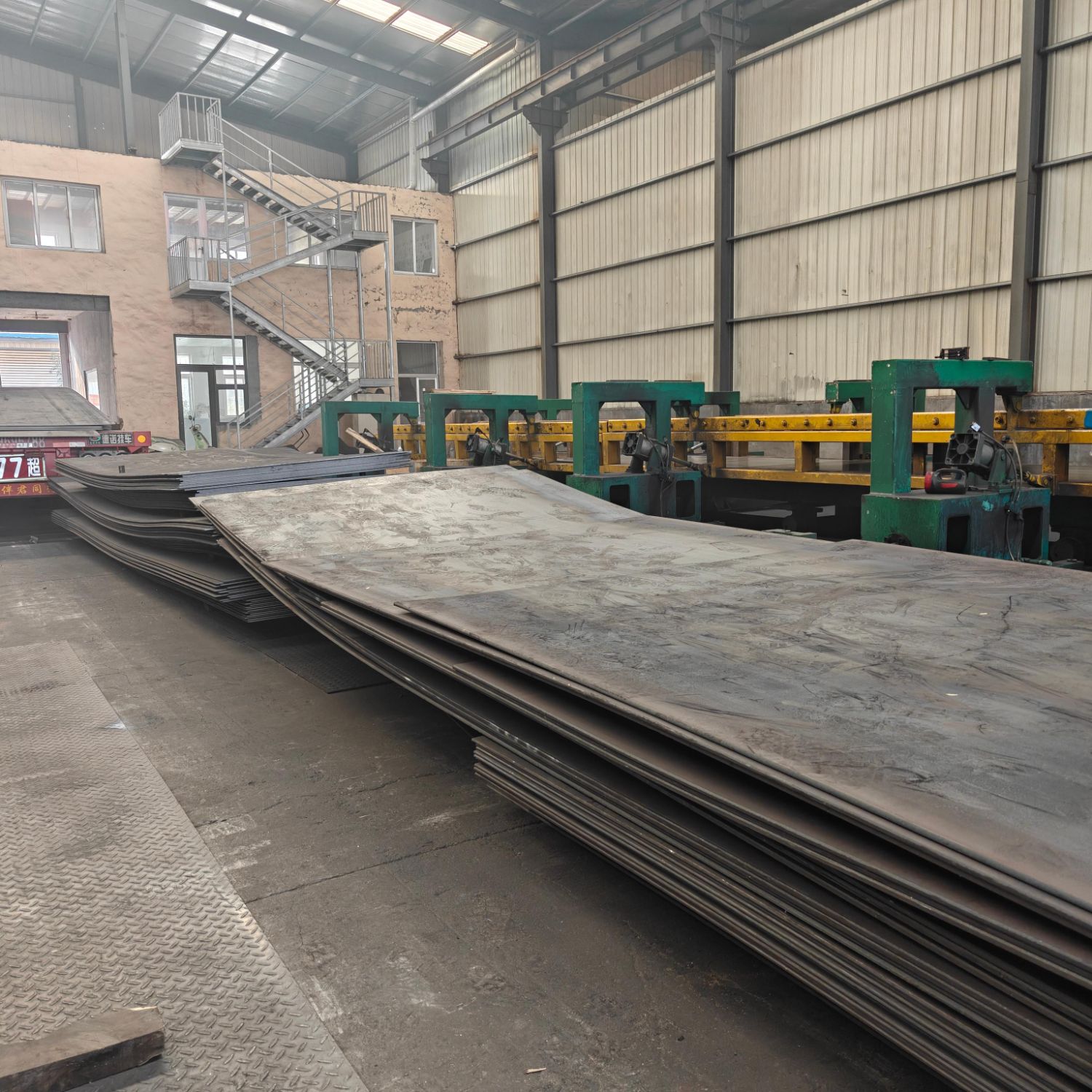
In most plate rolling operations, thickness tends to wander as the run progresses. Tooling heats up, roll surfaces wear, and even minor fluctuations in feedstock hardness push dimensions further from the nominal value with each successive piece. By the time you reach the tenth plate, the gap between the target thickness and the actual output can be noticeable enough to cause downstream problems. But here, that drift simply doesn't happen—the tenth plate measures within the same narrow band as the first, every single time.
What keeps the tolerance from sliding isn't a single magic fix but a set of interlocking controls. A closed-loop gauge continuously measures thickness right after the rolling pass and feeds micro-adjustments back to the roll gap, correcting for any emerging deviation before it becomes a trend. The frame itself is thermally stabilized and pre-stressed, so ambient temperature changes don't subtly expand or contract critical dimensions. And the incoming material is pre-sorted for consistent yield strength, ensuring the rolling force stays predictable plate after plate.
The result is a thickness variation of less than 0.01 mm across an entire production run, with no measurable drift from the first to the tenth plate. For fabricators, that means no need to re-zero cutting tools or adjust weld parameters mid-batch. Scrap rates drop, assembly tolerances hold, and the whole downstream process becomes quieter. When thickness doesn't wander, quality stops being a variable and starts being a given.
Delivery Dates Backed by Someone Who Answers the Phone
Most retailers will happily show you a delivery estimate, but the moment you need to change it, you're stuck navigating automated menus or waiting on hold for an hour. That's not how we operate. The dates we give you come with a real person on the other end of the line—someone who knows your order, can see the same system we use, and has the authority to make adjustments right then and there.
Think about the last time a package arrived later than promised and you tried to get answers. You probably got a chatbot that repeated your tracking number back at you. With our delivery dates, that frustration disappears. Pick up the phone and you'll reach a human being who can tell you exactly where your order is, reschedule for a day that works better, or flag an issue before it becomes a problem. No scripts, no runaround.
That simple promise—real delivery dates and a real person to back them up—changes how you plan your week. You can schedule installations, time off work, or just stop watching the doorstep. When a date slips, we call you first. And if you ever need to call us, you won't be asked to press 1 for anything.
Steel That Welds Clean on the First Pass, Not the Third
Welding clean on the first pass starts long before the torch lights up. This steel is produced with a tightly controlled chemistry, keeping sulfur and phosphorus at levels low enough to prevent porosity and hot cracking. The mill scale is uniform and thin, so the arc bites into the parent metal without fighting surface contamination. Fillers wet out smoothly, and the puddle stays calm, letting you run a full bead without stopping to grind out slag or re-strike.
That first-pass quality changes the pace of a job. Instead of welding, chipping, brushing, and welding again, you lay one solid root and keep moving. Less rework means fewer consumables, less heat input, and a heat-affected zone that stays predictable. For pipe welders and structural fabricators, it is the difference between trusting the steel and babysitting it.
The result is not just a cleaner weld, but a cleaner workflow. When the base metal cooperates, the welder can focus on technique instead of repair. This steel earns its reputation on the first arc, not the third attempt.
Inventory Reserves for Sudden Hull Repairs
Keeping a dedicated stock of hull repair materials on board is more than just good seamanship—it is a practical buffer against the unpredictable nature of open water. Rather than relying on port availability or waiting for delivery, a well-planned reserve allows the crew to act immediately when a crack, puncture, or abrasion appears. The reserve should be tailored to the vessel's hull material, whether steel, aluminum, fiberglass, or wood, and include compatible patching compounds, sealants, and fasteners. Storing these items in clearly labeled, watertight containers near likely damage zones reduces response time and prevents confusion during an emergency.
The size and composition of the reserve depend on the ship's operating profile. Vessels that frequently navigate rocky coastlines, ice-prone waters, or busy shipping lanes face a higher risk of sudden hull breaches and therefore need a larger, more varied inventory. A basic reserve might include underwater epoxy, tapered wooden plugs, rubber gaskets, backing plates, and emergency clamps for pipes and seams. It is also wise to add spare hull zincs, small sheets of matching hull metal or composite, and a portable welding or bonding kit if the crew has the skills to use them. The goal is not to carry a floating shipyard, but to have enough material to stabilize damage and reach a safe haven.
Regular inspection and rotation of the reserve are essential to keep it ready for use. Adhesives and sealants can expire, metal parts can corrode, and packaging can be damaged by humidity or rough seas. A monthly check that verifies quantities, expiration dates, and container integrity helps avoid a false sense of security. Crew members should also know exactly where the reserve is stored and how to apply each item under stress. Drilling simple repair scenarios during safety training builds muscle memory, so that when a sudden hull breach occurs, the inventory becomes a trusted lifeline rather than a forgotten locker.
Supplier Audits That Look Past the Brochure
A glossy brochure can make any supplier look like a best-in-class operation. But the real story unfolds once you step onto the production floor. Look for the small details that marketing teams never photograph: handwritten rework logs tucked behind a machine, calibration stickers that expired three months ago, or a receiving dock where incoming materials sit unlabeled for days. These are the signals that reveal whether a supplier actually controls its processes or just talks about it.
One useful habit is to ask line operators, not just the quality manager, what happens when something goes wrong. If the answer is a blank stare or a nervous glance toward the supervisor, the company's corrective action system is probably theater. A healthy supplier encourages workers to flag defects without fear, and you can see evidence of that in near-miss reports, root-cause notes, and even informal whiteboard updates. Walk the floor at shift change, when pressure peaks and protocols often slip. That is when the gap between documented procedure and daily practice becomes obvious.
Finally, pay attention to how the supplier treats your audit itself. A partner with nothing to hide will volunteer the awkward corners: the overflow warehouse, the subcontractor they use for overflow work, the backup plan when a key machine goes down. If you are steered away from certain areas or given only carefully curated records, trust your instincts. The goal is not to punish imperfection, but to understand how the supplier reacts when the brochure ends and reality begins.
FAQ
Look for suppliers with classification society approvals from ABS, DNV, LR, or BV, plus mill test certificates that verify chemical composition and mechanical properties for each batch.
They should maintain buffer stock of common grades like AH36 and DH36, and have a clear escalation process that assigns a dedicated logistics coordinator to track every urgent shipment.
Full traceability from heat number to final plate means if a defect appears later, you can quickly isolate affected plates and verify whether the issue is isolated or systemic, avoiding unnecessary replacement of sound material.
It reduces handling damage and ensures surface preparation meets the exact profile required before plates reach the yard, so welding and coating steps start clean instead of requiring extra preparation.
They use automated cutting lines and regular calibration checks, and they often supply actual thickness and flatness reports rather than relying only on nominal values.
Ask for evidence of ultrasonic testing, impact tests at specified temperatures, and visual inspection records for each plate, not just a general ISO certificate.
Yes, a supplier with multiple warehouses near major ports or shipbuilding hubs can reroute inventory faster when a production schedule changes, and they often have pre-negotiated freight contracts that reduce transit uncertainty.
A partner offers pre-order consultation on grade selection, welding compatibility advice, and post-delivery documentation support, helping engineers resolve issues without waiting for mill responses.
Conclusion
The best shipbuilding steel plate suppliers operate with a level of predictability that goes far beyond a glossy catalog. You know you're dealing with the right partner when mill certifications land in your inbox before the truck shows up at the gate, not weeks later as an afterthought. That early paperwork isn't just bureaucracy; it signals a supplier who understands that your yard can't afford to halt a build while chasing documents. Equally telling is how the tenth plate measures against the first. Thickness tolerances that hold steady through an entire order mean you won't find yourself adjusting weld preps midway or reworking fillets because the steel drifted out of spec. It's the kind of quiet consistency that keeps a project moving without anyone having to send a frantic email.
Then there's the human side of the equation. A delivery date is only as good as the person who answers the phone when you call to confirm it. The strongest suppliers pair their logistics with real accountability, not a voicemail maze. On the fabrication floor, steel that welds clean on the first pass saves hours of grinding and rework, and it tells you the chemistry was controlled properly upstream. That same forward-thinking approach shows up in inventory reserves for sudden hull repairs — a supplier that keeps buffer stock for emergencies earns loyalty fast. Finally, a supplier audit that looks past the brochure means walking the floor, checking heat traceability, and talking to the people who actually run the line. When all these traits line up, you stop worrying about late plates or bad welds and start focusing on launching the vessel.
Contact Us
Contact Person: Zoey
Email: [email protected]
Tel/WhatsApp: +86 15865577002
Website: https://www.sanhesteels.com