Best Laser Safety Window: Key Features and Selection Tips
2026-07-03
Ensuring proper protection in laser-intensive environments goes beyond just eyewear. When it comes to full-room safety, the right viewing window can make all the difference. But with so many options out there, how do you identify the best laser safety window for your specific setup? In this guide, we break down the essential features and offer practical selection tips to simplify your decision. And if you're aiming for top-tier clarity combined with uncompromising protection, LASERPAIR has you covered with innovative solutions that never sacrifice visibility for safety.
What Laser Safety Window Ratings Actually Mean
A common point of confusion is the sheer number attached to a laser safety window rating—often an optical density figure like OD 4, OD 5, or OD 7. This number is not a linear scale. Optical density represents the logarithm of the attenuation factor: OD 3 means the window reduces laser energy by a factor of 1,000 (103), while OD 6 equates to a reduction of 1,000,000 (106). So a small jump in OD translates to a dramatic difference in protection. For example, an OD 4 window might be perfectly adequate for a 10-watt continuous wave laser, but if you’re working with a pulsed system delivering gigawatts per square centimeter, OD 7 becomes essential. The rating is always tied to a specific wavelength or wavelength range, which means a window rated OD 6 at 1064 nm could be nearly transparent at 532 nm. Without matching the rating to both your laser’s wavelength and its power density, you’re essentially guessing at protection.
It’s tempting to simply buy the highest OD rating available, but that often backfires in real-world use. Excessive optical density can make the window so dark that seeing through it becomes impractical, especially when you need to monitor a process or align optics. Visible light transmission is a separate, crucial parameter that doesn’t always appear in bold on the spec sheet. A window with OD 7 at 900 nm might only transmit 5% of visible light, making it nearly opaque. For many applications, a lower OD that still provides a comfortable safety margin—paired with a decent VLT—is the smarter choice. Some standards, like the European EN 207, go a step further by testing the window’s ability to withstand direct hits over time, not just its initial attenuation. This results in a rating such as LB4 or LB5, which accounts for both the damage threshold and the optical density, giving a more complete picture of how the window will behave after prolonged exposure rather than in a single pass.
Materials That Go Beyond Basic Protection
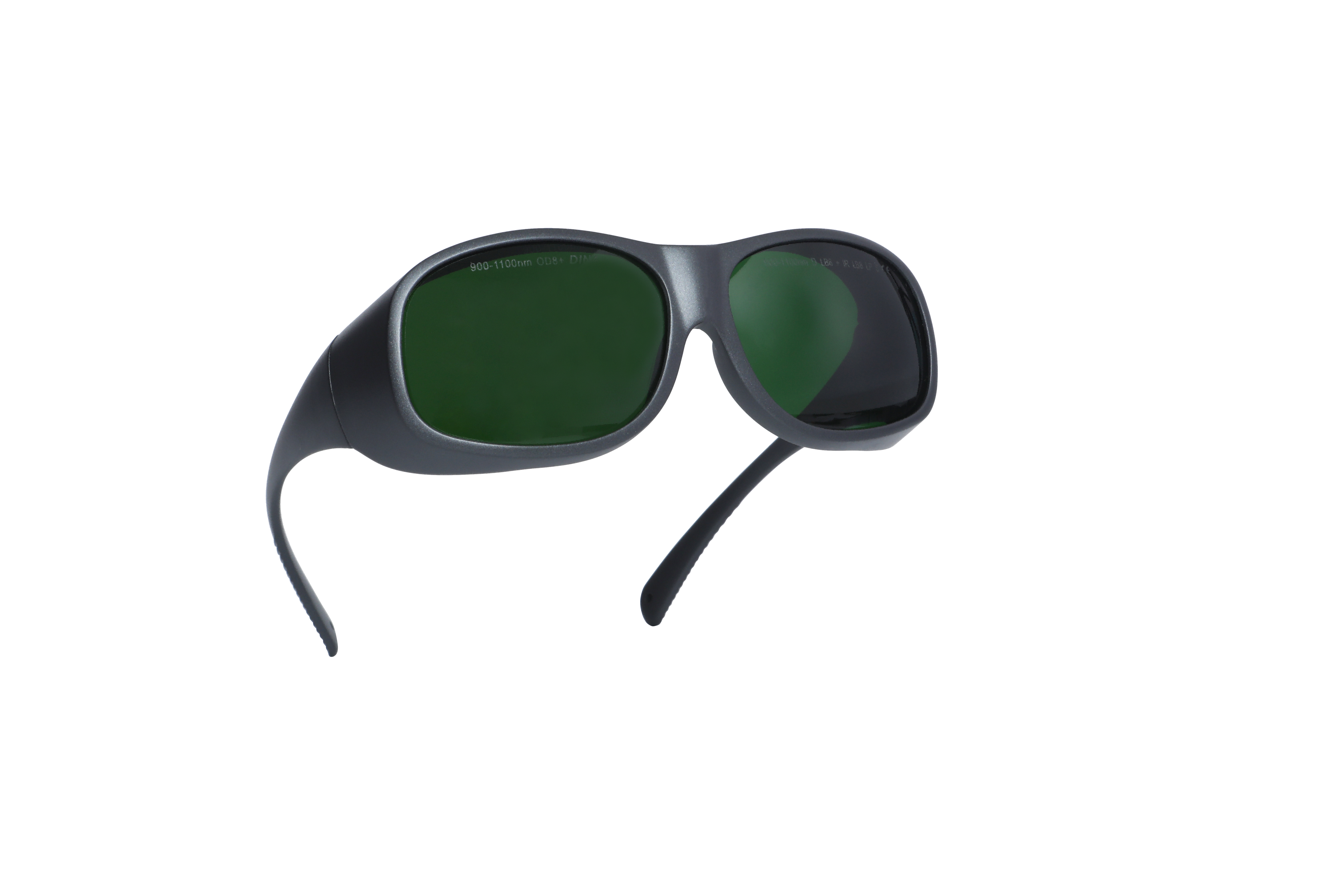
Modern protective materials have evolved far beyond simple impact resistance. Today's innovations integrate smart technologies like temperature-reactive polymers and self-healing composites that actively respond to environmental changes. These materials don't just shield—they adapt, stiffening on impact or repairing minor damage without human intervention, fundamentally changing what we expect from safety gear.
The next frontier lies in bio-inspired designs that merge protection with enhanced functionality. Consider materials that mimic the flexibility of spider silk combined with the hardness of mollusk shells, or fabrics that use micro-scale structures to dissipate force more efficiently than traditional padding. By embedding sensors directly into the weave, these advanced textiles can monitor vital signs while offering unobtrusive defense against extreme conditions.
Sustainability now plays a crucial role in material advancement, pushing manufacturers to create protective solutions from recycled ocean plastics or plant-based resins without compromising strength. This shift has given rise to lightweight, durable composites that perform under pressure while reducing ecological footprint—proving that high-performance protection and environmental responsibility can coexist seamlessly.
Optical Density: Not Just a Number
When you glance at an optical density reading, it’s easy to treat it as just another data point. But that single value carries a story about how light interacts with a material—how much it’s absorbed, scattered, or transmitted. It’s the fingerprint of a sample’s composition, thickness, and internal structure, all condensed into a dimensionless figure. Ignoring the context behind that number means missing out on insights that can make or break a process, whether you’re monitoring bacterial growth, checking filter performance, or calibrating a spectrophotometer.
Optical density isn’t a static property; it shifts with wavelength, concentration, and even the geometry of your measurement setup. A reading that seems out of spec might not signal an error—it could be telling you about a subtle change in particle size or a chemical transformation that’s just starting. Skilled practitioners learn to read between the digits, correlating OD fluctuations with real-world phenomena. That’s what elevates optical density from a simple metric to a dynamic tool for diagnostics and quality control.
Ultimately, treating optical density as more than a number means embracing the physics and biology behind it. It’s about understanding that each value is a snapshot of a living system or a material’s response to light. Once you start asking why that number is what it is, you unlock a deeper level of analysis—moving beyond pass/fail checks to a place where data drives genuine understanding and smarter decisions.
Seeing Clearly Without Sacrificing Safety
Modern lens technology has redefined what it means to see well without putting your eyes at risk. It’s no longer a choice between crisp vision and proper protection—advancements in materials and coatings now allow you to have both in a single pair of glasses. Whether you’re working long hours in front of a screen, driving at night, or simply enjoying the outdoors, the right lenses filter harmful blue light, reduce glare, and resist scratches, all while maintaining exceptional clarity. This fusion of safety and sharpness means you can go about your daily life with confidence, knowing your eyes are shielded without compromising on the details that matter most.
One area where this balance truly shines is in protective eyewear for active lifestyles. Gone are the days when safety glasses meant bulky, distorting plastic that made everything look slightly off. Today’s impact-resistant lenses are crafted from lightweight polycarbonate or Trivex materials that offer crystal-clear optics and superior impact protection. They’re designed to wrap comfortably around your face, guarding against debris, UV rays, and sudden impacts, while delivering the same visual precision you’d expect from premium everyday glasses. It’s this seamless integration of durability and definition that lets you stay focused on the task—or the trail—without second-guessing your sight.
Even for less demanding environments, the principle remains: safety should never make you squint. Lens coatings that repel water, dust, and smudges keep your view unobstructed, while anti-reflective treatments enhance contrast and ease eye strain. By choosing eyewear that refuses to trade off clarity for safety, you’re not just protecting your eyes—you’re elevating every visual experience. It’s a quiet assurance that lets you look out at the world and see it exactly as it should be: bright, sharp, and unforgivingly clear.
Common Installation Mistakes and How to Sidestep Them
Skipping the pre-installation checklist is a surprisingly common misstep. It’s easy to assume you have all the required dependencies, only to hit a wall when a library is missing or a version is incompatible. Take ten minutes to verify system requirements, update your package manager, and confirm that essential tools like compilers or runtime environments are present. This upfront check can save hours of frustrating troubleshooting later.
Another frequent headache comes from ignoring environment isolation. Installing everything globally might seem convenient at first, but it quickly leads to version conflicts between projects. A tool like virtualenv for Python or nvm for Node.js lets you keep dependencies project-specific, so an update in one won’t break another. It’s a small habit that pays off massively as your work scales.
Permissions problems often trip people up, especially when commands require elevated access. Some solve this by running everything as root or administrator, which is a dangerous shortcut. Instead, configure your environment to install packages in user space, or use a dedicated user with the minimum necessary privileges. If you do run into a permission error, resist the urge to force it—read the error message carefully; it usually tells you exactly what’s wrong and hints at a safer fix.
Spotting Genuine Certifications from Marketing Fluff
It’s easy to be dazzled by a product plastered with badges and seals, but not all certifications carry the same weight. A genuine certification is typically awarded by a recognized, independent third party that has no direct financial stake in the product’s sales. Look for standards that require ongoing testing, factory audits, or ingredient traceability—not just a one-time fee. If a label can be obtained simply by filling out a form and paying a fee, it’s likely more marketing than substance.
Dive deeper by checking who’s behind the logo. Reputable certifiers like Fair Trade International, USDA Organic, or ENERGY STAR publish their criteria openly and make their certification databases accessible. A quick online search can reveal whether a certification is backed by any scientific or ethical framework, or if it’s just a self-made stamp of approval. The difference often lies in the details: vague language like “natural” or “eco-friendly” without a standard definition is a red flag, whereas a specific claim like “100% recycled post-consumer waste” points to verifiable action.
Finally, trust your skepticism. If a company’s certification claims seem too convenient or perfectly aligned with every current trend, pause. Often, the loudest marketing campaigns overshadow the quiet, legitimate certifications that require real effort to achieve. Ask yourself: does this certification actually tell me something meaningful about the product, or is it just designed to make me feel good about my purchase? Authentic credentials aren’t afraid to let you scrutinize them.
FAQ
A laser safety window is engineered with specialized absorptive or reflective coatings that block specific laser wavelengths while still allowing visible light through. Standard glass wouldn't stop a focused laser beam and could shatter under the heat.
Optical density depends on your laser's wavelength and power output. You'll want to match the window's rated OD with the maximum possible exposure your setup could produce. It's wise to consult the laser's safety classification or work with a laser safety officer to nail the correct level.
It's possible if you opt for broadband filters designed to cover a range, but your best bet is usually a window tuned for the specific wavelengths you're working with. Multi-wavelength windows often involve trade-offs in visible light transmission, so define your priorities first.
Keep an eye out for pitting, discoloration, or delamination of the coating. Even minor scratches can compromise protection by scattering the beam or creating weak spots. If the window has taken a direct hit from a high-power pulse, replace it immediately regardless of how it looks.
A larger viewing area gives you better situational awareness of your experiment or process, but it also increases cost and may limit placement options. Strike a balance between the field of view you genuinely need and the constraints of your enclosure or room layout.
Give yourself at least a 2–3 mm margin from the opening dimensions to allow for thermal expansion and easy mounting. For irregular shapes, create a cardboard template first. Always confirm the actual thickness your frame can accommodate before ordering.
Conclusion
Selecting the best laser safety window isn't just about picking the highest optical density; it's about balancing clarity, material durability, and genuine certifications. True protection goes beyond the numbers—OD ratings tell only part of the story, as they must align with specific wavelength ranges and exposure durations. Advanced materials like polycarbonate or specialty glass blends can offer impact resistance and long-term stability, but only if they undergo rigorous third-party testing. What often trips people up are installation details: a panel that's perfectly flush with the wall, sealed at all edges, and mounted without gaps or compression damage makes all the difference between a secure barrier and a compromised one.
Equally critical is the ability to see your work clearly without squinting through dark, distorted windows. Visible light transmission should be high enough for comfortable monitoring while still blocking targeted laser wavelengths. This is where understanding the laser's specific parameters pays off—choosing a window that filters only what's necessary preserves natural visibility. Also, be wary of marketing claims that lack substance; genuine certifications like CE or ANSI are backed by verifiable test reports, not just logos. By focusing on these interconnected features, you end up with a window that truly safeguards personnel and processes, sidestepping common pitfalls that can make even costly equipment ineffective.
Contact Us
Contact Person: Jenny
Email: [email protected]
Tel/WhatsApp: +86 13537713281
Website: https://www.laserpair-safety.com/