
Best HDMI Coaxial Cable for Uninterrupted 4K Streaming
2026-11-16
Ever had a 4K movie freeze right at the climax? The culprit is rarely your streaming service—it's usually the cable. For genuinely uninterrupted 4K streaming, you need an HDMI coaxial cable engineered to handle high bandwidth without signal degradation. That's where EBCYX comes in. Below, we'll show you what makes a cable truly 'best' and why EBCYX has become a go-to for serious streamers.
When 4K Drops Frames, This Is Usually the Culprit
If your 4K footage stutters or freezes despite a beefy rig, don't blame the resolution just yet. More often than not, the real bottleneck hides in your storage drive. A standard hard disk drive spinning at 5400 RPM simply can't keep up with the massive data stream that 4K demands, especially at higher bitrates. Even many SATA SSDs hit their ceiling when multiple streams or high-frame-rate footage are involved. Before you start swapping out graphics cards, run a basic disk speed test — if you're not seeing sustained write speeds of at least 400–500 MB/s, your drive is likely choking on the data.
Another sneaky culprit is thermal throttling, particularly on laptops or compact desktops. Recording or playing back 4K video pushes the CPU and GPU hard, and if your cooling solution can't dissipate that heat fast enough, the system deliberately slows down to protect itself. This often looks like random frame drops that happen only after a few minutes of continuous work. Try monitoring your component temperatures while editing or watching 4K content. If you see spikes above 85–90°C on the processor or graphics card, improving airflow or reapplying thermal paste can make a more dramatic difference than any software tweak.
Finally, don't overlook the software layer. An outdated media player, a mismatched video codec, or even aggressive background processes can cause 4K playback to drop frames on hardware that should handle it easily. Hardware acceleration settings — like hardware decoding in your player or GPU-accelerated encoding in your editor — need to be enabled and properly configured. A quick test is to switch between software and hardware decoding; if one runs smooth and the other stutters, you've found your issue. Also check for driver updates, especially for your GPU, as driver regressions can sometimes introduce frame pacing problems that were never present before.
The Shielding Trick That Keeps EMI From Ruining Movie Night
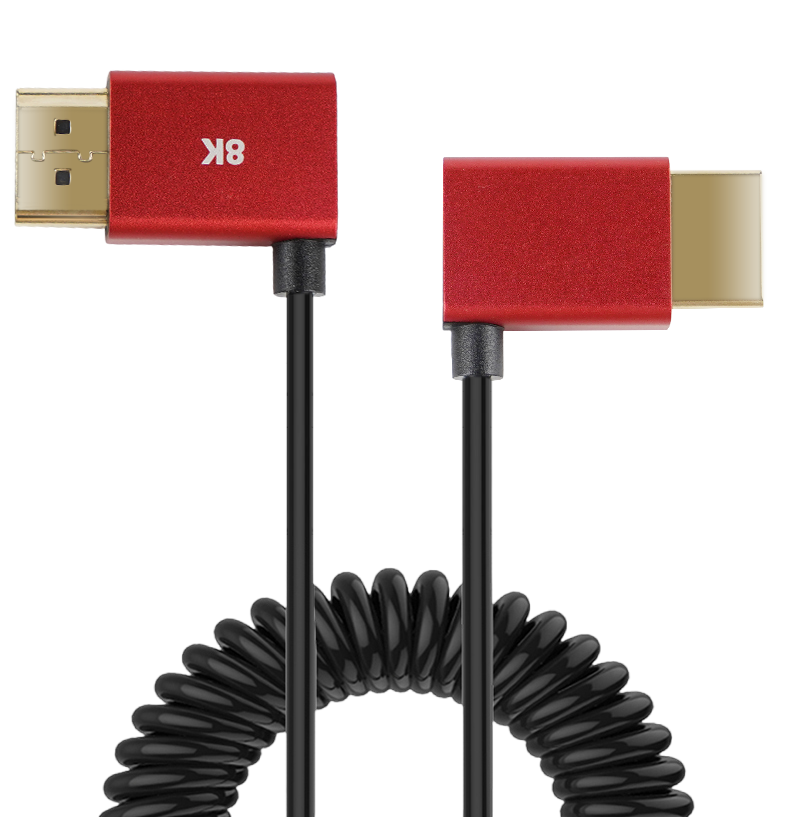
A loud buzz cutting through the surround-sound mix, flickering bars crawling up the projector screen — electromagnetic interference has a knack for showing up exactly when the popcorn is ready. The culprit is often a tangle of unshielded cables running parallel to power lines, acting like antennas for everything from refrigerator compressors to Wi-Fi routers. The simple fix? Treat your signal paths like a Faraday cage on a budget: wrap audio and video interconnects with a grounded copper braid, keep low-voltage lines at least six inches away from AC cords, and use ferrite beads on any cable that crosses a power strip.
Most people stop at swapping HDMI cables, but that rarely solves the real issue. The trick that actually works is isolating the ground plane between your media source and display. A floating ground loop — where two components reference slightly different earth potentials — turns your expensive shielded cable into a hum antenna. Breaking that loop with a passive ground isolator or simply powering the projector and receiver from the same outlet strip often kills the noise dead. For stubborn cases, wrap a few turns of the offending cable through a snap-on ferrite core at both ends; it chokes common-mode currents without degrading the signal one bit.
Once the shielding is in place, you will notice the silence between movie scenes feels deeper — no subtle hash under quiet dialogue, no faint scrolling lines during dark frames. The best part is that none of this requires rewiring your living room or buying exotic gear. A roll of adhesive copper tape, a handful of clamp-on ferrites, and twenty minutes of rerouting cables can transform a glitchy movie night into a clean, immersive screening. And when the credits roll without a single flicker, that is the shielding trick doing its quiet, invisible job.
Coaxial Architecture vs. Twisted Pairs: What Changes at 18Gbps
At 18Gbps, the physical structure of a cable becomes more than a mechanical detail—it dictates how cleanly the signal arrives. Coaxial construction surrounds a single conductor with an insulating dielectric and a braided shield, creating a consistent impedance path that keeps high-frequency energy inside. Twisted pairs, by contrast, rely on two insulated conductors spiraling around each other, which works beautifully for differential signaling but starts to leak and distort as rates climb toward 6Gbps per channel. The shield in coax is not a bonus; it is the main reason an 18Gbps HDMI signal can travel several meters without falling apart.
Twisted pairs introduce skew—the tiny timing difference between each wire in a pair—and at 18Gbps, that skew becomes a real source of jitter. Coax avoids this by treating the signal as a single-ended wave on one conductor with the shield serving as a low-inductance return path. The tighter the dielectric and the more uniform the braid coverage, the less the cable behaves like a filter. Twisted pair cables can be engineered with foamed insulation and individual shields, but they still must convert from balanced to unbalanced at the connector, adding one more place for reflections.
In practice, moving to 18Gbps means coax becomes the practical default for longer runs, while twisted pairs survive in short, carefully equalized patches. The crossover point is not fixed—it depends on copper quality, dielectric loss tangent, and connector soldering—but the architectural advantage of coax is clear: fewer mode conversions, less crosstalk leakage, and a return path that does not depend on precise twisting uniformity. That is what changes when the bit rate outgrows the forgiving low-frequency region.
Why Your 15-Foot Cable Might Be Streaming in 1080p Without Telling You
It’s easy to assume that a longer HDMI cable automatically means a worse picture, but that’s not how the signal works. The digital nature of HDMI means the data either arrives intact or it doesn’t—there’s no gradual degradation like the static you’d get from an old analog connection. What actually happens with a 15-foot run is that the cable might be barely passing the bandwidth threshold for 4K, so your source device quietly falls back to 1080p without any on-screen warning. Your TV still reports a 4K input because the handshake completed, but the actual video stream is downscaled before it ever reaches the screen.
Most people blame the streaming service or the TV settings, but the cable itself is often the silent bottleneck. A poorly shielded or thinner-gauge cable introduces enough signal attenuation over that distance that the HDMI transmitter decides to drop to a lower data rate. You won’t see an error message or a flicker—the switch to 1080p is seamless, which makes it nearly impossible to notice unless you’re sitting close to a large display. If you’ve ever thought your “4K” content looked a bit soft, a mid-length cable could be the hidden culprit.
This doesn’t mean all 15-foot cables are bad; it’s about how the cable handles the high-frequency clock signals required for 4K at 60Hz. Cheaper cables often use aluminum-clad copper or skip proper twisted-pair shielding, and at that length, the signal loss adds up. The fix isn’t to buy the most expensive option, but to look for a cable that’s been certified for the bandwidth you actually need—or simply test by swapping in a shorter cable and checking if the sharpness suddenly improves.
The Tiny Connector Fault That Causes Handshake Failures
It starts with a barely visible gap, no wider than a hair, inside the mating face of an RJ45 modular plug. When the connector is crimped, the gold-plated contacts are supposed to press evenly against the corresponding pins in the jack. But if one contact sits a fraction of a millimeter lower than its neighbors, the electrical connection becomes marginal at best. Under low voltage—just one or two volts for Ethernet signaling—that tiny air gap acts like an open switch. The link pulses get through, but the handshake packets that negotiate speed and duplex are dropped or corrupted. Technicians often blame cable length or switch configuration, yet the real culprit is a connector fault too small to see without a microscope.
Over time, this marginal contact invites further trouble. Each insertion and removal cycles the metal spring, wearing away the gold flash and exposing the nickel or copper underneath. Oxidation builds on the exposed base metal, raising contact resistance from milliohms to hundreds of ohms. Now the fault is no longer intermittent—it becomes persistent. Auto-negotiation fails completely, leaving the interface stuck at 10 Mbps half-duplex or, worse, flapping between link up and link down. The physical layer reports no cable fault because the wire map test passes: all eight conductors show continuity under the tester’s higher voltage. Only a time-domain reflectometer with sub-nanosecond resolution can spot the impedance spike at the connector, but few field techs carry one.
The fix is deceptively simple: replace the connector, not the cable run. Yet many teams waste hours re-terminating both ends, swapping switches, or updating firmware before checking the one component that costs less than a dollar. Crimp quality matters more than cable category. A properly seated contact deforms the gold plating just enough to create a gas-tight connection, excluding oxygen and moisture. Without that micro-deformation, the connector is nothing but a promise waiting to break during the next temperature swing or vibration event. For network reliability, the handshake begins not in software, but in the physical bite of metal against metal.
What a Stress Test Reveals About Budget 4K Cables
A stress test on budget 4K cables isn't just about bending them until the connector snaps. It involves pushing sustained 18Gbps signals, cycling temperatures, and checking how the thin shielding holds up over hours of continuous HDR playback. What shows up is often not a total failure but a slow degradation—sparkles in dark scenes, occasional audio dropouts, and a handshake that takes just a little too long to lock.
The most revealing part is the margin for error. Premium cables are built with extra headroom above the official spec, while budget options tend to sit right at the edge. Run a 2-meter cable on a cool day and it might pass, but stretch that same cable to 3 meters or place it near a power brick and the signal integrity falls off a cliff. You start seeing random black frames and EDID confusion that never appears in a quick plug-and-play test.
That doesn't mean every cheap 4K cable is a gamble. It means you should match the cable to the job: short runs behind a TV stand, fine; long in-wall pulls with 4K120, not so much. A stress test simply exposes which budget cables have enough build quality to survive real-world conditions, and which ones are only good for a static bench demo.
FAQ
A dependable cable pairs heavy-gauge copper conductors with tight triple-layer shielding and gold-plated connectors. That combo keeps the 18Gbps signal intact over longer runs, so you don't get sparkles, dropouts, or handshake failures when the bitrate climbs.
For passive HDMI coaxial builds, 25 feet is usually the safe limit for full 4K at 60Hz. Push to 35-50 feet and you'll want an active cable or a fiber-based hybrid, otherwise the eye pattern collapses and you'll see intermittent black screens or snow.
A standard cable can handle short 4K streams if it's certified, but coaxial construction gives you far better noise rejection near power strips, Wi-Fi routers, and AV racks. If your setup has any cable clutter or runs behind walls, the coax design saves you from random signal drops.
Look for HDMI 2.0b or higher, with a certified bandwidth of at least 18Gbps. That covers 4K/60 with HDR10 and Dolby Vision. If you plan to jump to 8K or 4K/120 later, choose a 48Gbps Ultra High Speed cable, but confirm the coaxial shielding is still there.
They carry video and multi-channel audio through one connector, including ARC and eARC for soundbars. No separate audio cable is needed. Just make sure the HDMI ports on both ends support the audio return channel if you're routing TV audio back to a receiver.
Check for 24K gold plating, a snug but not stiff fit, and a reinforced strain-relief collar where the cable meets the plug. Also look for a die-cast metal shell that blocks EMI at the termination point. Loose or thin plastic connectors are the first point of failure for intermittent 4K signals.
Some active coaxial HDMI cables are directional, meaning one end must connect to the source and the other to the display. If you buy one of those, label the ends after testing. A wrong connection gives you no picture at all. Passive coax cables are not directional, so they're simpler for most streaming boxes.
The coaxial arrangement wraps the signal-carrying conductor in a grounded shield, which blocks low-frequency interference from dimmers, USB hubs, and switching power supplies. That prevents the occasional HDMI re-handshake flicker that many people blame on their streamer or TV, when it's really the cable picking up noise.
Conclusion
Most 4K stutters aren't actually your player or panel misbehaving. In a lot of cases, the signal degrades because the cable's internal geometry can't maintain 18Gbps over distance. That's where coaxial architecture earns its keep: each conductor is wrapped in its own shield, which keeps impedance stable and stops the high-frequency roll-off you'd see with twisted pairs. Without that, a 15-foot run can look fine at a glance but silently fall back to 1080p because the HDMI handshake negotiated a lower clock rate. EMI is another quiet saboteur. Budget cables with thin foil or sparse braid let noise from nearby power strips or Wi-Fi routers corrupt the TMDS lanes just enough to cause dropped frames or sparkles.
Then there's the connector itself. A tiny bit of play in the shell or a cold solder joint on the data pins can trigger repeated HDCP handshake failures, leaving you with a black screen or intermittent audio cutouts. Stress tests on budget 4K cables expose exactly where corners get cut: some pass at 3 feet but fail at 10, others lose lock when a nearby motor switches on. The best HDMI coaxial cable for uninterrupted 4K streaming isn't about exotic marketing; it's about solid shielding, tight impedance tolerance, and connectors that survive being plugged and unplugged. If your setup drops frames or negotiates down, swap the cable before blaming the source.
Contact Us
Contact Person: David Yang
Email: [email protected]
Tel/WhatsApp: 8615814734054
Website: https://www.ebcyx.com/