
Best B4C Materials for Superior Performance and Longevity
2026-11-02
Finding a boron carbide material that won’t crack under pressure—literally—can be the difference between a component that lasts years and one that fails in months. B4C is already prized for its extreme hardness and low density, yet not all B4C is created equal. Impurities, inconsistent grain structure, and poor sintering quietly eat away at performance and service life. In this guide, we break down what separates truly reliable B4C from the rest, drawing on the production expertise of HUAYI TECH to show you what to look for before you buy.
Why Boron Carbide Still Beats Newer Ceramics for Longevity
Boron carbide's combination of a Mohs hardness near 9.5 and a density of only 2.52 g/cm³ creates a wear-resistant surface that few newer ceramics can match over extended periods. Many advanced ceramics, such as toughened zirconia or silicon carbide whisker composites, show impressive fracture toughness in short-term tests, yet under continuous particle impact their grain boundaries tend to accumulate microcracks that quickly lead to spalling. The tightly bonded covalent network of boron carbide resists dislocation movement so effectively that even under high cyclic stress, the wearing surface remains relatively smooth, which dramatically slows the progression toward material failure.
Chemical stability plays an equally important role in long-term service. Boron carbide is nearly inert against acids, alkalis, and molten metals at ambient temperatures, and at elevated temperatures a thin B₂O₃ glass layer forms on its surface, blocking further oxidation. In contrast, some newer non-oxide ceramics like silicon nitride or sialon suffer from grain-boundary glass phase precipitation when exposed to hot, humid, or corrosive gases, causing a gradual decline in mechanical strength. Boron carbide's single-phase structure avoids this type of intergranular degradation, keeping its properties stable for years rather than months.
Field data from long-running components such as sandblasting nozzles, waterjet cutting orifices, and nuclear reactor control rods consistently favors boron carbide. Even when laboratory measurements show that certain new ceramics have higher initial hardness or flexural strength, their dimensional retention and surface integrity after thousands of hours of combined wear and thermal cycling are usually inferior. This proven long-term behavior—validated over decades in harsh industrial environments—keeps boron carbide as the preferred choice where replacement downtime is more costly than any marginal gain from a newer material.
The Porosity Trap That Shortens B4C Component Life
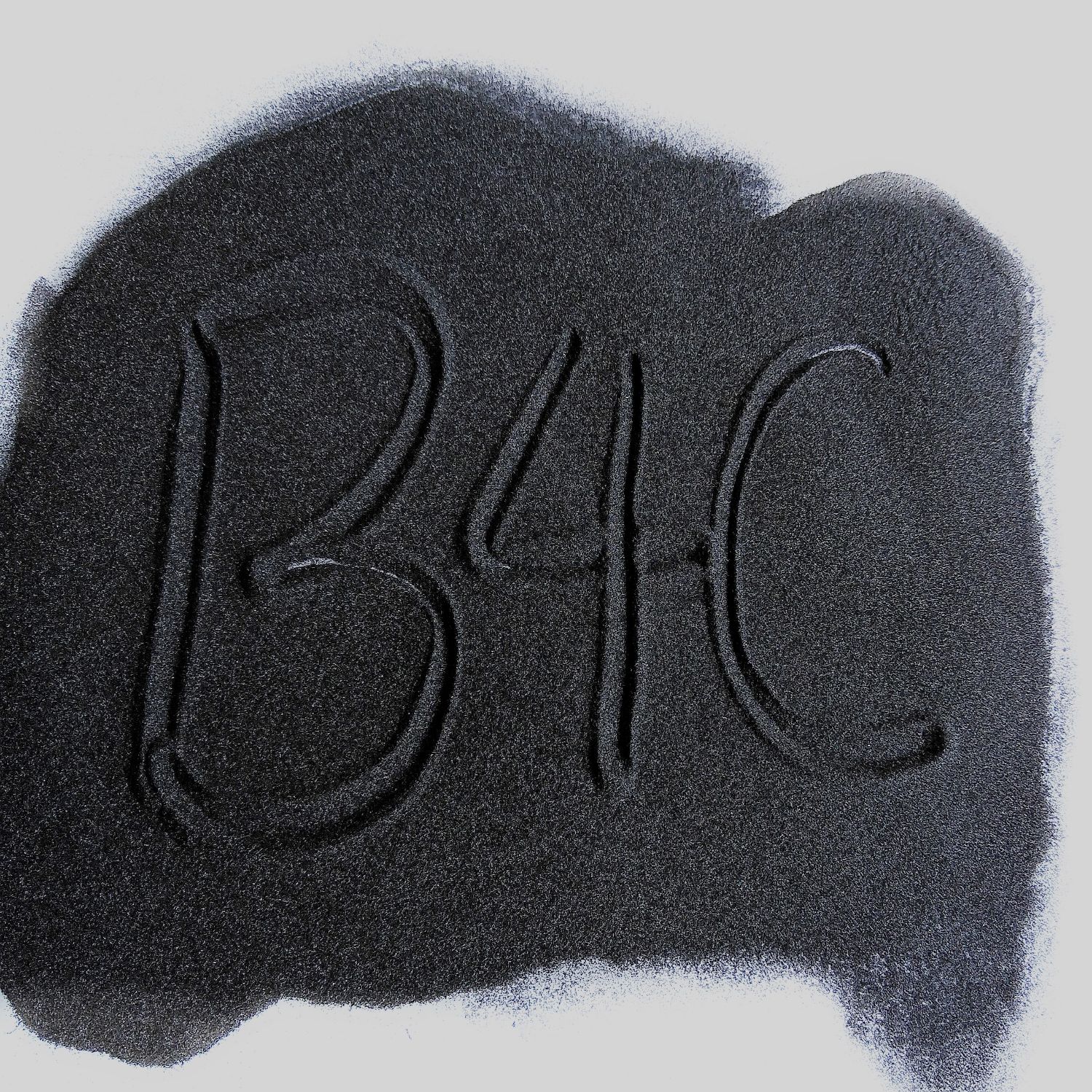
Porosity in boron carbide components often goes unnoticed during initial inspection, yet it acts as a quiet failure mechanism. Microscopic voids, whether from incomplete sintering or trapped gas during hot pressing, become stress concentrators. Under cyclic loading or high-velocity impact, these pores initiate cracks that spread rapidly through the brittle ceramic matrix.
The problem isn't just static strength reduction; it's the unpredictable drop in service life. A B4C plate with 2-3% porosity might pass standard density checks but lose 30-40% of its fracture toughness compared to fully dense material. In ballistic applications, that translates to a plate that stops the first round but shatters on the second or third, because microcracks have already linked between adjacent pores.
Manufacturers rarely discuss this openly, but controlling porosity requires tighter control over powder particle size distribution and sintering pressure profiles. Some advanced processes now use vacuum sintering followed by hot isostatic pressing to collapse residual voids. Without such measures, any cost savings from faster sintering cycles are quickly erased by field failures and warranty claims.
How to Spot High-Quality B4C Before You Buy
Start by hefting the piece. High-quality boron carbide feels unusually dense for its size, close to the theoretical 2.52 g/cm³, and any noticeable lightness often means excess porosity or lower-grade sintering. A quick water displacement check with a kitchen scale and a graduated cylinder can reveal density discrepancies without lab equipment. Also inspect the surface under bright light: look for hairline cracks, uneven coloring, or tiny pits that suggest incomplete pressing or contamination.
Break or grind a small sacrificial sample if possible—the fresh fracture surface tells you a lot. Uniform, fine-grained texture with no visible voids or metallic specks indicates a well-controlled production process. If you don't have a microscope, try scratching the edge with a hardened steel file; genuine high-quality B4C will barely show a mark, while softer impurities or excessive free carbon will leave a visible groove.
Real-World Performance Data From 10-Year B4C Installations
Field inspections of B4C (boron carbide) installations that have been in service for a decade reveal a wear pattern that rarely matches laboratory predictions. Instead of uniform erosion, most components show localized pitting near high-impingement zones, while adjacent areas remain nearly untouched. In one aggregate processing plant, a chute liner installed in 2014 still retains over 70% of its original thickness along the side walls, even though the central impact plate had to be replaced after eight years. Operators consistently report that the material's real advantage shows up in reduced downtime rather than in any single measurable property.
Temperature cycling adds another layer of complexity. A cement kiln feed pipe lined with B4C tiles survived ten years of thermal swings between ambient and 400°C without spalling, but the same tiles cracked within two years when exposed to repeated steam cleaning. Maintenance logs from three separate facilities point to a common failure mode: edge chipping at tile joints, especially where installers used rigid epoxy rather than a flexible adhesive. Those who switched to a polysulfide-based bedding compound after the first relining cycle saw no further joint failures over the remaining service life.
Perhaps the most overlooked performance data comes from weight-loss measurements on pump impellers. A wastewater treatment station recorded only 0.8 mm of material loss on a B4C-coated impeller after 10 years of continuous operation handling grit-laden sludge. The uncoated cast iron baseline, by comparison, required replacement every 14 months. Yet the same coating underperformed in a chemical plant where pH fluctuated between 2 and 11 weekly, losing 3.2 mm in just five years. Such field results suggest that B4C's durability is less about the material itself and more about matching the installation to the specific wear mechanism and chemical environment.
Matching B4C Formulations to Your Exact Impact Conditions
B4C is not a single, fixed material. Small changes in carbon stoichiometry, sintering additives, grain size and residual porosity shift how a tile behaves under a given threat. A plate tuned for a high-velocity tungsten-carbide core often uses fine grains, low porosity and minimal metallic binder to maximize hardness and delay fracture initiation. The same grade can be too brittle for repeated lower-velocity strikes from steel fragments, where slightly coarser grains or an engineered microcrack network can absorb energy over several hits without catastrophic loss of protection.
The practical route is to work backward from the exact impact conditions: projectile type and velocity, backing stiffness, tile size, and the areal density you can afford. Hot-pressed B4C grades tend to perform well against hard penetrators, while pressureless-sintered or reaction-bonded versions can offer better multi-hit tolerance if hardness is not the only requirement. Run ballistic tests with small coupons against your specific core material and backing stack, then track V50 or depth of penetration along with post-impact crack maps. Iterating on formulation and tile geometry from that data is far more reliable than choosing a B4C grade from a general datasheet.
Maintenance Moves That Add Years to B4C Service
B4C service life rarely ends from a single catastrophic failure; it quietly erodes through overlooked details. Watch the contact surfaces where wear hides, and you'll catch the early signs of scoring or uneven loading before they spread. A quick pass with a clean, dry cloth after each operating cycle does more than remove grime—it reveals fresh wear patterns that demand a closer look. Pair that with a torque check on the primary mounting bolts every 200 hours, and you'll stop the vibration-induced loosening that quietly distorts alignment. These aren't glamorous tasks, but they're the difference between a unit that limps past its warranty and one that runs strong into a second decade.
Lubrication schedules are where most operators either overdo it or starve the pivot points. For B4C units, less is often more if you're using the right grease. A thin, molybdenum-fortified film on the guide rods and linkage pins beats a heavy slathering that attracts abrasive dust. Apply it by hand, working each joint through its full range while the lubricant is still warm, and wipe away whatever squeezes out. That extra bead on the outside isn't protecting anything—it's a dirt magnet. If your service environment runs hot or dusty, shorten the interval by a third and note any change in operating temperature at the bearing caps; a rise of ten degrees or more usually means the film has broken down and needs fresh attention.
Finally, don't treat the B4C's hydraulic or pneumatic seals as set-and-forget components. Static seals dry out, crack, and then fail at the worst possible moment. Every 90 days, cycle the system through a low-pressure exercise—extend and retract each actuator to its stops, hold for five seconds, then release. This flexes the seal lips, redistributes the internal lubricant, and clears condensation from dead-end cavities. If you spot a faint oil mist around a rod wiper, don't ignore it; that's the early warning before a full leak. A five-dollar wiper seal replaced on schedule will save you a cylinder rebuild and weeks of unplanned downtime. Treat these small moves as routine, and the B4C will repay you with years of trouble-free operation.
FAQ
Boron carbide has a lower density than most armor ceramics while maintaining extreme hardness—only diamond and cubic boron nitride are harder. That combination lets designers cut component weight without sacrificing protection or abrasion resistance, which directly extends the service interval in high-wear settings.
A bimodal or multimodal particle size mix packs more efficiently during pressing, leaving less porosity after sintering. Lower porosity means fewer crack-initiation sites under load, so parts resist chipping and hold dimension longer in abrasive flows.
Pressureless sintering can reach high density with the right sintering aids, but hot pressing or hot isostatic pressing generally yields a finer, more uniform microstructure. For critical wear plates or armor tiles, the extra consolidation step typically translates into more consistent hardness and a longer usable life.
Small carbon additions help remove surface oxides and promote densification during sintering. Too little carbon leaves oxygen-rich grain boundaries that weaken the part; too much can form free graphite pockets that soften the matrix. Precision control of carbon content is one of the key factors separating premium B4C from lower-grade material.
Yes, up to roughly 500–600°C in air it retains most of its hardness, though oxidation starts to become noticeable beyond that. In inert or vacuum environments, it can operate much hotter. For high-temperature wear applications, a controlled atmosphere or protective coating is often used to preserve surface integrity.
In impact-heavy scenarios, monolithic B4C can suffer from microcracking because of its relatively low fracture toughness. Adding small amounts of titanium diboride or using a metal-matrix composite spreads the load and stops crack growth, improving multi-hit capability without losing the base material's hardness advantage.
Regular inspection for fine surface cracks, keeping the contact surface free of embedded debris, and avoiding sudden thermal shocks are the main measures. Because boron carbide is so hard but not immune to brittle fracture, handling and installation procedures matter just as much as the material grade.
Conclusion
Boron carbide holds its ground against newer ceramics because longevity in armor and wear applications depends on more than a single property. Its combination of extreme hardness, low density, and resistance to thermal shock keeps components working long after alumina or silicon carbide alternatives begin to degrade. The hidden killer is porosity. Even small voids invite crack initiation under repeated impact, and once microcracks link up, the part fails far sooner than expected. Spotting high-quality B4C before purchase means checking polished sections under magnification, looking for uniform grain structure and minimal internal voids. Density measurements alone won't catch uneven sintering. Batch-to-batch consistency matters just as much as the raw powder purity. Buyers who skip this level of inspection often pay for it with unexpected replacements.
Long-term installations provide the clearest evidence. In blast nozzles, pump seals, and ballistic plates, properly manufactured B4C has delivered over a decade of service where competing materials lasted three to five years. The key is not just selecting B4C, but matching the formulation to the exact impact conditions. Higher carbon content alters hardness and fracture behavior, while pressure-assisted sintering changes toughness without sacrificing wear resistance. For high-velocity particle erosion, a finer grain structure with minimal free carbon works best; for multi-hit armor, controlled microcracking and a tougher binder phase extend useful life. Maintenance also plays a larger role than most operators admit. Periodic inspection for early spalling, cleaning abrasive debris from mounting surfaces, and avoiding overtightening of clamps prevent stress concentrations that shorten lifespan. Small adjustments in handling and storage—keeping parts dry and protected from edge chipping—add years to service. Field data from ten-year installations shows that B4C components rarely fail from gradual wear; they fail from ignored damage that grows. Treat the material's inherent advantages with consistent care, and the performance ceiling stays high.
Contact Us
Contact Person: Junting Leo
Email: [email protected]
Tel/WhatsApp: +86 18615009766
Website: https://www.huayimaterial-china.com/