
Bespoke Big Industrial Fans: Custom-Engineered Airflow for Maximum Comfort and Efficiency
2026-07-06
When standard fans fall short, precision engineering takes over. At VINDUSFAN, we don’t just move air—we design it. Our bespoke big industrial fans are tailored to your space, delivering unmatched comfort, energy savings, and silent operation. Discover how custom airflow solutions can transform your facility.
The Art of Custom Air Engineering
Crafting a custom air system is less about ductwork and fans and more about sculpting invisible currents to match the rhythm of a space. It begins with a deep read of how people move, breathe, and interact within four walls—then translates that into a silent, efficient flow that feels almost intuitive. The art lies in balancing pressure, temperature, and noise until the air itself becomes an unnoticed luxury.
Every project is a new puzzle, demanding solutions that simply aren’t available off the shelf. It might mean reshaping a plenum to slip behind a historic cornice, or tuning a diffuser so precisely that a single candle flame stays perfectly still. These details rarely appear on a spec sheet, but they’re what turn a mechanical necessity into a quiet act of design.
Designing Fans That Fit, Not Force, Your Space
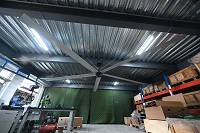
A fan shouldn't demand you rearrange your entire layout just to accommodate its bulk. The best designs slip into your space quietly, complementing the room rather than shouting for attention. Look for slim profiles that hug the ceiling, subtle color palettes that blend with your walls, and blades scaled to the proportions of the room—not every space can handle a dramatic 60-inch span. When the fan feels like it grew there naturally, you know you've avoided the common mistake of letting hardware dictate your decor.
Beyond mere dimensions, think about how air moves through your particular space. A gentle, diffused breeze often works better in a cozy bedroom than a gusty downdraft, while a more powerful push may be welcome in a double-height living area. Variable speed controls, reversible motors, and adjustable blade pitches let you finesse that airflow to match your comfort, not some factory preset. It's about presence without tyranny—cooling, not chaos.
Finally, consider the quiet details that make a fan feel bespoke: the warmth of a wooden blade against a soft white ceiling, a matte metallic housing that echoes your light fixtures, or a remote control tucked away on a nightstand instead of a dangling chain. These are the elements that turn a utilitarian object into a tailored part of your home, proving that thoughtful design is always more powerful than raw output.
How Bespoke Fans Elevate Employee Productivity
In workplaces where thermal comfort often takes a backseat, bespoke fans emerge as a quiet game-changer. Unlike generic, one-size-fits-all solutions, these tailored air circulators are engineered to match the specific layout, occupancy patterns, and even the architectural aesthetics of a workspace. By delivering targeted airflow exactly where it's needed—be it a stuffy corner office or a bustling open-plan area—they reduce the reliance on energy-hungry HVAC systems while keeping employees comfortably focused. The result is a subtle yet pervasive shift: fewer complaints about temperature, fewer distractions from personal desk fans humming away, and a workforce that can channel its energy into the task at hand rather than battling the environment.
The psychology behind bespoke cooling is as important as the physics. Employees who feel their comfort is considered tend to exhibit higher morale and a stronger sense of being valued. Custom fans, often designed with noise-reduction in mind, fade into the background acoustically, unlike the intrusive whir of portable units. This acoustic subtlety preserves the cognitive flow essential for deep work, while the personalized air movement can actually improve perceived air quality—reducing that mid-afternoon mental fog. It's a cumulative effect: when people aren't constantly adjusting layers or squinting against a draft, they settle into a rhythm that sustains output over longer stretches.
Moreover, bespoke fan installations can be integrated with smart building controls to adapt in real time—ramping up during peak occupancy or dialing back when spaces are empty. This dynamic responsiveness not only curtails wasteful energy consumption but also creates a microclimate that mirrors natural variability, which studies suggest can boost alertness. In essence, a well-designed fan system becomes an invisible productivity partner, working with the building's rhythms to foster an environment where people can do their best thinking without even noticing why.
Energy Savings Begin with Tailored Airflow
Facilities often overlook how much energy gets wasted when airflow isn't matched to actual demand. A tailored approach considers the specific needs of each zone, adjusting ventilation and cooling precisely rather than running systems at full throttle regardless of occupancy or load. This not only cuts kilowatt-hours but also extends equipment life by avoiding unnecessary strain.
Static pressure resets, demand-controlled ventilation, and variable frequency drives can transform a one-size-fits-all setup into a responsive network. Instead of pushing air at constant velocities, the system breathes with the building, delivering comfort where and when it's needed. The result is a quieter, more stable indoor environment that doesn't hemorrhage energy through over-treated supply.
The real win comes from integrating airflow optimization into a broader operational strategy. Monitoring data reveals patterns that allow fine-tuning without guesswork, turning what was once a background utility into a strategic asset. Over time, the savings compound, making a noticeable dent in operational expenses while reducing the building's environmental footprint.
Why Your Facility Deserves More Than Off-the-Shelf Fans
Every industrial or commercial space has its own rhythm—its own airflow demands, temperature quirks, and operational hours. Yet, off-the-shelf fans come with rigid specifications that rarely align perfectly with what your facility actually needs. They might push too much air in one corner and leave another stagnant, force you into awkward mounting positions, or draw more power than is sensible for a 24/7 operation. Generic solutions assume a generic environment, and your facility is anything but.
When you settle for a mass-produced fan, you’re also inheriting limitations in materials, noise levels, and control integration that weren’t designed with your team’s comfort or your machinery’s longevity in mind. Maybe the bearings in a stock fan won’t hold up to your washdown routine, or the default speed controller conflicts with your building automation system. These aren’t just minor gripes—they add up to reduced efficiency, premature wear, and a workspace that never quite feels dialed in.
A purpose-built fan, tailored to your exact layout and usage patterns, changes the equation. It consolidates circulation into fewer, smarter units. It integrates seamlessly with existing ventilation, filtration, or process cooling equipment. And because every component is selected for your specific load and duty cycle, maintenance becomes predictable rather than reactive. Your facility moves air constantly—shouldn’t the hardware doing that work be as dependable and customized as the operations it supports?
Real-World Performance: Bespoke Fans in Action
When you step into a facility cooled by our custom solutions, you feel the difference immediately—not just a drop in temperature, but a steady, whisper-quiet flow that seems to know exactly where to go. In a recent textile mill retrofit, the management had struggled for years with hot spots near dyeing machines that stalled production every summer. We studied airflow patterns, positioned oversized low-speed fans at calculated intervals, and added subtle winglets to the blade tips. The result wasn’t simply more air movement; it was a tailored breeze that cut the perceived heat index by 8 degrees without a single draft on sensitive materials. Workers stopped taking unscheduled breaks, and the humidity that used to cling to fabrics dissipated in half the time.
Another project took us to a three-story greenhouse, where uniform climate control was non-negotiable for a rare orchid grower. Off-the-shelf fans kept creating dry pockets near the vents, causing blooms to wilt unevenly. We designed a series of bespoke fans with staggered diameters and variable pitch blades, each tuned to push air gently across the canopy while pulling moisture upward. During the first trial run, the owner gestured silently at a row of Phalaenopsis—every petal flexing with the same gentle rhythm. That’s the moment we knew the design was working: not a single leaf trembled harder than another, and the sensors confirmed a temperature spread of less than 1°F across the entire growing zone.
Beyond controlled environments, bespoke fans prove their worth in places most people never see. A data center in the Netherlands needed to exhaust heat from high-density server racks without creating noise that interfered with the adjacent office wing. We crafted backward-curved centrifugal fans housed in acoustically dampened casings, then fine-tuned the inlet cones to reduce turbulence. The operators reported that the fans ran so smoothly they forgot to schedule vibration checks—the system just hummed along, year after year. It’s these quiet triumphs, far from any brochure photo, that remind us why standardized specs can never replace a design that’s born from listening to the space itself.
FAQ
They're large-diameter ceiling fans engineered from scratch for a specific facility, not just chosen from a catalog. Every component—blade profile, motor power, mounting height—is tuned to the building's dimensions, heat load, and layout.
By generating a massive column of air that moves consistently from floor to ceiling, they eliminate thermal stratification. In winter, slow upward push reclaims trapped heat. In summer, controlled velocity creates a cooling effect without disruptive drafts.
Absolutely. A single custom fan can displace 10–20 smaller floor fans, cutting electricity use dramatically. By evening out temperatures, they reduce HVAC runtime. In many warehouses, the payback on fan installation is under two years just from smaller AC demand.
Off-the-shelf forces your space to adapt. Bespoke means we study your ceiling height, obstructions, occupant pathways, and local climate, then tailor blade length, airfoil, and drive controls. The result feels like the building breathes, rather than just blows air.
They thrive anywhere with tall ceilings and open floor: distribution centers, aircraft hangars, manufacturing plants, indoor sports domes, even livestock barns. Lately, we're designing for retail warehouses and converted church spaces where aesthetics matter as much as performance.
We model the space using CFD software, mapping heat sources, structural columns, and work zones. Then we adjust blade count, pitch angle, and speed range to create a gentle horizontal floor jet that reaches into aisles without scattering lightweight products or documents.
Yes. For libraries, studios, or upscale showrooms, we use low-noise airfoils, vibration-isolating mounts, and inverter drives that run below the threshold of human conversation. You'll feel the air but won't hear the fan.
Remarkably little. Sealed bearings eliminate greasing, and the gearless direct-drive motors have no wearable brushes. Annual bolt checks and blade wipe-downs are typically all it takes. We design for 100,000-hour duty cycles in dirty conditions.
Conclusion
In industrial environments, air movement is often treated as an afterthought—a commodity solved by standard fans hung haphazardly from ceilings. But genuine comfort and efficiency emerge not from forceful blasts, but from airflow engineered to harmonize with a building’s architecture and daily rhythms. Bespoke big industrial fans represent the art of custom air engineering: every blade profile, motor placement, and rotational speed is calibrated to match ceiling heights, obstructions, and occupancy patterns. Rather than imposing a one-size-fits-all breeze, these fans are designed to fit your space, working with natural convection currents to create a gentle, pervasive cooling effect without disruptive drafts. This tailored approach transforms stagnant warehouses and stuffy manufacturing floors into environments where employees feel physically at ease, allowing them to focus and perform.
The return on such precision extends well beyond comfort. Custom-engineered airflow directly elevates employee productivity—when workers aren’t battling heat stress, their concentration sharpens and sick days decline. Moreover, energy savings begin with this tailored strategy; by precisely delivering air where and when it’s needed, facilities can downsize or even eliminate supplementary cooling systems, slashing electricity consumption. Off-the-shelf fans simply cannot replicate this efficiency, because they ignore the unique heat loads and layout of your facility. In real-world applications, facilities that transition to bespoke big industrial fans report not only smoother temperature distribution but also measurable drops in energy costs and a palpable boost in workforce morale. It’s a holistic upgrade that pays dividends far exceeding the initial investment.
Contact Us
Contact Person: Michael Danielsson
Email: [email protected]
Tel/WhatsApp: +1 951 565 7769
Website: https://www.vindusfans.com