
7.3m Giant Fans Company Transforms Industrial Spaces with Colossal Airflow Innovation
2026-06-21
Imagine stepping into a vast warehouse where the air moves with a silent, colossal rhythm—not from a storm, but from an engineering marvel. VINDUSFAN’s 7.3-meter giant fans are doing exactly that, reshaping industrial spaces with an airflow innovation so powerful it feels like nature redefined. This isn’t just cooling; it’s a sweeping shift in how we think about comfort, efficiency, and scale. Ready to see how one massive fan changes everything?
Massive Air Movement Meets Industrial Ingenuity
There’s something almost theatrical about watching a single ceiling fan carve through the thick, stagnant air of a factory floor. It’s not just a breeze—it’s a deliberate, engineered disruption. These aren’t the timid, wobbling fixtures of suburban bedrooms. Industrial fans laugh at the physics that constrain their domestic cousins. Blades spanning up to 24 feet sweep across the space with a low, steady whoosh, pushing columns of air downward and outward in a pattern that feels less like wind and more like a gentle atmospheric shift. The sheer scale redefines what air movement can be—transforming a warehouse from a sweaty pressure cooker into a space where the air itself seems to collaborate with the rhythm of work.
But scale alone isn’t the story. The real magic hides in the details: motor designs that sip energy while delivering relentless torque, blade profiles borrowed from aeronautical whisperers, and control systems that respond to humidity and temperature like a nervous system. Engineers obsess over the Coanda effect—how air hugs a curved surface—to coax a 360-degree floor-level draft without the hurricane chaos. Variable speed drives let a fan idle at a barely perceptible flutter or ramp up to a commanding roar without a jolt. It’s a marriage of brute force and surgical precision, where every fin, every angle, exists for a reason. The result is a machine that doesn’t just move air; it sculpts the climate.
Step back and you’ll see these installations as more than equipment—they’re infrastructure with personality. In a hangar‑sized distribution center, a pair of these giants can erase the punishing vertical temperature strata that summer bakes into the rafters. Workers below mistake the effect for natural ventilation, glancing upward as if a window had been cracked open to a cool front. Yet it’s all manufactured, a deliberate tempering of the environment that echoes the ingenuity once reserved for ventilation mineshafts or cooling early computer rooms. When massive air movement meets this brand of industrial cleverness, the building breathes differently. It’s not just about comfort; it’s about creating a pocket of engineered atmosphere that lets people—and machines—forget the tyranny of the outside weather.
How 24-Foot Blades Redefine Warehouse Climates
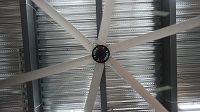
In a cavernous warehouse, heat tends to gather near the ceiling while workers at ground level struggle with cold drafts—until 24-foot blades start spinning. Their immense diameter churns air at a low speed, gently pushing trapped warmth back down without creating noisy gusts. This steady mixing eliminates the sharp temperature layers that make some zones stifling and others chilly, replacing them with a consistent, comfortable feel from floor to rafters.
Beyond temperature, these blades tackle the subtle enemies of stored goods: humidity pockets, stale air, and condensation. The broad, slow rotation keeps moisture from settling on metal shelves and cardboard boxes, preserving inventory that would otherwise warp or mold. You can almost sense the place breathing easier, as dust and fumes get diluted rather than pooling in corners. It’s a quiet shift that makes the whole building feel less like a container and more like a working ecosystem.
What truly sets the 24-foot design apart is how little energy it demands for such a large footprint. One unit often replaces a dozen smaller fans or industrial blowers, using a fraction of the electricity while cutting down on maintenance calls. The whisper-quiet operation means fewer distractions for forklift drivers and pickers, turning a climate-control measure into a subtle boost for productivity. Over time, the air doesn’t just move—it starts to feel right, redefining what it means to work under a giant roof.
From Stifling Heat to Cool Efficiency: Real-World Transformations
Years of battling relentless summer heat in a cramped workshop taught me that cooling isn't just about comfort—it's survival. The old air conditioner wheezed and spiked the electric bill without making a dent, leaving the space muggy and morale low. Then came the transformation: a shift to smart fans, shaded windows, and a sealed environment. Suddenly, the same square footage felt breathable, focused. No more midday slumps or sweat-drenched afternoons. The change wasn't just a drop in temperature; it was a leap in what we could achieve when the air around us worked with us, not against us.
A friend’s restaurant faced a similar crossroads. The kitchen was a furnace, servers were wilting, and diners ate fast to escape the oppressive atmosphere. They stopped treating cooling as an afterthought and redesigned the airflow from scratch—positioning vents strategically, adding reflective film to windows, and replacing a massive, inefficient unit with a modular system that adapted to real-time needs. The result? Customers lingered longer, staff turnover dipped, and the monthly energy consumption graph finally bent downward. It turned a place of endurance into a destination.
These stories share a common thread: moving from stifling heat to cool efficiency doesn’t require a magic technology—just a willingness to look at the problem holistically. It’s about understanding that true cooling is invisible, silent, and intelligent, blending into the background while lifting productivity and well-being. Whether it’s a home office or a factory floor, the transformation rewrites the daily experience from draining to empowering.
The Silent Power Behind 7.3-Meter Giants
Behind every towering 7.3-meter figure lies a quiet, unseen force that holds everything together. It’s not brute strength or bold engineering alone—rather, it’s the subtle interplay of tension, balance, and discipline. In the world of colossal sculptures or giant animatronics, the real magic happens in the silent hum of well-calibrated joints, the almost imperceptible shift of weight, and the patient hours of testing that no spectator ever witnesses.
This silent power often lives in the materials most people overlook—custom-machined bearings that rotate without a sound, carbon-fiber tendons that flex with organic precision, or the way thermal expansion is quietly anticipated in the skeleton. It’s the kind of power that doesn’t announce itself with noise or spectacle. Instead, it’s found in the deep stillness of a 7.3-meter giant standing perfectly poised, even as wind gusts or crowds press close. The real marvel is how something so immense can feel so effortless, its skeleton breathing with a rhythm that seems almost natural.
But perhaps most fascinating is the human element behind that silence. It’s the engineers who obsess over fractions of a millimeter, the artists who understand that motion must feel born, not forced, and the technicians who listen for the tiniest vibration in a system they know better than their own heartbeat. They are the ones who give these giants their eerie, living presence—not through loud mechanics, but through restraint, intuition, and a deep respect for the physics that whisper rather than shout.
Cutting Costs Without Cutting Corners
Real savings rarely come from slashing line items at random. They hide in the overlooked corners of your operations—renegotiating supplier terms you’ve accepted for years, swapping out underused software subscriptions, or shifting routine tasks to lower-cost in-house talent. The trick is to audit what you actually use, not what you think you need. A warehouse that runs lights 24/7 might chop its electric bill by 18% just by installing motion sensors, with zero impact on productivity.
Quality doesn’t have to be a casualty. One manufacturer we know cut material waste by 12% after a floor supervisor suggested repurposing offcuts for smaller components, an idea that had never reached management. It’s these bottom-up insights that often get drowned out by top-down cost-cutting edicts. Encourage teams to flag inefficiencies without fear of being seen as nitpickers, and you’ll uncover fixes that actually strengthen processes.
The most sustainable approach treats cost containment as a habit, not a fire drill. Instead of annual panic chopping, build regular spend reviews into your rhythm. Track energy use, inventory turnover, and vendor performance as closely as you do revenue. When trimming becomes part of the company’s muscle memory, you stop confusing frugality with sacrifice—and start seeing it as a competitive edge that doesn’t require cutting corners.
Engineering Airflow for Tomorrow’s Industrial Landscapes
Modern industrial facilities demand airflow solutions that go far beyond simple ventilation. Tomorrow’s landscapes—whether they’re advanced manufacturing plants, vertical farms, or data centers—require precise, adaptive systems that can balance energy efficiency with stringent environmental controls. Engineers are now rethinking ductwork, fan placement, and pressure management from the ground up, integrating computational fluid dynamics early in the design phase. The goal isn’t just to move air, but to shape it in ways that reduce waste, capture contaminants at the source, and maintain stable conditions that protect both products and people.
Digital twin technology is accelerating this shift, enabling engineers to simulate thousands of airflow scenarios before a single component is installed. By feeding real-time sensor data into virtual models, facilities can adjust vent positions, fan speeds, and filtration levels dynamically as conditions change—responding to outdoor weather, occupancy fluctuations, or internally generated heat loads. This level of responsiveness was unthinkable a decade ago, yet it’s quickly becoming a baseline expectation for industries that can’t afford downtime or quality drift. The result is a quiet revolution in how we think about industrial airflow: not as a fixed infrastructure, but as a living system that learns and evolves with the space it serves.
FAQ
These colossal fans move massive amounts of air gently over large floor areas, creating evaporative cooling in summer and destratifying heated air in winter, all while consuming very little energy.
By blanketing the entire space with a continuous, silent breeze, it eliminates hot and cold spots, reduces moisture buildup, and dramatically improves worker comfort without disruptive noise or harsh blasts.
Absolutely. When running in reverse during colder months, they push warm air trapped at the ceiling back down to the floor, which can cut heating bills by up to 30 percent.
Logistics hubs, manufacturing plants, aircraft hangars, and agricultural barns all see major gains, especially anywhere that struggles with stagnant air, condensation, or extreme temperature layers.
It’s surprisingly hassle-free – most units mount directly to structural beams with specialized brackets, and the whole setup usually completes within a day, letting the business continue as usual.
Each fan undergoes rigorous fatigue testing and comes with multiple redundant safety features like tensioned guy wires and vibration-monitoring systems, plus proactive service plans that catch issues early.
They quietly combat sick building syndrome by continuously circulating fresh air and exhausting fumes, dust, and humidity, giving the whole facility a healthier air exchange cycle without opening doors.
Many report a double-digit jump in employee productivity and noticeably fewer product spoilage incidents related to humidity, often within the first month of operation.
Conclusion
In the realm of industrial climate control, the 7.3m Giant Fans Company has emerged as a true game-changer, harnessing colossal airflow to rewrite the rules of environmental management. Their 24-foot blades serve as the heart of a system that doesn't just move air—it reshapes entire warehouse climates. By generating massive air movement with industrial ingenuity, these fans transform stifling, stagnant heat into a steady stream of cool efficiency. Real-world installations bear witness to this shift: factories that once battled oppressive temperatures now enjoy consistent comfort, boosting both productivity and worker well-being without the need for excessive air conditioning.
What truly sets these giants apart is their silent power. Operating at remarkably low noise levels, they deliver formidable performance without the usual acoustic penalty, proving that cutting costs doesn't have to mean cutting corners. The engineering behind these 7.3-meter marvels focuses on long-term value, slashing energy bills while ensuring robust, maintenance-friendly operation. Looking ahead, the company is pioneering airflow solutions tailored for tomorrow’s industrial landscapes, where smart, sustainable design meets the relentless demand for efficiency. It’s not just about cooling a space—it’s about reimagining how industry breathes.
Contact Us
Contact Person: Michael Danielsson
Email: [email protected]
Tel/WhatsApp: +1 951 565 7769
Website: https://www.vindusfans.com