
5-Tier Wire Shelving Manufacturer Shares Smart Storage Solutions
2026-11-23
Storage problems rarely come from a lack of space. More often, they come from unused vertical room and shelving that fights the way people actually work. That’s the problem ZEOU set out to solve as a 5-tier wire shelving manufacturer. Instead of treating a wire shelf as a basic rack, we design it as a flexible storage backbone for pantries, garages, stockrooms, and commercial kitchens. Below, we’re sharing the smart storage strategies that help buyers get more usable space from the same footprint.
What Actually Happens When a Wire Shelf Meets a Busy Kitchen
You think it will hold the spice jars and maybe a few cookbooks. Then a Tuesday dinner rush hits, and suddenly that wire shelf is the only flat surface left for a roasting pan, three phone chargers, a stack of mismatched lids, and a toddler who needs somewhere to park half a banana. The shelf doesn't complain exactly, but the way it flexes under a cast iron skillet tells you it has opinions.
Busy kitchens teach you quickly that wire shelves are not storage—they are landing pads. A bowl of proofing dough gets balanced on a box of parchment, next to a knife you swore you'd wash an hour ago. Crumbs fall through the gaps, which is why the shelf seems to feed the floor more than it feeds you. Yet every time you clear it off, it fills again within a day, like it's been quietly running its own little pantry economy while you weren't looking.
Eventually you stop treating it as a place for things and start treating it as a witness. It holds the onion skin you missed, the half-empty bottle of olive oil, the receipt from the market, the oven mitt with a hole in the thumb. A busy kitchen doesn't need another correct place for every item. It needs one surface that forgives you for being messy, even if that forgiveness comes with slightly rusted edges and a wobble on the left side.
Why Five Open Tiers Make Inventory Easier to Scan
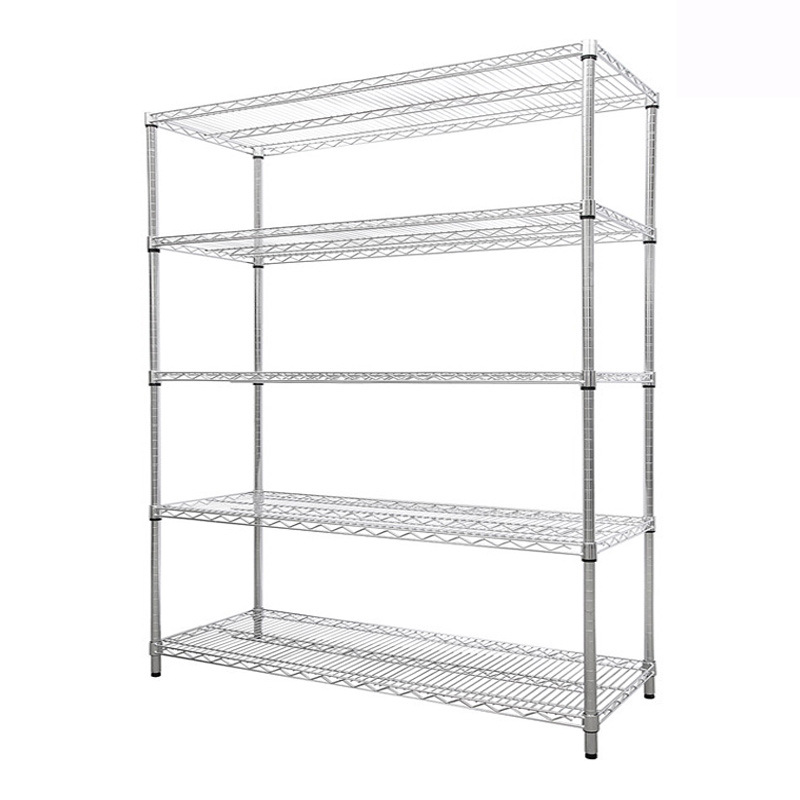
Most scanning slowdowns happen the moment a label is blocked by a frame, a side panel, or a deep shelf lip. With five open tiers, that problem mostly disappears. Each level sits in plain view from the aisle, so a handheld scanner can reach the barcode without pulling the item off the shelf or shifting boxes around. The open design also lets light reach the lower levels, which makes worn or slightly damaged labels easier to read on the first pass.
Counting becomes more of a visual sweep than a step-by-step chore. Because every tier is exposed on all sides, staff can work down the rack in a steady rhythm: scan the top, move to the next, and catch discrepancies before they turn into missing stock. There’s no need to open doors, crouch behind supports, or guess what’s hiding in the back corner. That reduces handling time and keeps inventory tags facing outward where they’re actually useful.
The five-level setup also suits how warehouses actually operate day to day. It gives enough vertical storage without pushing items so high that scanning requires a ladder or a stretch. When labels are consistently at arm height and nothing blocks the line of sight, new staff pick up the routine faster, and regular cycle counts feel less like disruption.
The Case for Leaving Part of a Storage Unit Half Empty
A storage unit packed to the door feels thrifty until the one item you actually need is behind a wall of boxes. Leaving a clear lane or an empty rear third may look like wasted rent, but it changes the unit from a dead drop into a room you can walk through. That empty strip is where you stand to sort, where a dolly turns around, and where a wet umbrella or a just-sold chair can sit without forcing a full reshuffle.
The empty space also absorbs life's irregular arrivals. A half-loaded unit can swallow a bulky estate-sale find, a set of off-season tires, or a few boxes from a relative's move without tipping into chaos. When the unit is already at maximum density, any new object starts a cascade of repacking, and the storage bill becomes a tax on indecision rather than a convenience.
There is a quieter argument, too: blank space keeps your attachment to the stored items honest. Seeing a clear floor makes you ask whether the things in the back still need to be there. It turns storage from an out-of-sight archive into a space that has to justify itself each time you open the door.
How a Small Height Adjustment Changes Daily Workflow
Raising a monitor by two inches sounds trivial until you notice your shoulders finally drop away from your ears. That small change shifts the entire rhythm of the day: fewer micro-stretches between emails, less leaning toward the screen during long reading sessions. What used to feel like an afternoon slump now stays at bay because the neck isn't constantly fighting gravity. The adjustment itself takes seconds, but the cumulative effect on how you sit, type, and even breathe turns a routine desk setup into something that quietly supports you instead of wearing you down.
Lowering a standing desk by an inch or two reveals a different kind of improvement. Suddenly your elbows rest at a natural angle, and the heel of your hand stops pressing into the edge of the table. That tiny drop means you can shift weight from one foot to the other without unconsciously lifting your shoulders. The workflow becomes smoother not because any single task changed, but because the body stops sending low-level discomfort signals that used to interrupt concentration. Over a full afternoon, those interrupted moments add up to more than most people expect.
A height adjustment also changes how you move around the workspace. When the desk fits, you reach for the phone, grab a notebook, or glance at a reference sheet without twisting your spine. The small change removes a recurring friction point that never seemed important enough to fix. Day by day, the result is a quieter mind and a more fluid transition between tasks. It's the rare upgrade that costs almost nothing, takes under a minute, and yet reshapes the feel of an entire workday.
Leveling Feet and the Floor Damage Nobody Warns You About
A leveling foot looks harmless, but it puts an entire machine’s weight on a contact area smaller than a bottle cap. On vinyl plank, cork, or engineered wood, that concentrated load can create a permanent dimple within a few weeks. The problem gets worse when the floor has underlayment with any give: one foot sinks a little, the bubble drifts out, and you end up chasing level over and over because the floor is now part of the adjustment.
Then there is the slower chemical damage nobody mentions. Steel feet sweat with temperature changes or mop water and leave faint rust halos. Rubber feet can plasticize into vinyl and leave an amber or white patch that won’t lift. If a bit of sand or a metal shaving gets trapped underneath, every small bump or drawer motion grinds it across the surface.
Before you trust the level, check what touches the floor. Wider polyurethane pads, hard felt discs, or even a scrap of rigid plastic can spread the load and keep metal away from moisture. Clean the pads when you clean the machine, and look for embedded grit or cracks before moving anything. In a space with soft flooring, protecting the footprint is not an afterthought—it is half the reason the adjustment holds.
Taking the Same Five-Tier Unit From Pantry to Garage Without It Looking Wrong
A five-tier shelf that feels right in a pantry usually has a lighter look—white or pale gray, maybe a slightly glossy finish. The fastest way to make it belong in a garage is to let the contents change the shelf's posture. Swap glass jars and woven baskets for flat-sided tool boxes, sealed parts bins, and a couple of heavy plastic crates on the bottom. When the lower levels carry visible weight, the unit stops reading as kitchen overflow and starts working as garage storage.
Surface cues matter more than most people expect. If the shelf is a light color, break up that brightness with dark metal bins, rubber-backed mats, or labeled black totes. Adding a magnetic strip to one side for drivers, bits, and small wrenches gives the frame a harder, more mechanical edge. You can also line the shelf boards with thin ribbed rubber matting—not only does it hide scuffs, but it echoes the floor and workbench textures already present in a garage.
Stability is the final piece. Garage floors often slope toward the door, so adjust the feet and check the unit with a level before loading it. Keep dense items low, frequently used tools between waist and shoulder height, and light or bulky supplies up top. If the shelf has open sides, pushing it against a bare wall and adding one small wall anchor behind the top rail keeps it from swaying without changing the look. The same unit can move between rooms, but these adjustments keep the transition from feeling accidental.
FAQ
In humid spots like basements, cold storage and commercial kitchens. The open grid lets air move through, so condensation doesn't get trapped. You also get better visibility, which cuts down on lost stock.
Look at the cross-brace design and the post thickness, not just the wire diameter. Keep the heaviest items between shoulder and knee height so the load transfers straight through the posts. With an even spread, a quality unit holds far more than most people assume.
Usually yes. The posts and wire decks slide together with split sleeves or tapered clips. No drilling or special tools. One person can typically finish in fifteen to twenty-five minutes if they lay the parts out first.
Most five-tier units use grooved posts at one-inch intervals. You loosen the plastic sleeves, tap them to a new height, and retighten. That makes it easy to fit tall appliances later without buying another rack.
Casters turn a fixed rack into a work cart. Kitchens roll prep trays to the pass, garages move tool storage to the project, and laundry rooms can pull the unit out for cleaning behind it. Use locking casters if the floor slopes.
Switch to clear bins with open fronts. Because wire shelves don't block light, you can read labels at eye level and below. Add shelf liners only where small jars might tip through the gaps.
Chrome offers a bright look and decent rust resistance indoors. Zinc or epoxy-coated options handle damp garages better. Wipe up spills, avoid abrasive pads, and the shelf should stay clean and functional for years.
Putting heavy bulk on the top shelf. That makes the rack top-heavy and hard to load. Keep heavy cases near waist height, store lightweight bulk up top, and use the bottom tier for less frequently needed items.
Conclusion
When a five-tier wire shelf actually lives in a busy kitchen, the first change isn't visual clutter but how quickly surfaces pick up grease, dust, and small spills. Open wire means airflow moves through, but it also exposes every jar, pan, and box to constant handling. That's why the manufacturer suggests keeping the middle tiers at eye height for items used daily and leaving at least one section partially empty. An open shelf with some breathing room does more than look tidy: you can slide in a bulky mixer or a bag of produce without reshuffling the entire unit. A small height adjustment, even two inches, often removes that awkward crouch or high reach that slows down prep work. It turns shelf access from a deliberate task into something you do without thinking.
Five open tiers also change how inventory gets scanned, whether in a pantry or a garage. Instead of opening doors or moving bins, you can read labels at a glance and notice when a container is close to empty. That visual scan works best when the unit isn't packed edge to edge, because your eye needs a gap to separate categories. Leveling feet matter more than people expect. On uneven tile or concrete, a slightly tilted shelf shifts weight onto one corner, leaves marks, and can even scratch softer flooring over time. Once the feet are set properly, the same five-tier unit moves from pantry staples to garage tools without looking out of place, since the galvanized or powder-coated finish reads as utility rather than kitchen-only furniture.
Contact Us
Contact Person: Alin
Email: [email protected]
Tel/WhatsApp: +86 15015291051
Website: https://zeoumetal.com/