
10 Trusted Solar Roof Clamp Suppliers in China for Quality Mounting Solutions
2026-11-18
When a solar array fails, it’s rarely the panel that gives way first — it’s often the small metal components holding everything to the roof. Roof clamps might not dominate spec sheets, but they quietly decide how long an installation stays safe in high winds, heavy rain, and years of thermal cycling. China remains a key sourcing hub for these mounting parts, yet the gap between a precision-engineered clamp and a cheap imitation can be invisible until it’s too late. That’s why we’ve cut through the noise to highlight 10 trusted suppliers worth your shortlist — including Egret Solar, a name gaining attention for practical, quality-focused mounting solutions. Here’s what separates dependable manufacturers from the rest.
The Metal Grade Behind a Clamp Matters More Than the Brand Name
A clamp stamped with a well-known logo can still be made from metal that barely holds up in damp air. The real question isn't whose name is on the handle; it's whether the alloy behind the casting matches the job. Grades like 304 and 316 stainless look nearly identical on a shelf, but the extra molybdenum in 316 changes how the clamp behaves around salt, chlorides, and repeated washdowns. If the grade isn't printed on the part or the packaging, the brand name is doing very little work.
Cheap zinc-plated steel hides behind plenty of familiar labels. It will pass a quick visual check and then start rusting at the thread roots and pivot points within months. A clamp made from a proper stainless grade, or even a well-specified carbon steel with a known coating, carries its performance in the material spec rather than the paint color. That matters most in food processing, marine work, and outdoor installations where a failed clamp is not just an inconvenience but a contamination or safety issue.
The habit of buying by brand alone also makes it easy for suppliers to switch alloys without changing the outward design. One production batch may arrive with the same shape and the same box, yet carry a lower chromium content or a thinner passivation layer. Checking the grade, asking for mill certificates, and matching the metal to the environment will do more for long-term reliability than paying extra for a logo.
Coastal Projects Need a Different Conversation About Corrosion
Most corrosion guidance still treats the coast as a slightly harsher version of an inland site. That assumption falls apart the first time a spec calls for standard galvanizing on a handrail facing prevailing salt spray. Coastal exposure does not just accelerate rust; it changes which parts fail, how fast they fail, and whether a repair will survive a single season.
The conversation needs to shift from coating thickness alone to geometry and drainage. Hollow sections trap chloride-laden air, fasteners become little galvanic cells, and sheltered corners collect salt that never washes away. A stainless alloy that performs beautifully a mile inland can pit within months in the splash zone.
Owners and engineers get better results when they stop asking which material is corrosion-proof and start asking how water, salt, and oxygen move across each connection. That means fewer standard details, more mock-ups, and honest maintenance budgets tied to inspection cycles rather than warranties.
Reading a Factory Audit Report Without Glossing Over the Gaps
Most people open a factory audit report and drift toward the summary box as if the score alone can tell them whether the site is stable. That habit is exactly where gaps hide. The real signal is rarely in the final number or the top three strengths; it sits in the phrasing of non-conformities, the items marked “pending verification,” and the corrective actions that keep slipping their deadlines. When you read, slow down at any sentence that feels unusually smooth. Audit reports written to please a buyer often round off the sharp edges, so a lack of detail around a fire exit, chemical storage, or machine guarding should be treated as a finding in itself.
Look for what the report avoids saying. A vague phrase like “management has been advised” is not the same as “records from the past six months were reviewed and matched to production logs.” One gives comfort; the other gives evidence. Compare the severity of an observation with the proposed timeline. If a serious issue affecting worker safety or product integrity is assigned a ninety-day correction window without an interim control, the gap is still open, no matter how polite the wording. Pay attention to repeated “minor” issues in the same area, because clusters often reveal a systemic weakness that no single line item captures.
Finally, treat the report as a starting point rather than a verdict. Ask the auditor or the factory for the objective evidence behind each closed item. If a report claims that a previous non-conformance was resolved, confirm whether the fix was a permanent process change or just a one-time cleanup before the visit. A strong reader questions whether the photographs show the real working conditions, whether the employee interviews match the written policy, and whether the report describes a typical Tuesday rather than a staged tour. When you read without glossing over the gaps, the gaps become more useful than the scores.
Custom Clamp Profiles for Tile Roofs That Standard Catalogs Miss
Standard clamps tend to assume a clean, symmetrical tile profile, but real roofs rarely cooperate. Field measurements often show that the rib height, underside draft angle, and edge radius shift by a few millimeters between batches—even from the same manufacturer. A custom profile captures those quirks and lets the clamp bear on the flatter section of the tile instead of pinching the crown.
The process usually starts with a short sample section or a digital contour taken on site. From there, the jaw can be machined to follow the tile’s actual sweep, including a small relief near the water channel so debris doesn’t get trapped. That relief alone prevents a lot of the hairline cracks that show up later around the fastener holes.
Material choice matters just as much as shape. For lightweight tile profiles, a 6000-series aluminum with a hard anodized finish works well, but coastal jobs often need a stainless insert or an isolation pad to avoid galvanic action. A properly fitted custom clamp should feel like it’s cradling the tile, not biting into it, and that’s the difference catalogs rarely describe.
Shipping Damage Starts With How Clamps Are Packed at the Factory
The damage you see on a job site often has nothing to do with the truck, the warehouse, or the crew unloading it. It starts further back, at the factory floor, where clamps are packed into crates with a speed that leaves little room for second thought. A clamp dropped into a box at a slight angle or stacked under heavier tooling can carry that stress for weeks before it shows up as a cracked housing or a bent spindle. The problem is less about negligence and more about a packing line that treats each clamp like a commodity, not a precision instrument.
At the factory, the emphasis runs toward volume, and that means foam inserts get compressed too tightly, steel bands get torqued past the point of usefulness, and the cardboard itself often bears the load instead of the internal supports. When the clamp finally arrives, the damage can be invisible at first. A hairline fracture near the swivel joint or a misaligned jaw might not stop a worker from mounting the clamp, but it will shorten the tool's life or cause a failure under full load. The real issue is that nobody at the packing station sees that end result, so the feedback loop never closes.
Some factories have begun to rethink this by slowing down the final stage and using custom-cut high-density foam paired with internal blocking that matches the clamp's center of gravity. Instead of relying on generic corner pads, they recess the clamp body so the jaws hang free and the shank rests on a molded cradle. That simple change prevents the most common failure point, where the clamp gets slammed against a hard edge during transit. But until those kinds of packing adjustments become standard, every unopened crate leaves the factory with a small bet on whether the tool inside will arrive intact or already compromised.
Response Time After Delivery Tells You More Than the Sales Pitch
After the contract is signed and the product is in place, the speed of a routine reply says more than any polished slide deck. A quick answer to a billing question or a technical hiccup shows that the team has clear ownership, enough staff, and a genuine respect for the buyer's time. Sales promises can be rehearsed, but response time is simply observed.
That lag between an email and a real answer often reflects internal health. When a vendor needs three days to confirm a simple detail, it usually points to unclear processes or an overextended support queue. When the reply arrives within hours, someone has taken responsibility. These small moments accumulate and quietly shape whether a customer renews, expands, or walks away.
FAQ
Look at the aluminum grade, anodizing thickness, tensile and pull-out test reports, warranty length, and whether the supplier has handled projects with the same roof profile before.
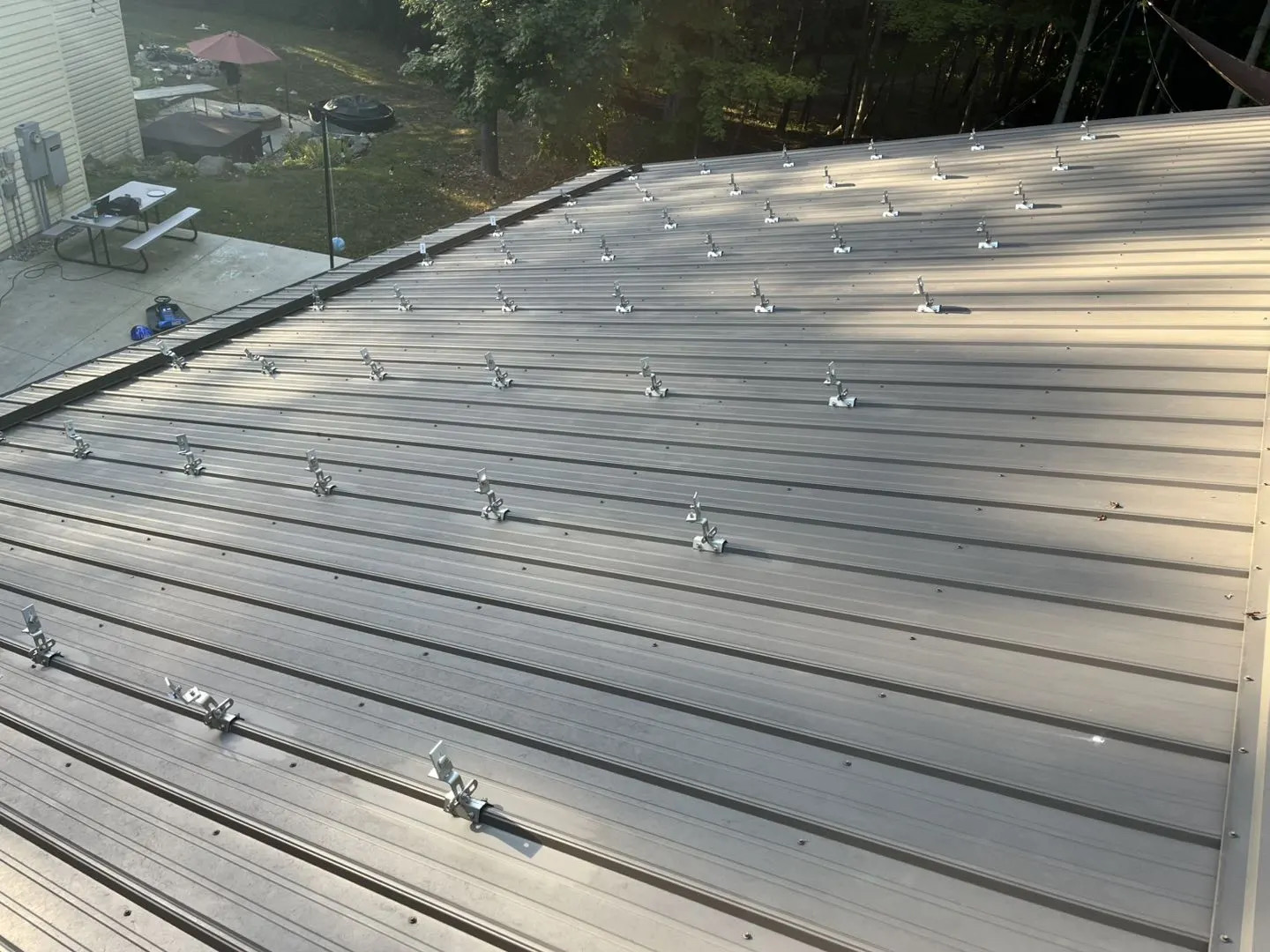
Trapezoidal roof clamps usually fasten through the crown with EPDM washers and self-drilling screws, while standing seam clamps grip the seam without penetration and must match the exact seam shape and width.
The lower price often comes from recycled aluminum, thinner profiles, a reduced anodizing layer, or skipped batch testing. Ask for mill certificates and current test data to confirm what you are actually getting.
It usually helps because the parts are designed to fit each other, tolerances are controlled as a set, warranty responsibility is clearer, and technical support is easier when one team knows the whole system.
Common requirements include ISO 9001, material certificates such as EN AW-6063 T5, mechanical test reports, and sometimes wind uplift calculations or structural reports for the target market.
Request reference projects with installation photos, ask for contactable clients where possible, and review the technical drawings or installation manuals used on those jobs to see if the work matches the supplier's claims.
Many factories provide samples at low or no cost while the buyer covers courier fees. Ask for samples taken from regular production rather than specially prepared pieces, and compare them against the quoted specifications.
EPDM hardness and UV resistance, bolt grade and corrosion class, exact seam height compatibility, and the correct edge distance from roof sheet ribs are frequently missed until installation problems appear.
Conclusion
Most sourcing discussions start with a brand name, but the more useful starting point is the actual alloy and temper of the aluminum or stainless steel used in the clamp body and hardware. A familiar label means little if the extrusion is soft or the bolt grade is below what the wind load calculation assumes. For installations within a few kilometers of salt water, that conversation has to go further: 304 stainless fasteners and standard anodized aluminum can still degrade faster than expected, so the better suppliers are willing to discuss 316 hardware, thicker anodizing, or alternative coatings instead of offering a generic coastal upgrade. When reviewing their documentation, look past the summary page of a factory audit and check whether corrective actions were closed, whether subcontractors for casting or coating were included, and whether the report covers the same production line your order would actually use.
Tile roof projects often expose the limits of a standard catalogue. A supplier that can adjust clamp height, throat depth, or the angle of the hook without treating every change as a special project tends to save more time than one with a long product list and no engineering support. Packing deserves the same attention as the part itself: individual separation, reinforced carton corners, and pallet strapping that survives container handling reduce the number of bent edges and scratched surfaces that show up on site. Finally, the clearest signal usually comes after delivery. A factory that asks for installation photos, tracks a damage claim quickly, and has a technical person reply within a day is more valuable than one whose sales team was responsive only before the order closed.
Contact Us
Contact Person: Leite
Email: [email protected]
Tel/WhatsApp: (+86)13666072898
Website: https://www.egretsolars.com/